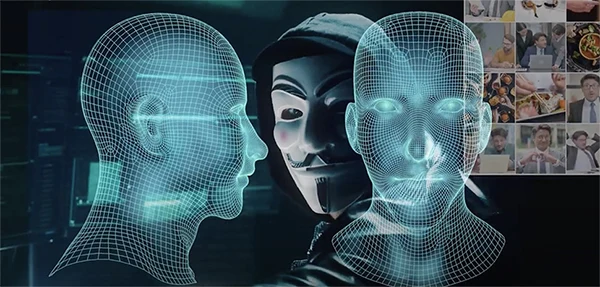
The digital world is evolving fast. Nowadays, tools that manipulate content are easy to find online, making AI-generated content a huge problem for those who want truth and privacy.
Such advanced tools let scammers make fake media look real, allowing deepfake scams to become even more complex. Learning to spot these before they steal information is the key to staying safe online. Keeping your presence safe is crucial for everyone involved.
This guide provides you with important tips to avoid scams. We’ll show you how to check if the content is real.
Key Takeaways
- Every convincing fake video comes from a battle between two neural networks. This setup is key to making synthetic media that looks very real
- One well-known trick is the deepfake, where someone’s face is put on another’s body in a video. These videos utilize high-quality footage to precisely match the lighting and expressions
- Generative AI threats often manifest in the environment surrounding the subject. Examine the background for any shapes that lack definition and logic
- Human language comprises emotions and different tones. Alternatively, synthesized voices may contain no emotions at all and may sound monotonic even in varying situations
Every convincing fake video comes from a battle between two neural networks. This setup is key to making synthetic media that looks very real. It’s important to know about these Generative AI threats to stay safe online.
This process uses a system that learns from huge datasets. It studies how people move and talk to make fake videos that look real. Knowing about these AI risks helps us avoid digital tricks.
Generative Adversarial Networks, or GANs, work by having two neural networks compete. The first, the generator, tries to make fake media that looks real. The second, the discriminator, checks if the fake media is believable.
As the discriminator gets better, the generator must find new ways to fool it. This keeps going until the fake media is almost indistinguishable from real. This has made the tech go from simple image tricks to creating fake videos and audio.
One well-known trick is the deepfake, where someone’s face is put on another’s body in a video representation. These videos utilize high-quality footage to precisely match the lighting and expressions.
But there’s more, like creating fake online personas. These can talk to people through calls, making scams easier. Knowing about these generative AI threats helps keep your info safe from online scams.
Signatures of digital alteration are often evident in modern digital manipulations that expose their artificial nature. You will learn to recognize these signatures as an essential step in navigating the AI content world. These visible signatures will be your first defense against digital trickery.
Fraud detection using AI starts by closely inspecting the individual’s face. Portraits created artificially typically have smooth-looking skin or appear as if they have been airbrushed. One may identify a portrait that lacks pores, lines, or other skin imperfections seen in natural human photographs.
Facial symmetry is yet another field where generative models have trouble performing. Although human faces are hardly ever completely symmetrical, the AI tends to produce something that is almost mirrored, which looks unnatural. The problems with recognizing faces become obvious when one observes an odd combination of earrings, misaligned glasses, and misshapen eyes.
Generative AI threats often manifest in the environment surrounding the subject. Examine the background for any shapes that lack definition and logic. If there is a discrepancy between the lighting of the individual and that of the background, then the picture is probably fake.
Shadows provide another critical clue for observers. AI models sometimes fail to render shadows that follow the laws of physics.
If you locate shadows falling in many directions or disappearing suddenly, you are likely looking at a synthetic creation.
The reason behind the existence of the uncanny valley is the fact that something can look very much like a human being but will be very unnerving for you at the same time. The reason behind this is the possibility that this technology will not be able to replicate the biological micro-expressions accurately.
Such portraits usually seem lifeless or mechanical when examined more closely. The brain is exceptionally good at recognizing such small nuances in emotion.
If something generally feels “off” about a face but you’re not sure what exactly, it’s better to trust your gut instinct.
Such images that have been tampered with are often analyzed at their borders. There are normally digital artifacts associated with the edges of objects such as hair strands, accessories, or patterns on clothing. The texture overlaps in the object or the shape is indistinguishable.
Watch out for unusual geometrical designs or objects that seem to merge with their environment. This is something quite usual in high-resolution AI techniques where more emphasis is laid on the object rather than the environment. This will definitely help you improve your abilities in spotting fake media content.
Did You Know?
Early deepfakes struggled with hands and teeth, but by using modern AI and its capabilities, scammers are now easily able to render perfect details, forcing users to pay more attention to every video they see online.
These days, cybercriminals employ synthetic media to duplicate human voices. Often, phone calls or voice messages are used to reach people. Learning how to identify these phony voices is quite important.
Voice cloning tools cannot exactly replicate human speech cadence. A speaker’s rigid, artificial voice might catch your attention. Also, check for forgotten breath pauses between sentences.
Natural human speakers stop to change their voice or catch their breath. It’s probably made up if the audio appears too flawless or devoid of these pauses. This is a serious warning flag during a call.
Identifying fake audio often involves checking the background sounds. Scammers mix different clips to create a message. This process often leaves digital clues.
Pay attention to any abrupt variations in the background sound or static noise. Any time there is a stoppage or variation in the background sound midway through a sentence, you will know that it is not real.
Human language comprises emotions and different tones. Alternatively, synthesized voices may contain no emotions at all and may sound monotonic even in varying situations.
Observe how the voice changes according to the setting of the discussion. If the tone stays the same even if the subject changes, be careful. Understanding these audio signs keeps real-time fraud from happening.
Modern cybersecurity requires us to be proactive in verifying AI-generated content. By using these cybersecurity best practices, you can boost your AI fraud detection. These tools help you check the media you see every day.
For verifying photos, reverse image search engines are very useful. Sites like Google Images or TinEye let you submit a picture to identify its original source.
If a photo shows up in many places, it might just be a fake. This quick check can tell you if a photo is real or not in seconds.
Digital files have hidden data called metadata. It tells you when and how a file was made. Tools that pull out Exif data show the file’s creation details.
When metadata doesn’t match what the uploader says, it might be tampered with. Checking this info helps you see if a file has been heavily edited with AI.
Always check viral videos or audio with trusted news outlets. This is key when dealing with possible voice cloning or deepfake news.
Good AI verification methods include seeing if big news groups have covered the story. If a big story isn’t reported by known sources, it’s probably fake.
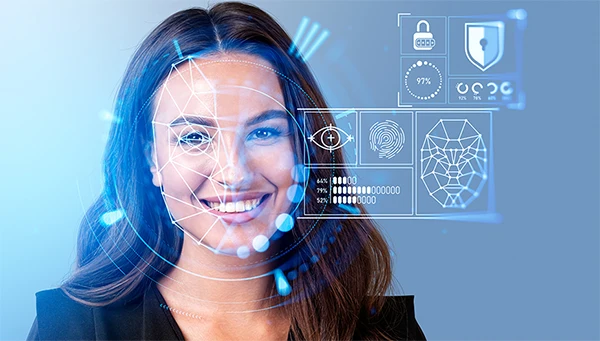
Keeping your digital identity safe is key to fighting off deepfake scams. You have to actively online as false information improves. These measures will help you to beat fictitious ID-faking AI fraudsters.
Multi-factor authentication safeguards against hackers. It provides an extra security measure that helps you to protect your information even if someone is aware of the account’s password. This is one of the best cybersecurity methods.
Use app-based authenticators instead of SMS codes for better protection. These tools are harder to intercept. Regularly using these tools helps keep your personal info safe.
Deepfake scams often try to rush you into sending money. Strict checks for every money request will help to counter this. Always verify the identity of the individual requesting money by means of a reputable source.
Don’t send money just because someone calls or videos you. Use a “code word” with family to check requests. This simple trick helps you make sure the request is real before you act.
Your face and voice can be used to make fake AI models. Share less high-quality media on social media to protect yourself. This helps fight against facial recognition risks online.
Think twice before posting photos and videos online. Scammers utilize this content to create fake personas online. By sharing less, you make it a lot tougher for them to target you.
Surfing the internet safely today demands careful attention and a willingness to learn. You can protect your privacy by learning key digital skills. These skills help you fight off advanced online tricks.
Being careful of what you read and hear online helps to protect your identity. Using artificial intelligence to review material enables you to find false information. Always approach demands for personal information with caution.
Keeping your personal data safe is a must for all internet users. Using safety tips online helps protect your accounts from threats. Simple steps like checking sources and metadata can greatly improve your security.
The world of online deception is always changing with new technology. Staying current enables you to protect your digital environment. Being proactive helps you to use the internet safely and securely.
In the case of deepfake technology, the core technology is Generative Adversarial Networks (GANs), which come with two neural networks called the generator and the discriminator, working together for the purpose of creating the most realistic synthetic media.
The first step would be to hang up immediately and to return the call using a reliable and verified number or to confirm the individual’s identity by asking for a secret family code word previously agreed upon.
No tool is capable of providing a 100% guarantee. A solid security approach should rely on the implementation of multiple technical validation tools combined with thorough human protocols and manual eye validation.