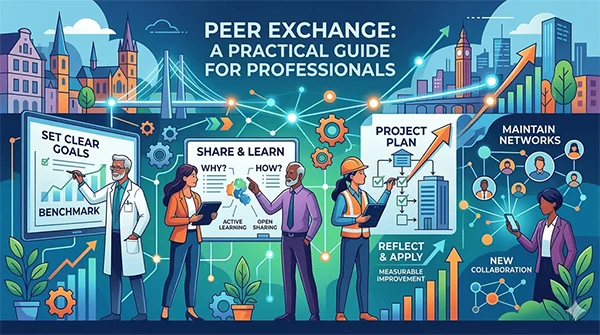
Finance functions have continually been evolving according to changes in technology within planning, analysis, or reporting functions. Courses, guides, or materials related to certification include systematic principles of finance. Discussions with practitioners bring a practical view of finance principles. The finance practice may continue to evolve depending on changing requirements for planning, reporting, or technology.
Read the full blog to know more about how peer discussions can expose finance professionals to new tools and approaches.
Finance functions have continually been adapting to changes in technology in planning, analysis, or reporting functions. Some departments have changed existing processes to stay up with the technology. Finance teams are usually expected to provide clear analysis under tight deadlines. Peer interaction offers an opportunity for a first-hand look at technologies, techniques, or processes used by other finance teams.
Regular work often means that the focus will be on existing technology within an organization. Peer interaction can offer different perspectives that one does not get through regular work activities. Conferences such as AFP FP&A Forum offer an environment for practitioners to learn from one another through open dialogue. This practitioner-based approach makes sure that learning is based on practical experience.
For finance professionals who learn best from peers, these events are worth thinking. The list opens with a practitioner-focused FP&A forum before the broader conferences.
Hosted by the Association for Financial Professionals, the AFP FP&A Forum is for FP&A practitioners and features practitioner-led sessions including planning, forecasting, and finance strategy. It runs March 22 to 24, 2027, at the Hyatt Regency New Orleans in New Orleans, Louisiana. Passes run from $985 to $1,785; the program carries FPAC and CPE credits across 18+ sessions, and early registration closes December 11, 2026.
Vena Excelerate Finance Fest
Vena’s community-driven finance event, known for practitioner stories on planning, budgeting, and reporting.
Gartner CFO & Finance Executive Conference
A CFO-focused program with research-backed guidance on finance strategy, performance, and technology.
AFP Annual Conference
AFP’s flagship conference, a wide-ranging treasury and finance event with sizable FP&A programming.
EuroFinance International Treasury Management Conference
An international treasury conference attracting global finance teams around cash, liquidity, and risk.
Courses, guides, or materials related to certification cover systematic principles of finance. Discussions with practitioners bring a practical view of finance principles. The conversation brings information on how the technique works in the process of finance functions. Colleagues can show how they handle issues during the planning cycle or reporting deadlines. Some can reveal how they implemented technological innovations in their finance group. Others can show organizational factors affecting the outcome of a particular finance project.
The case study offers the listener context about what was achieved in a particular case. This discussion describes those facts which may not be presented in a presentation. Thus, the listener can consider whether an outcome was achieved because of a specific technique or because of the context in which it was applied. A technique that is effective in one finance function may need to be adapted to be effective in another finance function. AFP focuses on practitioner-led, real-world learning in its educational programming.
Peer conversations can introduce finance professionals to technology already in use across other finance functions. A peer who has worked with a tool can describe the task it supports in plain terms. That firsthand account can help a listener picture where the tool might sit within planning, analysis, or reporting. AFP covers topics that touch on multiple tools that may come up in peer exchanges.
Peer examples can show how tools fit particular tasks within a team. The value lies in exposure to a range of uses, with no single product held up as the answer.
The planning and budgeting process can be quite different from one finance department to another. Similarly, there can be big variations when it comes to forecasting and reporting practices among companies. Exchanging experiences with peers offers the opportunity for finance professionals to compare their processes against those of others. Some departments use rolling budgets, which involve adding a period to the existing budget after the old one closes. There are others who make scenario-based forecasts.
Reporting automation uses technology to automate parts of the reporting process, minimizing the need for manual intervention. Month-end practices can be explained as well because delays at month-end can have an influence on the reporting process. Hearing peer experiences about the month-end process might help departments think differently about one of their practices.
AFP covers many of these topics as part of its Planning, Budgeting & Forecasting programming. The Finance Reporting & Process Optimization programming includes reporting automation and month-end processes.
Sessions run by practitioners keep finance professionals who work in the field at the forefront. The presenters use practical experiences from real cases within an organization. Roundtable interactions give attendees opportunities to participate. Such frank exchanges allow participants to make queries immediately regarding the problem raised. Networking among peers can extend such discussions even beyond the session period.
Direct interaction can offer insights into the entire process of a finance project. Peers may highlight the achievements achieved as a result of changes to a process. They may also describe the obstacles faced during the process and how they were overcome. These insights can be utilized by other teams for planning with realistic expectations.
Multiple finance professionals from different organizations bring diverse backgrounds to discussions. Such exposure to peers can increase the understanding of common practices of a finance professional.
A new tool or method from a peer discussion still requires a careful review against the listener’s own organization. A finance team can check a few points before it moves ahead with any change.
A review of these points keeps the decision grounded in the team’s real situation. Exposure to other teams’ methods can lead a finance department to reconsider established processes. A small adjustment drawn from a peer example may ease a recurring issue. The AFP FP&A Forum stresses actionable ideas that lead to practical solutions within finance teams.
Peer exchange can let finance practitioners learn about some of the tools, processes, or methods that exist elsewhere in other companies. The practitioner experience helps root ideas in a real financial environment. Networking allows for continuation of discussions even after a session is finished. Interactivity gives participants a chance to put their ideas to the test using real examples provided by others. The finance practice may continue to evolve based on changing requirements for planning, reporting, or technology.
Peer discussions reveal how other finance departments deal with actual tools and processes in their workday. Such accounts give valuable information that everyday activities in one firm may lack.
Peers may explain the tools they utilize for planning, analysis, or reporting. Examples can reveal situations in which products such as Power BI or EPM cloud products can be used by the finance department.
Practitioner-led discussions share successes, challenges or lessons learned from actual finance projects. Teams can use these insights to review their own approaches to planning, forecasting or reporting.