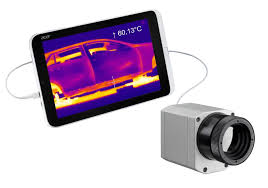
Thermal imaging is one of the most important technologies in the developing world. With changing temperatures and atmosphere, making homes and buildings unprepared for the climatic conditions can lead to difficulties eventually.
“Whatever good things we build end up building ourselves”
-Jim Rohn (legendary American Entrepreneur, author and motivational speaker)
This is why building homes post a thorough inspection of insulation becomes important. These cameras’ identity shortcomings, which humans often tend to miss, include insulation gaps, moisture seepage, and electrical faults.
This article particularly aims to unveil what Infrared cameras actually mean, their types, uses, and benefits entailed, as well as to understand why such cameras are important to carry out an inspection.
Key Takeaways
- Exploring what infrared cameras are and how they work?
- Understanding why IR cameras are useful for finding insulation problems
- Analysing the main types of infrared cameras
- Assessing common insulation problems in cameras can reveal
Infrared Cameras, which are often referred to as a powerful thermal imaging camera tool, allow inspectors to see variations in our homes.
Unlike traditional cameras, which capture visible light, an IR camera detects and displays it as a thermal image. This allows inspectors to spot issues that are not visible to the naked eye.
Also, IR cameras are based on the principle that all objects emit infrared radiation as a function of their temperature. The hotter the object, the more infrared energy it emits. An IR camera collects this radiation and converts it into electronic signals using thermal sensors.
These signals are then processed to create a visible image that displays temperature differences.
IR cameras are useful in early detection of the insulation problems that lead to several benefits, such as :
This provides major benefits when it comes to the insulation process, specifically.
Thermal cameras come in various types based on their resolution, sensitivity and intended application:
Temperature variations within a building can reveal much about its thermal performance. Infrared thermography detects heat loss caused by settled cavity wall insulation, thermal bridges and other structural inefficiencies. These issues create temperature gradients, often resulting in thermal discomfort.
Infrared thermography can detect air infiltration and exfiltration points, from defects in dots and construction to gaps around doors and windows. These leaks enhance convective heat transfer, leading to heat loss and temperature fluctuations.
Infrared cameras help in identifying such aspects, which saves costs and energy as well as building a sustainable home.
Initially, insulation problems may not be obvious, but as comfort and energy consumption change, these problems tend to worsen, as seen on infrared cameras.
Some of the common insulation problems are :
Thermal imaging technology has emerged as a game-changer for identifying problems in homes that would otherwise go unnoticed. Let’s delve into the advantages of utilising infrared thermal energy for home inspections.
First and foremost, one of the key benefits of infrared thermal imaging is its ability to detect moisture issues. Traditional methods might miss these problems, but IR cameras can identify moisture sources by detecting temperature variations caused by evaporation cooling.
Furthermore, IR cameras are advantageous in detecting insulation deficiencies within the home. By capturing thermal images of walls, ceilings and floors, homeowners can identify areas with insufficient insulation, providing homeowners with an advantage to take proactive measures such as adding insulation or sealing air leaks to improve energy efficiency.
In addition to these benefits, IR cameras also help in detecting temperature anomalies, preventing water damage or inefficient heating or cooling.
Thermal Imaging technology allows us to examine building structures from a “temperature perspective”, revealing potential issues related to walls, windows and even pipelines.
Whether you’re a professional inspection agency, building maintenance company, residential property manager or a homeowner concerned with living quality, mastering the details mentioned in this article can help improve the accuracy and practical value of thermal inspections.
They usually have a range of about 100 to 200 feet, enough to carry thermal images of a room or a small building.
In infrared sensing technology, the IR spectrum is commonly divided into near-infrared (NIR), mid-infrared (MIR), far-infrared (FIR), and extreme infrared based on how it propagates through Earth’s atmosphere.
Thermal cameras can only detect the temperature of the wall’s surface and cannot provide information about what’s inside.
Infrared (IR) or thermal radiation is a band of energy in the complete electromagnetic spectrum.