
The healthcare sector is changing fast. The healthcare industry is seeing a nearly 20% increase in claim denial rates every year. This changes your healthcare bills. A system of software generates those bills. So in turn, the bills for that software also change.
Many small clinics are closing every year because of that reason. Even if they’re the best in the town, if the software bills keep rising, how do you make the occupation feasible? Nobody can predict what the future holds.
Back in the day, healthcare software worked simply. A clinic paid one big yearly fee. That fee covered everything, no matter how much or how little the tool got used.
Here’s the catch. A tiny clinic with three staff members paid almost the same price as a bigger practice with thirty staff. That never felt fair, and small practices noticed.
So what happens next? Smaller clinics started shopping around. They wanted pricing that matched their actual size.
Regardless, go for specialized healthcare app developers only.
Think about it in this way: What software licensing models are, in plain terms, is just the rulebook for how a company charges you to use their software.
Some models charge per user. Some charge per patient record. Some charge a flat fee no matter what. The result? Two clinics doing almost identical work can pay completely different amounts, just because they picked different plans.
Why does that matter? Because picking the wrong plan can waste thousands of dollars a year without anyone noticing until the bill arrives.
Think of a solo dentist. She barely touches half the features in her current plan. A per-user model would save her real money. But she signed up for the flat-fee option two years ago and never checked again.
Pay-As-You-Grow model is gaining popularity. All clinics start small. So, companies are pitching them plans that charge as per their current requirements. A brand-new mental health practice might start with two therapists and five patients. Their software bill should reflect that.
What does that mean for you? If you run a small practice, you’re no longer stuck paying enterprise prices for a startup-sized operation.
A physical therapy clinic in Denver used this kind of plan last year. They added staff slowly, one hire every few months. Their software cost grew at the same pace. No sudden jumps. No surprise invoices.
That’s where things change for a lot of small healthcare businesses. Pricing finally moves at the speed of the business itself, instead of locking everyone into a one-size-fits-all number.
The infographic lists all the benefits of the pay-as-you-grow software model:
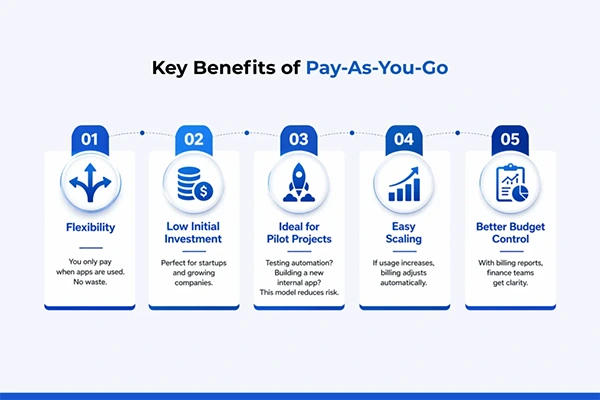
Charm Health pricing is a great example to understand this scenario. In this case, the picture will be much clearer in your head about what the trend is and where it’s heading. Instead of one flat number for every practice, their plans scale based on how many providers actually use the system.
A single provider pays far less than a twenty-person clinic. That sounds obvious. It wasn’t standard practice a few years ago.
Why is that important? Because it means a brand-new practice doesn’t have to gamble a huge chunk of its budget just to get basic scheduling and billing tools running.
One home health agency switched to a scaled pricing plan after outgrowing an old flat-fee system that no longer matched their staff size. Their monthly cost actually dropped, even though they were seeing more patients than before.
You might think that the software bill concerns just the doctors running those clinics; why should patients going there bother? Well, because it affects them too.
A clinic overspending on software often cuts corners elsewhere: shorter appointments, longer wait times, fewer front desk staff answering phones. A clinic paying a fair, predictable price has more room to actually invest in patient care.
Picture a patient calling to reschedule an appointment. At an overwhelmed clinic, that call sits on hold for fifteen minutes. At a clinic with breathing room in its budget, someone picks up in two rings. Small difference. Big impact on how a patient feels about their care.
Usage-based plans are the way to go. Clinics will be charged for the software as much as they use it. Pay for what you use, nothing more. Clinics are asking for this loudly, and companies are listening because competition has gotten fierce.
Bundled add-ons are also becoming more common, letting clinics pick only the features they need instead of paying for a giant package stuffed with tools they’ll never open.
A few practices are even negotiating custom deals now, something almost unheard of five years ago.
The bigger story here isn’t really about software at all. It’s about smaller healthcare providers finally getting pricing that matches their actual size, instead of being squeezed into deals built for hospitals ten times their scale. That change alone is reshaping which small practices can afford to stay open, and which ones can finally grow without their software bill growing faster than they can handle.
It’s simple: If it wasn’t documented, it wasn’t done.
Sending quotes for more expensive medical services or recording billing for services that weren’t even there are some of the most common red flags in medical billing.
The obvious benefit is that it’s paperless. Also, it’s much faster and more accurate.