Your Solana app works well in staging, performs as intended during early production, and then a real high-load traffic event exposes the gap it leaves between “it works” and “it holds”.
This gap is caused when businesses use a generic shared RPC endpoint, whereas a professional provider like https://rpcfast.com/ actually sticks and replaces a firefighting cycle with a predictable baseline.
With this guide, we’ll explore where the real costs hide and how the infrastructure of dApps has let businesses down constantly during scaling operations.
Key Takeaways
- The real hidden cost businesses face while scaling their operations
- Practical comparison of what teams encounter when switching from entry-level RPC to a SaaS tier
- The Stake-weighted quality of service problems that most teams ignore and suffer losses
- A short infrastructural audit is necessary before changing RPC providers
The sticker price of a shared RPC plan is rarely the actual cost. The actual cost shows up in three places that don’t appear on any invoice.
When a transaction fails silently, or a WebSocket stream drops during a market spike, someone on your team has to diagnose it. Is the problem on-chain? In the RPC layer? In the application logic?
Without proper observations, that investigation can take many hours. For a small team at the seed or at the Series A stage, these wasted hours are extremely expensive
On Solana, the order in which transactions reach the leader determines who captures a trade, avoids a liquidation, or executes a strategy on time.
A shared RPC node that gets rate-limited during congestion doesn’t just slow you down — it removes you from the race entirely. You don’t get an error message. You just lost.
Many providers advertise low per-request rates that look reasonable until a traffic spike hits. At $0.0005 per request, 10 million monthly requests cost $5,000.
A single viral moment can boost traffic instantly, turning a $100 monthly bill into a $5,000 shock. Computer-unit-based billing, offered by different providers, converts that unpredictable event into a known line item.
Fun Fact
A single Solana transaction uses less energy than turning on an LED bulb for a few seconds.
Here is a practical comparison of what teams typically encounter as they move from free or entry-level shared RPC to a structured SaaS tier:
| Stage | Infrastructure | Typical pain |
| MVP / Testing | Free shared endpoint | Rate limits, no support, stale data |
| Early production | Entry SaaS tier | Heavy methods throttled, no gRPC |
| Scaling production | Mid-tier SaaS | Bandwidth fees, stream instability |
| HFT / MEV | Dedicated node or top-tier SaaS | Requires Shredstream, SWQoS peering |
The pattern is consistent. Teams stay on a tier longer than they should because switching feels disruptive.
By the time they switch, they have already experienced and absorbed weeks of degraded performance and the increased engineering cost that comes with it.
One of the most misunderstood aspects of Solana infrastructure is Stake-Weighted Quality of Service, or SWQoS.
During network congestion, Solana’s admins prioritize transaction delivery based solely on validator stake. So, the unstaked traffic gets rate-limited, basically meaning that paying a high-priority fee won’t be enough if your transaction never reaches the leader in the first place.
Most shared RPC providers do not have a clear answer to this. The better SaaS providers solve it through partnerships with staked validators or routing networks like bloXroute, which effectively gives your transactions a priority lane during congestion.
For DeFi and trading teams, this is not an optional feature. It is the baseline for competitive execution.
Before switching providers or upgrading tiers, it is worth running a short infrastructure audit. The questions that matter most:
These four common questions surface most because of the hidden costs in a typical Solana infrastructure setup.
The answers usually point to one of two actions: moving to a higher SaaS tier, or graduating to a dedicated node for workloads that have outgrown shared environments entirely.

For most teams, a well-structured SaaS plan handles the journey from early production to significant scale. The signals that you are approaching the limits of shared infrastructure are specific:
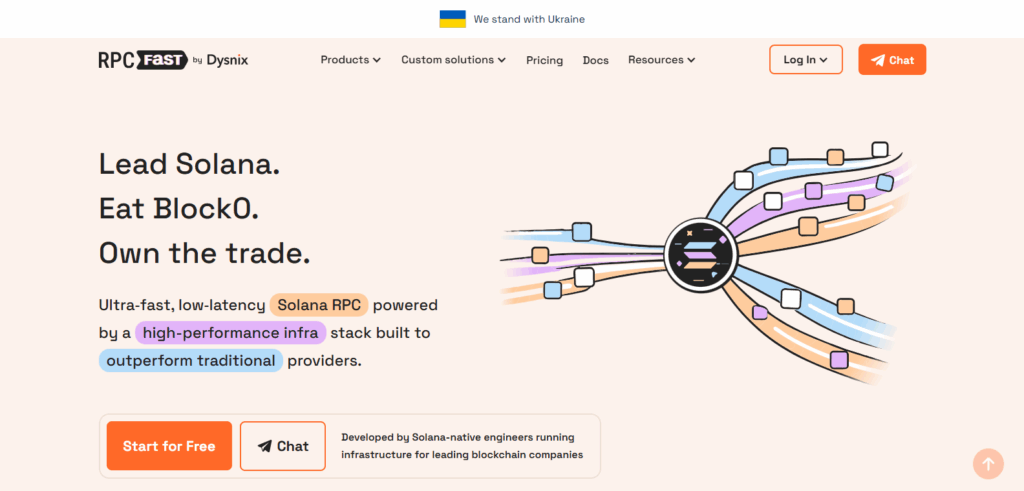
At that point, a dedicated Solana node gives you the same managed infrastructure model — no hardware to run, no validator to maintain — but with reserved resources, custom geo-distribution, and SLAs built around your workload rather than a shared pool.
This decision is less about infrastructure pride and more about risk management of the business. The question for a CTO or technical founder is straightforward: at what transaction volume or assets under management does unpredictable infrastructure become a business risk rather than a technical inconvenience?
For most of the team, that maximum threshold arrives way earlier than expected. The cost of switching is rather low than the cost of staying on the wrong tier altogether.
The main hidden costs are:
Solana requires rent to be paid for storing some amount of data on the blockchain. The larger the program and its traffic, the more the rent increases, making it an incredibly expensive option for small teams.
Yes, some providers may lock you in, making the whole task a complex engineering project, but it is still preferable by many instead of sticking to a wrong tier altogether.
Public nodes are rate-limited and are often very unreliable, creating bad user experiences. This is why it is important to use dedicated RPC nodes for a large-scale app.