Residential proxies are the go-to tool for scraping, verifying localized ads, SEO monitoring, and accessing websites with bot detection systems. But selecting the best provider isn’t about the largest IP pool; many other factors depend on it.
Before comparing your options, it’s necessary to understand how such factors influence real-world performance. A larger residential network reduces IP reuse, flexible rotation adapts to changing workloads, and much more.
In this guide, we’ll explain when you need best rotating residential proxies, give criteria to consider when choosing a provider, and select the best one for your needs.
Rotating residential proxies distribute automated traffic across real residential IPs to avoid sending repeated requests from the same IP. Here’s when they are used in real workflows:
Search engines customize outputs by location and user actions. Proxy rotation with geo-targeted IPs delivers precise SERP data across markets, while sticky sessions track changes over time without triggering anti-bot measures.
Public data collection depends on avoiding rate limits and blocks. A per-request rotation strategy distributes traffic across thousands of IPs, mimicking organic visitor patterns and maintaining consistent success rates.
Confirming ad placements requires viewing campaigns as local users do. Rotation combined with city-level targeting ensures ads appear correctly across regions, while detecting fraud or misplacement.
Competitor pricing, product availability, and consumer trends differentiate by region. Combining rotation with accurate geo-targeting captures local intelligence without needing rate restrictions.
Residential proxy providers vary by pool size, IP quality, and how flexible rotation control is. These factors determine whether a service actually delivers uninterrupted work and reliable results.
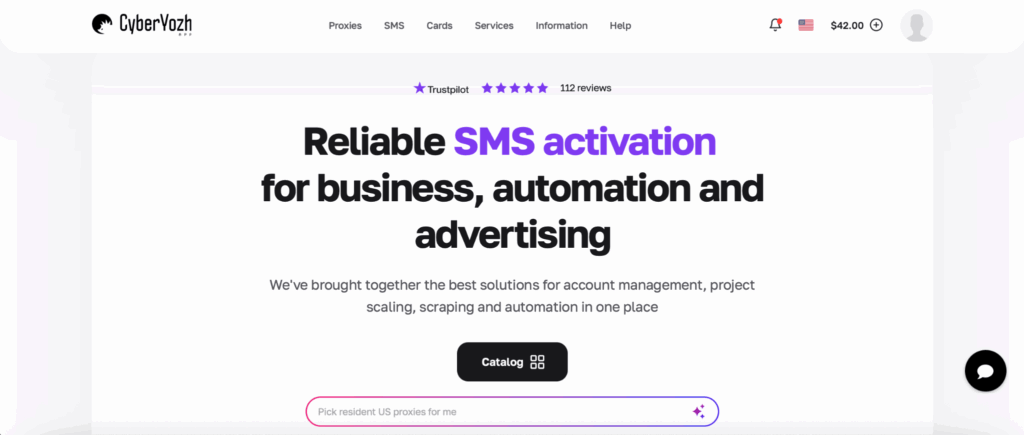
Among other residential proxy providers, CyberYozh stands out because it offers comprehensive infrastructure with enterprise-level features, but without enterprise pricing.
The platform provides multiple proxy types (mobile 5G/4G proxies, rotating residential, ISP, and datacenter), combined with virtual numbers for SMS verification, fraud risk evaluation tools, and virtual cards. The infrastructure approach makes it an effective choice for scraping, SEO monitoring, AI data collection, and other tasks.
Key advantages:
Best for: Businesses, agencies, and developers searching for an automation-ready platform that combines rotating residential proxies, scraper, and fraud-risk identifications in a single ecosystem.
Enterprise-grade infrastructure with one of the largest residential pools in the industry. Backed by comprehensive documentation and dedicated support for large-scale scraping operations.
Best for: Enterprise-level web scraping, complex market intelligence, and organizations that complete compliance-conscious data collection.
The industry’s largest proxy network with an extensive suite of tools. While it offers good control over data collection, a steep learning curve and sophisticated interface can turn off non-technical users.
Best for: Large organizations with enterprise budgets that need proxy and data collection tools.
Decodo is a balanced proxy service that prioritizes ease of use without sacrificing performance. A clean dashboard makes it a popular choice for smaller teams; however, limited IP filtering and a smaller ecosystem compared to some providers can limit its capabilities.
Best for: Businesses, SEO professionals, and developers looking for a straightforward proxy service.
SOAX offers flexible targeting with combinable filters for data collection. A well-maintained residential pool is appealing to users who need custom geo-configurations.
Best for: Geo-targeted scraping, SEO research, and market intelligence with location accuracy.
The right rotating residential proxy provider depends on your goals, budget, and the level of control you require. Enterprises running large-scale scraping may gain advantages from Oxylabs or Bright Data, but they may be overkill for smaller teams.
Decodo and SOAX provide solid performance for focused projects, but may offer fewer built-in scraping and automation features — the kind of tooling trade-off tech outlets like Kemotech often weigh when comparing software and infrastructure options for developers.
For users who want an all-in-one platform combining rotating residential proxies, automation support, SMS verification, and fraud-risk evaluation, CyberYozh provides a balanced solution with enterprise-level capabilities at an accessible price in 2026.
Rotating residential proxies are used for web scraping, SERP tracking, ad verification, market research, and automation.
Rotation depends on the task. Per-request rotation suits large-scale scraping, while sticky sessions are better for workflows that need the same IP for minutes or hours.
Per-request rotation works best when collecting large amounts of data. Sticky sessions are better when websites require session consistency, such as multi-page crawling, SERP monitoring, or workflows that rely on cookies.
Proxies only solve IP-related limitations. Websites also analyze fingerprints, cookies, and account activity. To avoid blocks, combine proxy configuration with proper setup and automation practices.