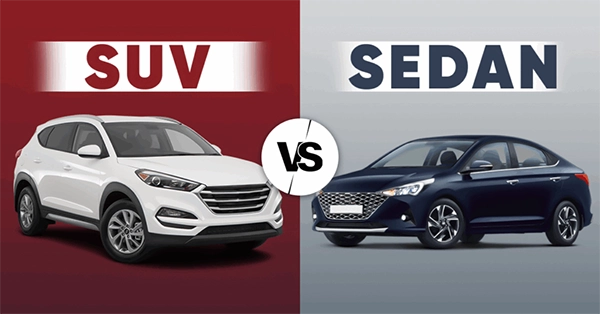
Selecting a vehicle for you and your family can be really tricky when you don’t know what purpose the car serves. Is it designed specifically for comfort, convenience, boot space, or all of the above?
One can only wonder unless they study the general specifications of the vehicle type, as compact SUVs and mid-size sedans offer very different features and include varying tech options. Having access to deep insight into these things allows you to make informed decisions and choose the best fit, suited exactly to your needs.
This article presents a technology comparison between the two vehicle types and helps you choose the right tech-focused vehicle.
Every vehicle has different types of technology that they prioritize. Some focus on driver-assisted interfaces and connectivity, while others offer better Fuel efficiency along with enhanced safety.
These features matter a lot as they add easy accessibility, convenience, and more to vehicles, which wasn’t the case in older times, where cars were just seen as objects used to travel from point A to point B.
Compact SUVs commonly include wireless charging, touchscreen interfaces, and top-of-the-line driving experiences for individuals who like to make the most out of their journey.
Sedans, on the other hand, have similar integrated features, offering a subtle and luxurious feel of the car, while also including premium audio additions.

Safety always comes first, and these vehicle types are no strangers to these requirements.
Both categories include advanced driver assistance features such as adaptive cruise control, automatic lane-assist, and smart braking, allowing the driver and passengers to enjoy the drive without needing to worry much about the protective considerations.
Furthermore, a compact SUV such as a 2026 Toyota RAV4 in houston presents a unique visibility advantage because of its default height, providing an enhanced view of the traffic and road in front of you.
Though both segments share similar price ranges and seating capabilities, Sedans prioritize smoothness and better rear legroom for the passengers.
Alternatively, SUVs focus on better headroom, effective cargo management, and higher seating positions
Fun Fact The higher floor and door openings in compact SUVs mean passengers (especially elders and kids) don’t have to bend down as much to get in and out of the car.
Mid-size sedans and Compact SUVs both support hybrid options, providing drivers with the choice of selecting the model that works best according to their requirements.
Furthermore, sedans are designed to be aerodynamic, thus supporting better driving dynamics on freeways when driving at high speeds.
It also offers a lower center of gravity, allowing drivers to remain safe on sharp turns as their body design prevents the car from rolling over, along with better fuel efficiency when compared with other segments.
Compact SUVs present a different array of performance additions, such as having different suspension designs, enabling drivers to travel through deep potholes or off-road paths without facing much turbulence.
They also have the added functionality of folding the backseats to safely accommodate oversized items.

Compact SUVs are designed to accommodate the family with you, wherever you go. Better view of the road, lower turbulence, integrated technological features like touchscreens equipped with voice capabilities and wireless capabilities make this vehicle type the best on-road companion for daily driving and family travel, irrespective of the length of the journey.
Ultimately, the right choice completely depends on the driver’s daily requirements.
Some may prefer the smooth driving, subtle yet luxurious features, and better stability of Mid-size sedans, whereas some may look for a vehicle that provides a commanding view of the road, allows for better off-road capability, along with its many advanced tech features directly integrated into the car’s terminals.
Whatever the choice of vehicle you may select, remember to always drive safely on the road, wear a seatbelt, and adhere to all on-road guidelines and rules to ensure stress-free arrivals to your destinations.
Sedans offer enhanced fuel efficiency as they are aerodynamic in design, have a lower centre of gravity, and are lightweight in comparison to heavy-duty SUVs.
Yes, both segments feature many hybrid options, giving drivers the option to choose based on their daily usage and requirements.
Compact SUVs are best suited for off-road adventures as they are designed to handle deep potholes, cracks, and more, allowing drivers to swiftly move through unpaved regions without turbulence.
Both categories include advanced driver assistance features such as adaptive cruise control, automatic lane-assist, and smart braking, allowing the driver and passengers to enjoy the drive without needing to worry much about the protective considerations.