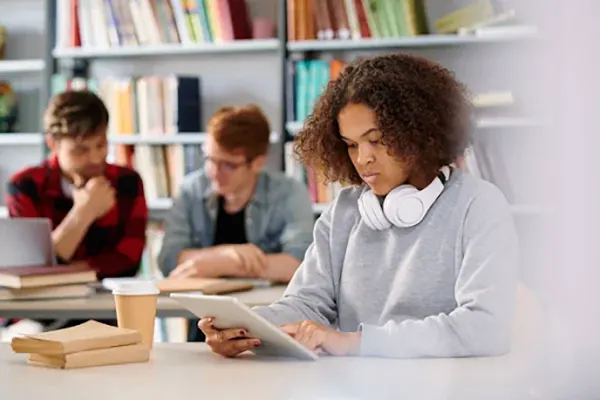
Today’s world is oversaturated with information that is changing constantly. The last one directly affects modern students’ ability to concentrate while studying. Messengers. Social networks. Countless other distractions. In most cases, all these factors contribute to a significant decrease in productivity. Yet, modern technologies offer non-trivial tools.
The ones that help students focus and thus increase the learning effectiveness. Smart devices are no longer just a means of communication or entertainment, as they were in the past. Now they have become powerful assistants. Particularly, in the learning process.
The important thing is to use cellphones, tablets, and other electronics responsibly. Their appropriate application can significantly alter a student’s approach to learning. The results will be better time management, focus on what is important, and progress tracking.
Proper organization of time and tasks that must be completed timely is the first step toward effective learning. Smart devices offer a range of tools that help students structure their learning process.
Now there is no need to spend hours searching for materials or planning. Modern applications allow you to do everything conveniently and centrally. Thanks to this, students are not distracted by organizational or everyday issues. Instead, they focus on their studies.
Smart devices offer tools for effective time management. Students can use digital calendars, reminders, and task trackers to divide enormous volumes of studying material into digestible portions. With these tools, students can:
Each block of study becomes more focused and structured. Thanks to this, students do not procrastinate and are more productive.
There are a large number of apps to improve focus that help students stay alert for long periods of time. These can be:
Such tools do not simply distract from phone notifications but are aimed at developing self-discipline and attention management.
Along with the help of apps for organization and planning, there is often a need for additional expert support. Especially during intensive training, exams, or important projects. What can we say when it comes to such complex subjects as economics or finance? This is where qualified support from experts is needed. Learners may get such support from the online writing service EduBirdie. It has long established itself as a reliable resource.
With https://edubirdie.com/finance-homework-help students can effectively cope with academic tasks related to finance. With the help of the professionals at this service, the need for writing strategies for students is solved. Learners can be confident in the logical structure of their homework and its compliance with academic standards. In this way, students optimize their time by getting help exactly where it is needed. This approach also promotes the formation of a systematic attitude to solving problems.
Using a proven platform eliminates the risk of errors and helps avoid unnecessary information overload. The latter often interferes with concentration. As a result, students can:

Constant distractions are one of the main reasons for low productivity. With smart devices, you can control this process. Thus, you will create an environment conducive to learning.
Even brief distractions on your smartphone reduce productivity by 20–25%. Therefore, actively using notification blocking features helps to:
With smart devices, you can set concentration modes that automatically disable notifications from social networks and applications that are not related to learning. Modern systems allow you to set priorities. You choose which messages are critical and which you can postpone.
Smart devices allow students to set tailored reminders to complete assignments or review content. They may also set a reminder to prepare for tests. All this enhances accountability and maintains a consistent learning rhythm.
Smart devices allow integrating reminders with calendars, planners, and progress tracking apps. By doing so, you create a comprehensive learning monitoring system. This approach helps reduce cognitive overload and increases the effectiveness of knowledge acquisition.
Clear signals and a structured daily routine reduce anxiety. They also increase the feeling of control over learning. It is particularly relevant for students who balance their studies with work or other activities. Smart distraction management devices aid in the development of self-regulation and effective time management abilities, as well as concentration.
Modern gadgets allow us to integrate learning with technology into our daily practice. They not only provide access to information but also foster active student participation in the process. They also promote critical thinking and help students concentrate on important activities.
Smart devices promote active student involvement in the learning process. It is now possible to reinforce information more effectively thanks to apps for creating:
Flashcards with a spaced repetition system can improve long-term memory. They also help students learn new concepts faster.
Interactive notes help to:
By integrating smart devices into their daily learning practices, students:
Smart devices provide instant access to electronic libraries, online courses, and scientific articles. This saves time searching for materials. Instead of spending hours obtaining material, students can focus on studying and comprehending it.
Mobile reading apps allow you to:
Using this method, you can build a personalized knowledge base that you can rapidly go to when studying for tests.
Integration with search engines and academic platforms allows you to quickly confirm the accuracy of the material. This improves the quality of the learning experience and encourages critical thinking.

Smart devices can stimulate motivation by visualizing progress and achievements.
Some smart devices can integrate gamification elements:
Thanks to this, additional motivation is created. The learning process also becomes more engaging and structured.
Planning apps allow you to set clear learning goals and evaluate their implementation. Students can see their progress. Such an opportunity increases motivation and encourages regular learning sessions.
Smart technologies have provided new opportunities for successful learning. With their help, students may now better organize their time. It is also possible to reduce distractions and increase concentration during study periods. Integrating such technology into your daily routine helps you increase productivity and build self-control. Attention management skills are developed. The use of concentration apps and interactive memorization tools makes learning more structured and effective. Therefore, the proper integration of smart devices into traditional learning methods can form an effective system that helps students stay focused, productive, and motivated.
It helps students by providing vast information to the students with few seconds, making their preparation faster
Smartphones have a dual impact on student academics: they offer educational resources for e-learning, research, and personalized learning, but excessive or non-academic use (social media, gaming) significantly harms performance by causing distraction
Yes, research shows measurable brain changes after 72 hours.