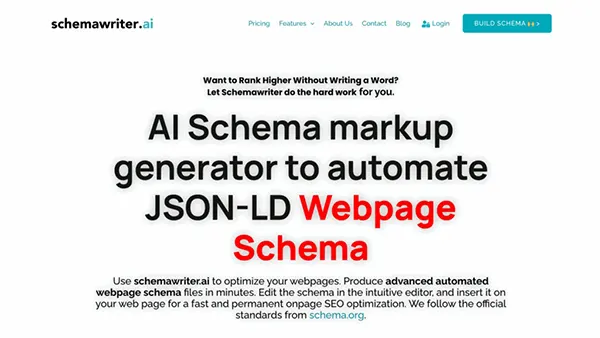
Schema markup has been there for a long time. Google, Microsoft, Yahoo, and Yandex came together to form Schema.org, providing webmasters with a shared vocabulary to describe the content on their websites in a way that search engines actually understand.
But after many years, most websites still fail to implement it correctly or just outright ignore it. The gap between knowing schema matters and getting it right is where most site owners get stuck, hence why more teams are now gravitating towards an AI-powered schema markup generator to handle their technical webpage data.
Here’s how this shift is completely transforming how sites compete for rich results and how you can apply the same to your webpage.
Key Takeaways
- Rich snippets, knowledge panels, FAQ dropdowns, and more are the SERP features that work when a schema markup is correctly applied.
- An incorrect schema markup breaks such features, making your content and website unable to rank on the results page of a search engine.
- AI tools study the content and create a corresponding schema code that fits your website, allowing it to gain SEO functionalities.
- The schema markup is used for all types of content, creative works, events, people, products, reviews, and more.
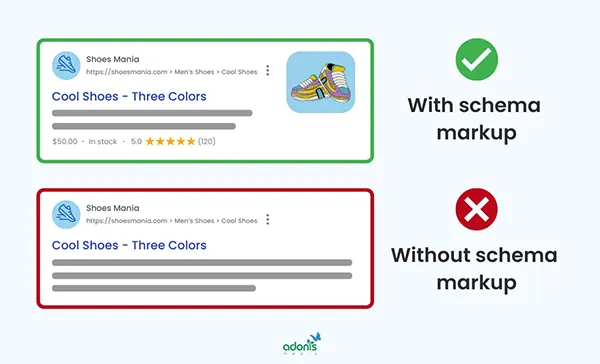
Discuss it with any SEO consultant, and they’ll tell you that structured data matters. Rich snippets, knowledge panels, FAQ dropdowns, these SERP (Search Engine Results Page) features are all dependent on correctly implemented schema markup.
This issue doesn’t lie in people not knowing about it; the problem remains that JSON-LD syntax is unforgiving. The Schema.org’s guidelines read everything like a technical specification, where one misplaced bracket can break everything.
Most websites fall into one of three traps:
Manual implementation demands a developer who understands both SEO intent and structured data syntax. That’s a rarer combination than most agencies admit.
For a five-page brochure site, writing the schema by hand is manageable. For an e-commerce store with 12,000 product pages, a recipe blog with 800 posts, or a local business directory, it’s a different problem entirely. Each page type needs its own schema structure. Products need Offer, AggregateRating, and Brand entities nested correctly. Articles need an author, datePublished, and proper Organization references.
Local business listings need GeoCoordinates, openingHoursSpecification, and NAP consistency across every location page. Now, consider the complexity across thousands of URLs, and even experienced developers start making mistakes.Worse, those mistakes are invisible; schema errors don’t break a page visually. They just quietly prevent your content from qualifying for rich results in Google Search Console.
This is the scaling problem that pushed the industry toward automation.
An AI schema generator doesn’t just spit out boilerplate JSON-LD. The advanced tools first analyze the page content, identify the correct schema type, map its elements to the right properties, and output the correct markup that matches what search engines expect. The difference between a basic template tool and a genuine AI schema generator comes down to contextual understanding.
A template gives you the same Product schema whether you’re selling running shoes or industrial pumps. An AI-driven approach studies the page, reviews the data, brand mentions, pricing structures, and more, and then builds the structured data around what’s actually there.
Some of the practical advantages:
Fun Fact
There is a specific speakable property that allows voice assistants to pick parts of a page that are suited for text-to-speech conversion.
AI isn’t magic, and not every tool calling itself an AI schema generator deserves the label. Some are just template engines with a chatbot interface bolted on. Other tools do generate syntactically valid JSON-LD but fail to match the actual page content, which Google rightly treats as spammy structured data, making it prone to penalties.
Before trusting any tool with your schema, check a few things:
The tools worth using are the ones that treat schema as a reflection of real content, not a wishlist of rich results you’d like to trigger.

Even with AI handling the heavy lifting, someone needs to review what gets published. Schema markup makes promises to search engines about what’s on a page. If the markup says there’s a 4.8-star rating based on 200 reviews and the page shows something different, that’s a trust signal going the wrong direction.
The most effective workflow puts AI tools in charge of generation and validation, while a human carefully reviews the output, providing oversight on the data before forwarding it for deployment. This is especially true for pages with complex schemas like Events with multiple performers, Courses with different structures, or MedicalConditions types, where accuracy is crucial. Structured data that’s both technically correct and content-aware is what distinguishes sites that earn rich results from sites that just wish they could.
Schema markup isn’t going away anytime soon. Alternatively, it’s becoming even more important as Google leans harder into AI-generated search results and structured snippets.
Getting it right manually at scale was always unrealistic for most teams. An AI schema generator closes that gap, handling the syntax, nesting, and validation that trips people up while letting you focus on whether the content itself deserves the visibility. The sites winning in search right now aren’t the ones with the most backlinks or the longest articles. They’re the ones making it dead simple for Googlebot to understand exactly what each page offers. Schema markup, implemented correctly, is how you do that.
Ans: It is a form of structured data code that is added to websites to help search engines actually understand the content inside the page and display “rich snippets” in search results.
Ans: Rich snippets are enhanced search results, such as star ratings, images, event dates, and more, that greatly improve the chances of a better ranking on the SERP.
Ans: Schema markup allows search engines to understand the content and produce results according to the user’s queries. A contextually correct markup promotes SEO functions for a page.
Ans: It can be applied to any content type, such as creative works, organizations, events, products, reviews, people, and more.