Marketing keeps changing and evolving, integration of AI and the demand to keep up appearances have made businesses change their promotional tactics to increase appeal among their customers.
Moreover, the introduction of QR codes in modern catalogs has increased the versatility of creating an interactive experience. With the addition of digital versions of catalogs, many businesses have observed a massive increase in their engagement.
But how do they work? And how can a business employ the use of these digital elements to reshape its printed catalogs and interact with customers? Let’s find out with this guide.
Key Takeaways
- The relevance of print media in an evolving digital world
- How QR codes are a game-changer when included in catalogs and booklets
- Linking webpages, text, videos, and products with QR codes
- Offers exclusivity and personalized promotional options to brands that want to boost their sales.
There were probably a lot of marketers who predicted that printed catalogs would be obsolete by now. With digital advertising establishing its dominance, one would expect all other printed marketing tactics to disappear.
But it appears that something quite the opposite has happened. Physical marketing materials still maintain their importance and demand as customers move away from the digital world and back to the traditional ways of brand discovery.
Consumers today are overwhelmed with online advertising. Just think about how many ads you see every day online. You can’t watch an Instagram reel without an ad popping up. But you can sit in your favorite armchair and flip through a catalog without being bothered by YouTube ads.
Because of this, a physical catalog often feels more intentional and less intrusive. When someone receives a well-designed catalog, they are more likely to take the time to browse through it.
Actually, customers are 40% more likely to remember your brand if you provide them with a physical copy as well.
Retailers have noticed that print catalogs also influence online purchases. Your customer may browse a catalog on their couch and later visit the website to complete a purchase.
Another reason printed catalogs have maintained their effectiveness is through their visual impact. High-quality images, unique layouts, and vibrant design on tactile paper create a more immersive experience than a simple screen. Brands can convey a more thoughtful story about their products rather than simply displaying them on a regular digital platform.
However, traditional catalogs still have limitations. That’s why we need just a bit of digital integration.

QR codes have become a practical solution for turning static print designs into interactive marketing opportunities.
Catalogs have always been a great way to market your products, since the beginning of advertising. The option to easily create a customized catalog that reflects your brand identity attracts many customers and businesses alike.
Plus, it’s an affordable and efficient marketing tactic as you can find many online printing services, such as Greenerprinter booklet printing services where you simply choose the binding and quantity, and voila!
It’s a great option for new businesses that don’t have huge marketing budgets but still want to reach their target audience.
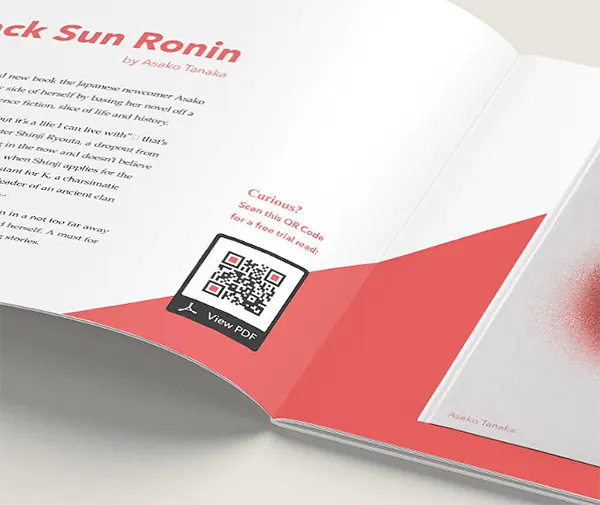
And, as said, you can easily include a QR code as well, and in different ways for different purposes.
With a QR, you can simply link the printed products to your online store. So, instead of asking your customers to manually search for a product, a simple scan takes them straight to the purchase page.
This is a more useful way of getting the customers to check out your products than simply going through a long process of searching on the internet and browsing through the website to look for your product.
Moreover, this optimizes the buying process by making it faster and quicker. A reader who sees something they like can immediately scan the QR and view sizes, colors, reviews, and pricing.
The conversion rate is much higher, and all it takes is placing a simple QR code.
Did You Know?
The world’s smallest printed book is a 22-page Japanese book detailing the flowers of the seasons, measuring just 0.74 x 0.75mm.
Some products are difficult to explain through images alone. Especially if you want to give your customers a sense of how the product moves or looks in real life.
Furniture, electronics, and fitness equipment often require demonstrations to show how they work. But you can’t really place a video inside a catalog. Or can you?
With QR codes, a catalog can swiftly guide interested clients and customers to a video demonstration or a guide. This allows brands the flexibility to include much richer content without crowding the overall design of the printed material.
For example, a home appliances brand might include a QR code next to an air fryer that opens a short video showing all of its functions and cooking options. This helps customers visualize the product in their own home.

Another great use of QR codes in catalogs is personalized marketing. Brands can create special codes for their viewers that lead to exclusive deals and limited-time offers, and those discounts are only available if you have the printed catalog, thus increasing the demand for printed materials by providing exclusivity.
When readers scan the code, they may receive a special promotion that is only available to catalog readers. This makes the catalog feel more valuable and encourages customers to interact with it.
Plus, no one likes a discount to go to waste, so they’re 67% likely to actually use it even if they did not plan on making the purchase.
We can now certainly say that the printed catalog is here to stay. It’s an important touchpoint in the customer journey as businesses and brands can boost their conversion rates significantly if they just use the power of catalogs properly.
QR codes are here to take printed designs and catalogs to the next level by linking websites and products to printed pages, creating an interactive online experience.
That means your customers can instantly add a product to their carts or see how the product functions in real life.
If you feel like your printed catalogs are not living up to their full potential, make sure to check that you have those QR codes with juicy discounts included!
Ans: A Quick Response (QR) code is a bar code that is readable by a machine. Scanning the code through your mobile device redirects you to the linked webpage.
Ans: Print media is evolving by including digital elements like QR codes in catalogs and booklets to create an interactive viewing experience.
Ans: Only the printed material of digital catalogs includes QRs with special deals that are not included in digital materials, making it an exclusive deal for physical catalog buyers.
Ans: Yes, you can link text, images, videos, and webpages to a QR code directly, ensuring the customers are redirected straight away to what you want them to see.