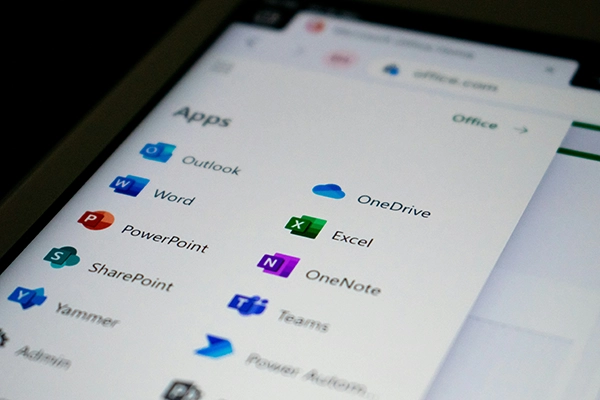
Millions of organizations rely on Microsoft 365, which makes this platform relatively important, especially for emails, files and providing extra safeguards.
But as the concept becomes common, issues such as weak authentication, poor backup planning, and other aspects become highlighted.
In this article, we will discover common Microsoft 365 security mistakes and practical steps to prevent costly data breaches effectively.
Skipping multi-factor authentication (MFA) remains one of the most serious security weaknesses in Microsoft 365. Research from the Cybersecurity and Infrastructure Security Agency shows that enabling MFA can prevent the vast majority of account compromise attempts. It makes it one of the single most effective safeguards for securing organizational data.
Relying only on passwords is no longer sufficient to defend business accounts from business accounts from today’s increasingly sophisticated cyber threats.
Organizations should require multi-factor authentication required to sign in using multi-factor authentication.
Strong authentication methods add an essential layer of protection.
Effective Microsoft 365 security depends on a layered defence instead of relying solely on multi-factor authentication.
Following Microsoft 365 security best practices means combining controls that reduce risk across your entire environment.
Businesses should enable conditional access to block high-risk login attempts, activate audit logs to track user and administrator activity, and apply the principle of least privilege so users only have the access they need.
IT Weapons explains that improving cybersecurity does not always require major investment.
Many organizations continue to provide employees with excessive permissions and fail to remove outdated access when job responsibilities change.
Implementing the principle of least privilege ensures users can access only the applications, systems, and information essential for their work.
Regular audits, role-based controls, and prompt account deactivations minimize attack vectors. Restricted permissions contain compromised accounts and fortify Microsoft 365 security.
Healthcare, pharmaceutical, and biotechnology firms suffered the highest volume, accounting for 22% of these incidents. Restricting permissions strictly to necessary roles prevents external partner access from becoming a critical breach vector.
Uncontrolled external sharing increases the likelihood of exposing sensitive business data to unauthorized users and accidental information leaks.
Although Microsoft 365 simplifies collaboration, neglected sharing settings may leave sensitive files available longer than intended.
Organizations should routinely audit external sharing settings and disable anonymous links that are no longer required.
Apply expiration dates to shared access whenever appropriate.
Restrict collaboration to trusted users and monitor shared content to protect sensitive information while supporting secure, efficient teamwork.
Many businesses mistakenly believe Microsoft 365 provides complete, long-term backups for all data. Although Microsoft offers service availability and recovery features, these are not comprehensive backup solutions. A dedicated backup plan is essential for recovering data lost through deletion, ransomware, or user error.
Implementing an independent Microsoft 365 backup solution enhances recovery speed and supports uninterrupted business operations after unexpected incidents. Regularly testing backup and restoration procedures verifies that data can be recovered successfully. These practices reduce downtime and ensure critical business information remains accessible when it is needed most.
Phishing emails and social engineering attacks often succeed because employees fail to recognize common warning signs. Regular security awareness training helps staff to identify threats and follow secure security practices. Simulated phishing exercises strengthen these lessons. Ongoing refresher sessions strengthen Microsoft 365 security and lower the risk of successful cyberattacks.
IBM’s Cost of a Data Breach 2025 report found that human error was responsible for 26% of data breaches, while IT failures accounted for 23%. Threat actors frequently take advantage of employee mistakes to gain access to sensitive information. These findings highlight the importance of ongoing user security awareness training for every organization.
If a Microsoft 365 account is hacked, attackers may access emails, files, Teams conversations, and sensitive business data.
Open the shared file in OneDrive or SharePoint. Select Manage Access or Share to review users, groups, and existing sharing links with permissions.
Yes. Microsoft 365 blocks unfamiliar logins using Conditional Access and Microsoft Entra ID Identity Protection.
These tools evaluate sign-in risk, user location, device compliance, and other factors before granting access. Organizations can require additional verification or completely block suspicious login attempts.
| Reduction in account compromise risk with Multi-Factor Authentication (MFA) | 99% lower risk of account breaches |
| Third-party breaches reported by North American organizations | 53% of reported breaches |
| SharePoint sites allowing external sharing in the cited case study | 58% of sites |
| Data breaches caused by human error | 26% of breaches |
| Data breaches caused by IT failures | 23% of breaches |
Avoiding common Microsoft 365 mistakes requires ongoing attention instead of relying on single security configurations. Cyber threats continue to evolve, making regular reviews and policy updates essential for maintaining effective protection. Proactive security assessments identify hidden weaknesses well before attackers can exploit them.
Organizations that proactively improve authentication, permissions, backups, and user awareness significantly reduce cyber risks and enhance regulatory compliance. A well-planned security strategy ensures Microsoft 365 remains a reliable platform for collaboration, communication, and daily business operations.
Microsoft Entra provides multifactor authentication, conditional access, and role-based permissions.
Microsoft 365 security risks are misconfigurations, vulnerabilities, and gaps in default settings that leave email, files, and identity data exposed to unauthorized access.
Microsoft Defender for Identity protects your organization from identity-related cyber threats.
Researchers disclosed a one-click vulnerability chain, CVE-2026-42824, that could quietly pull mailbox, OneDrive, and SharePoint data out of a tenant through Microsoft 365 Copilot – rated at Microsoft’s maximum severity before it was patched.