Gone are the days of old e-commerce, where ramping up production was the best way to generate business and bring in more customers to the brand.
Nowadays, the e-commerce industry is evolving and innovating into something different, into customization. This bold move is creating great new trends and buzz in the market, driving more growth.
This article explains what this new change in e-commerce means for the users, how it impacts them on a day-to-day basis, and what the future holds for retail.
Key Takeaways
- Why Personalization is crucial for an online retailer’s success
- Consumers’ demand for more personalized and customisable options
- What are the tools used by brands to showcase and display custom design options
- A look into the future of online retail as a whole
Customization is a huge change for online shopping as a whole, as customers looking to buy a product can not only select which item they want but also how they want that item to look.
This creates very interesting scenarios where it’s left up to the creativity of the buyer to change the product according to one’s needs.
Additionally, if a person requires a specific design on a shirt of their choosing, then it is now definitely possible! One can also select size variants and material types according to their comfort and choices.
Fun Fact
The commercial use of the internet was restricted until 1991, which is when the World Wide Web became available for everyone, laying the stepping stones for the boom of online shopping.
There is a wide belief that personalizing online stores to what the user actually wants to buy makes for better results. Well, statistically, companies that excel in personalization generate 40% more revenue than those that don’t.
As a result, e-commerce companies invest in AI, machine learning, and real-time data to display users exactly what they want to see, to encourage them to buy the product.
For example, if a person is looking to buy canvas prints, then they would head to https://www.wallpics.com/pages/personalized-canvas-prints and check out the store, wherein they will look at personalized options.
These would be based on that user’s history, web surfing patterns, and needs, all perfectly understood in real time with the help of artificial intelligence.
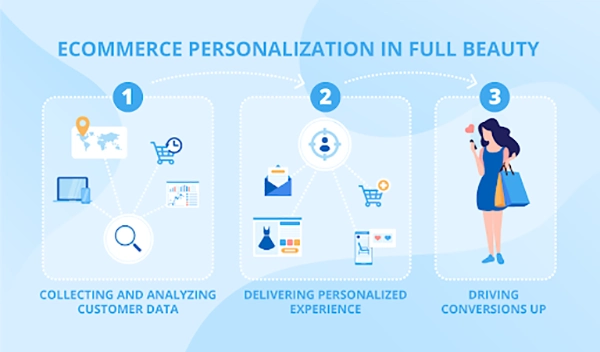
Check out this illustration on how personalization actually works for brands:
The consumer’s demand for unique and personalized products has risen. McKinsey reports that 71% of customers expect some level of personalized experiences from brands, and 76% get frustrated when that doesn’t happen.
This clearly proves that there is a huge demand among customers for custom experiences, which means they expect a say in the choice of product as well.
Products that offer users the ability to change most aspects of them are the ones that are most successful in today’s market. The choice to change the material, the color, style, design, and more enables the product to show its customisability.
Users who prefer to make changes to the product on their own choice can check out https://www.wallpics.com/collections/vintage-wall-art, as it offers great customization, where users can change the dimensions of the artwork according to their available space.
Popular brands use the following tools and technologies to gain an upper hand in delivering to the user what they like:

This is an evolving period of online retail where those brands that travel with the waves of custom design trends instead of resisting them excel the most.
As customers demand better customizability, studies prove that greater personalization options attract users to make purchases from a brand.
So, e-commerce brands must take note of these changes and adapt with the use of the latest tools and technology to drive more growth than their competitors.
The ability to make considerable changes to a product according to one’s needs is customization.
Customers demand personalization and results filtered according to what they like, as they prefer to see results of their interests.
3D printing, AI software, and print-on-demand options and tools let brands showcase their level of customizability to customers.
Online retailers make use of AI to give a personal touch to each result shown to the viewer by making it perfectly tailored to their preferences, with the help of their search history, patterns, and real-time data.