An event can run on schedule and still leave visitors unsure why a brand matters. Registration staff, ushers, and operations teams keep the venue operating while ambassadors focus on conversations that bring a campaign to life, just like protecting tech wiring. Their contribution relies on preparation, clear responsibilities, and a useful next step for attendees.
The difference lies in assignments, not in an assumption that other staff lack communication skills. The first conversation sets the direction at the booth.
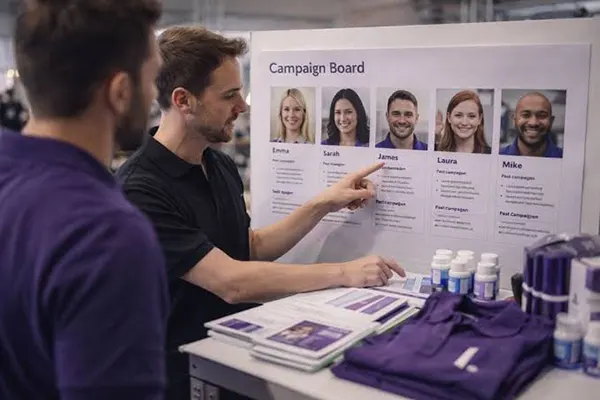
A visitor passing a booth needs a reason to stop. An ambassador might ask about the visitor’s interests, then connect the answer to a relevant demonstration.
The aim is to make the next step clear without applying pressure for brand ambassadors who turn engagement into action. An invitation gives the conversation a practical direction while leaving the visitor free to decline.
Organizers should brief ambassadors on the intended audience and what an appropriate invitation sounds like. A greeting that works at a trade show may feel out of place at a community festival.
Ambassadors need enough product knowledge to answer common questions without reciting a script. When a visitor asks how an item fits into a daily routine, an ambassador can demonstrate its use and explain the relevant benefit in plain language.
The brief establishes the limits of the role. Ambassadors need to know which claims are approved, which questions demand a specialist, and where to direct someone who needs more details.
Practice some common questions to expose the gaps before attendees arrive. Standard event staff can learn such information, but their assigned duties may leave little time for detailed product conversations.
Listening gives each conversation a direction. One attendee may want a quick demonstration, while another has a detailed question about whether a product suits a particular need. Ambassadors can adjust the explanation without changing the approved message.
A helpful brief provides staff room to respond, instead of forcing every interaction through the same talking points. It explains the main message and gives examples of suitable questions. Ambassadors also require permission to end a conversation politely when someone is not interested. Respecting that response protects the visitor’s experience and leaves time for people who want to engage.
Visitors are better placed to act when the next step is clear and optimal. An ambassador can invite someone to join a demonstration, request a follow-up, or speak with a product specialist. The invitation should demonstrate what the visitor has said.
Organizers should decide before the event what happens after each action. If a visitor requests contact, the team needs a reliable way to record the request and pass it to the right person. Staff should explain what the visitor is agreeing to and avoid collecting personal information without permission. A clear handoff keeps a promising conversation from ending at the booth.
Ambassadors hear questions and objections as they arise. Their notes can show whether visitors understand a demonstration, confuse the product with another category, or repeatedly ask for information missing from the display.
A brief reporting routine makes those observations useful. Organizers can ask ambassadors to record recurring questions and the words attendees use, instead of guessing why someone declined an invitation.
Staff should separate direct comments from their own interpretations. The event team can also decide whether to clarify an explanation or move printed material closer to the demonstration area during a short debrief.
A crowded booth doesn’t show whether visitors learned anything or wanted further contact. Organizers should choose measures that match the event’s purpose, such as completed demonstrations or requested follow-ups. Define each measure before the doors open.
Counts need context. The team should agree on what qualifies and how to avoid double-counting the same interaction it staff record conversations. Comparing requests with completed handoffs also exposes gaps in the process. Numbers cannot explain every result, so organizers should review them alongside visitor questions and staff notes.
Before the next event, organizers should write a brief that separates operational duties from ambassador responsibilities. It should identify the audience, the approved message, the intended visitor action, and the person responsible for follow-up.
A rehearsal can test whether an ambassador can explain the product and respond to an unexpected question. The brief gives staff a practical standard for the event and gives organizers a basis for reviewing what happened after visitors leave; similarly, the brief on Braze implementation partner vs. in-house build compares cost, speed, and risk.
A rehearsal can test whether an ambassador can explain the product and respond to an unexpected question.
Ambassadors’ notes can show whether visitors understand a demonstration, confuse the product with another category, or repeatedly ask for information missing from the display.
Organizers should choose measures that match the event’s purpose, such as completed demonstrations and requested follow-ups.