Did you notice the standout appeal of AI shifting in today’s landscape? The AI is no longer about just writing poems or essays; it has evolved, and it is now looked upon as a system that can think, predict, and execute things.
As we navigate through 2026, technological growth is not the only thing you witness; you are living through a fundamental rewrite of how the world functions.
Key Takeaways
- AI is moving from being a tool to being a strategic decision-making partner.
- Green AI is becoming a necessity as energy demands are surging.
- Industries such as finance and healthcare are using AI to offer 1-on-1 experiences at scale.
The trial phase is over, and 2026 is the year of full integration into the new system. Using dedicated hardware and edge computing technology, AI development agents increased speed and became more localized.
Our infrastructure is now matching our goals because it allows us to get real-time intelligence without the need for remote cloud services.
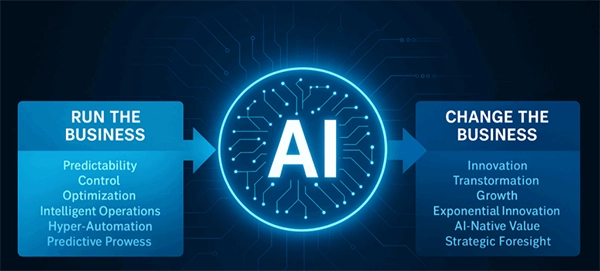
Today, AI has moved from just handling routine tasks to becoming a strategic partner. It is not just limited to managing emails; in 2026, AI is actively interpreting real-time market changes and is guiding decisions.
This allows you to pivot entire business models in days, transforming AI from a simple utility into the core driver of your organizational strategy.
The significant shift in the landscape is happening beneath our feet, and staying ahead means understanding the two engines of modern progress, which are creative generation and independent logic.
GenAI has developed into a major industrial strength. The ‘World Models’ now first create physical environments to test products before they build them. You need to explore the AI trends that drive global industry development to understand their global impact on emerging technologies.
Did You Know?
30% of new drugs are estimated to be discovered using AI-led molecular simulation by the end of 2026.
The autonomous ‘brains’ today use probabilistic reasoning to manage supply chains. These systems have the potential to take high-stake decisions in a few seconds, such as rerouting around storms without any human intervention.
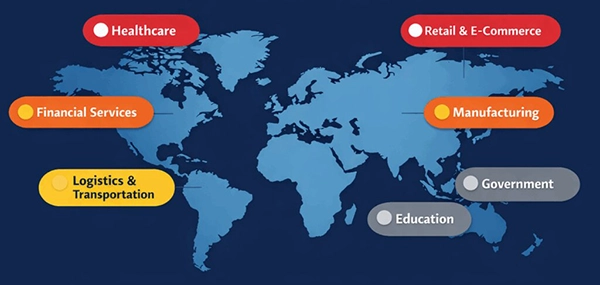
AI has evolved beyond a single, universal approach; it has moved to healthcare, finance, education, retail, and manufacturing sectors.
You are entering the age of ‘Digital Twins.’ Doctors can now create a virtual version of your biological profile to test how a certain cancer drug will affect you specifically, eliminating the trial-and-error approach to medicine.
Forget simple fraud alerts. AI now manages ‘Hyper-Personalized Economies,’ where your banking app anticipates your cash flow needs three months in advance and auto-negotiates better interest rates on your behalf.
The ‘Dark Factory’ is now a reality. You’ll see plants that operate entirely in the dark because the AI-driven robots do not require light to see, drastically cutting energy costs along with carbon footprints.
With AI-driven predictive logistics, the item you want is often shipped to a local hub even before you click ‘buy’. This anticipatory shipping is completely based on your browsing patterns and local trends.
In 2026, you don’t just watch videos, you engage with AI tutors that adapt their teaching style, auditory, visuals or kinesthetic, based on your real-time cognitive load and frustration levels.
Fun Fact: Recursive Learning is a process in which some AI models are trained on data generated by other AI models.
We cannot say that it is all smooth sailing. As you scale, you will come across the ‘Data Wall,’ which is the point where high-quality human data runs out.
Furthermore, a shift towards Green AI seems a necessity now because of the energy demands of massive models. Make sure that you also go through the ‘Trust Gap’ to ensure that the decisions your AI takes are explainable and free from any system bias.
The era of ‘AI for the sake of AI’ is long gone. We have now entered the age where intelligence is embedded in the core of industries. It helps in reshaping how businesses operate and how people engage with services daily.
From boardrooms to living rooms, the algorithms are quietly redefining experiences and interactions. The future is not approaching; it is already deciding what comes next.
Companies use Explainable AI (XAI) that allows them to trace decisions and ensure that the outcomes are fair.
It would be wrong to say that AI would replace your job; it is more likely that it can replace tasks within your job profile.
Yes. In 2026, data is processed locally on your device rather than being sent to a central server, which improves privacy.