Redis is the most popular among developers when they need to work with caching and real time. It is fast, reliable, and many internet users runs this. You can also find client libraries for it everywhere. However, one drawback is that it can be troublesome to run on Windows.
So, there are some alternatives to Redis for Windows that will be helpful for your projects. In this article, their comparison, features, and advantages are given for better understanding.
In this article, we’ll look at five of the best Redis alternatives for Windows and compare their features and advantages. This way, you’ll have an idea if it’s a good fit for your project specifically.
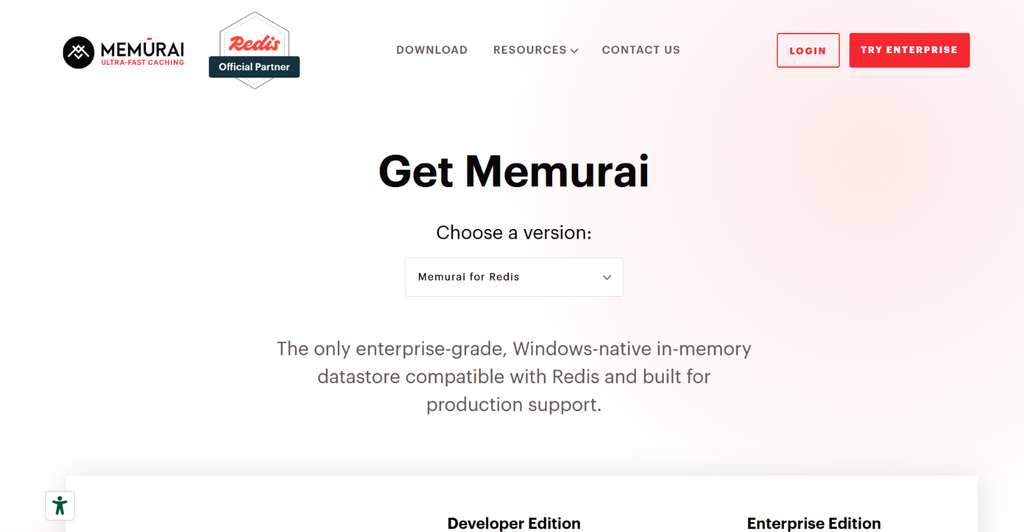
Memurai is a main memory data store and a Redis-compatible server that gives you the speed, simplicity, and reliability of Redis that is fully optimized for your Windows environment. You can download Memurai for Windows and start developing without setting up Linux or depending on virtualization.
Memurai supports features such as:
Key advantages of Memurai include:
| Advantages | Work |
| Compatibility with Redis | Memurai supports Redis 8.2.0 and works with existing Redis client libraries. |
| Redis Stack Capabilities | RedisJSON, RedisSearch, and Vector Sets. |
| Integration with Windows | Memurai runs on window service and makes it easy to manage other apps and services. |
Visit the Memurai developer download page to get started for free. You’ll get access to all the features with only one limitation: the server auto-shuts down after 10 days. It’s also limited to 10 unique IP addresses and 50% of available system memory. You can either restart the server or just get the Enterprise Edition if you’re serious about switching to Memurai for your work.

Garnet is another Redis alternative for Windows that is worth considering. It is a remote cache that offers several benefits. It comes from Microsoft Research, and it shows- it’s built for people who live in Visual Studio. It’s open-source and works cross-platform on both Windows and Linux. You can also connect Garnet to existing Redis client libraries because it supports the Redis Serialization Protocol.
Garnet offers several features beyond basic caching:
Garnet also supports Lua scripting and custom server-side operations written in C#.
| Important Note: Garnet is Redis-compatible, not Redis-identical, so some commands and behaviour can differ. You can definitely work with Redis-compatible clients, but make sure to test your application for compatibility. |
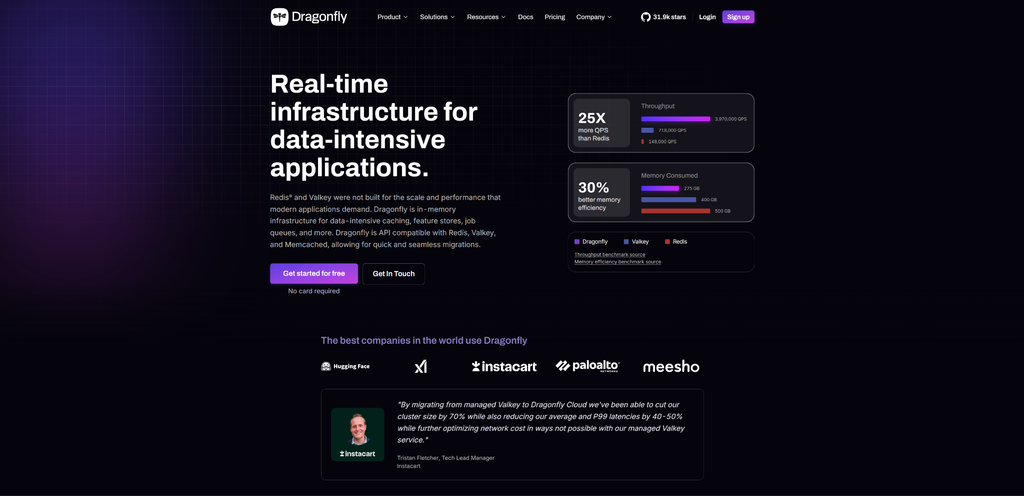
Unlike Redis, which executes commands on a single thread, Dragonfly is a well-performing and memory-efficient drop-in replacement. It uses multithread architecture to make better use of available CPU cores. For apps with lots of simultaneous connections and heavy throughput, that alone can make a huge difference.
Dragonfly supports features such as:
Dragonfly also aims to simplify migration and works with Redis-compatible client libraries. Windows developers can run Dragonfly locally through Docker, and as a developer, you can use Dragonfly for testing and development.
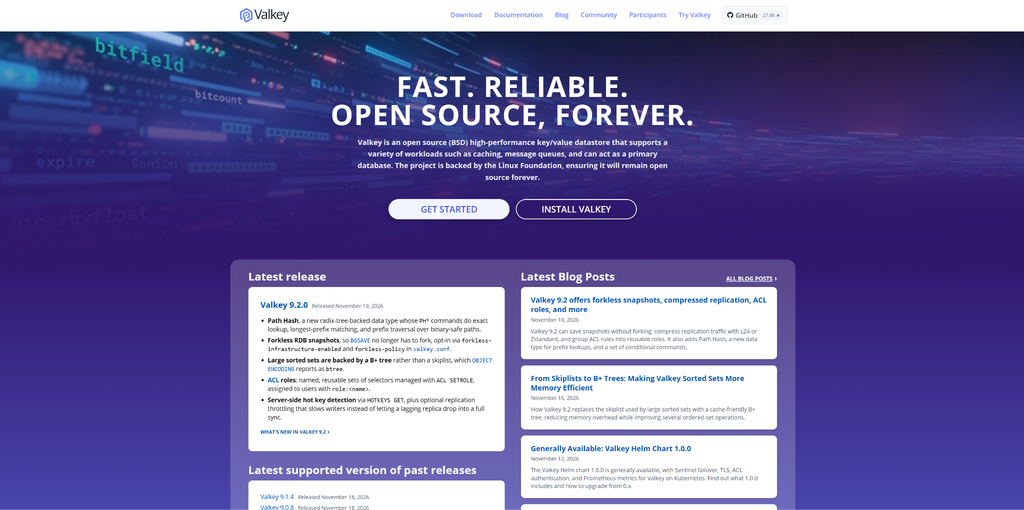
Valkey is an open-source and high-performance value datastore. It is managed and built on an open-source Valkey and compatible with Redis. It started as a fork of Redis and has since become a collaborative alternative for developers.
Valkey supports familiar Redis-style data structures and functionality, including:
Valkey also supports replication and automatic failover, which makes it suitable for demanding caching and data-storage workloads.
Valkey is a good option for teams that want to build and maintain their projects independently. It has a drawback that it doesn’t run natively on Windows, so you’ll need WSL or Docker.
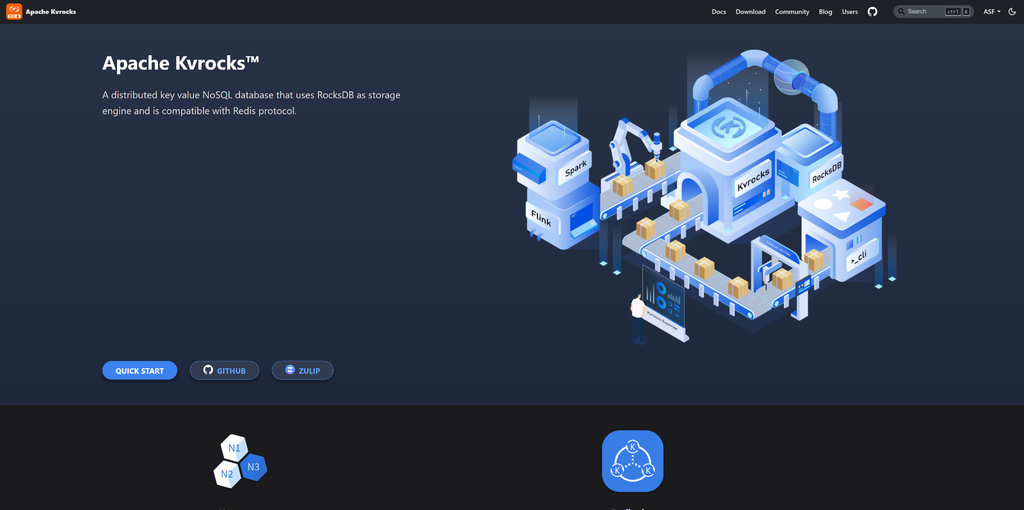
Apache Kvrocks is an open-source distributed key-value database that uses RocksDB as its storage engine. It supports the Redis protocol, which allows devs to work with existing Redis clients and commands.
Unlike traditional in-memory data stores, Kvrocks uses disk-based storage. This strategy is useful for apps working with datasets that are too large to fit into RAM. RocksDB also provides efficient storage and retrieval, making Kvrocks a good option for self-assured large-scale workloads.
Kvrocks supports features such as:
This makes Kvrocks relevant and most useful for projects that need persistent key-value storage while retaining familiar development interfaces.
As we’ve discussed, each tool is good for something when it comes to Redis. In this article, we’ve picked Memurai as our first choice because it’s the only one here that runs on Windows natively. Another software also has its own advantages, but it is nicer not to get bogged down in infrastructure while working with Redis on Windows. If you’re considering a Memurai download, it’s worth checking whether the Developer Edition fits your project’s needs.
Memurai is considered the best tool compatible with Redis for Windows Developers.
Memurai works with existing Redis client libraries, and it runs on windows service that makes it easy to manage other apps and services.
Some good alternatives to Redis for Windows include Memurai, Microsoft Garnet, and Valkey.