KEY TAKEAWAYS
- Packaging-related errors remain one of the leading causes of product recalls across regulated industries.
- Early compliance reviews keep regulatory risks from actualizing into costly redesigns.
- Version control and structured pre-production checks reduce the chances of non-compliant packaging reaching production.
- Ongoing regulatory monitoring ensures packaging remains compliant after product launch.
It’s not carelessness that leads to packaging compliance issues. Problems tend to emerge from fragmented workflows – legal reviewing in isolation from regulatory, design files cycling through without version control, compliance checks happening too late to influence anything.
It’s not a single task but a chain of decisions that spans the entire product development cycle. Risk compounds when any link in that chain is skipped or rushed.
Understanding where things typically go wrong makes it easier to build reviews that actually prevent them.
Many of the most expensive packaging errors originate during the early design phase, when critical regulatory requirements have not yet been fully considered:
None of these is easy or cheap to fix once the design is finalized.
Running a pre-design compliance checkpoint means asking the key regulatory questions first: Which markets is this product entering? Which packaging compliance regulations apply? Are there any requirement changes scheduled around the product launch? Answering these early gives the design team parameters to work within, rather than constraints to work around after the fact.
Regulatory requirements vary significantly across regions, making a one-size-fits-all approach to packaging copy both risky and inefficient. Allergen disclosure formats differ between the U.S. and the EU. Child safety warnings that satisfy CPSC requirements may not satisfy Canadian or Australian equivalents. Nutritional labeling is not standardized globally.
A market-by-market regulation matrix – built before the copy is drafted – prevents the most common version of this problem. It doesn’t need to be complex. A structured document mapping each target market to its applicable requirements (labeling format, language obligations, mandatory warnings, recycling symbols) gives every stakeholder a shared reference.
Solutions with built-in regulatory databases can automate much of this mapping. Even a manual version is meaningfully better than no version.
Compliance issues can slip through even when packaging is reviewed by multiple departments.
A dedicated compliance review consolidates the regulatory perspective into one structured step. The reviewer’s specific focus: does this packaging meet packaging compliance regulations in each target market, and are there any gaps between what’s shown and what’s required?
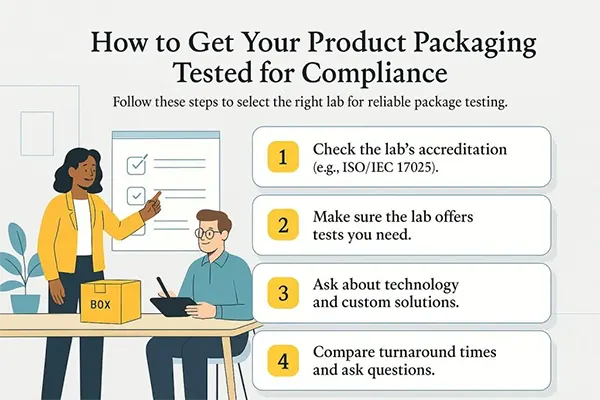
Testing product packaging for compliance involves:
This reduces the total number of revision cycles. Catching issues once, together, is faster than catching them separately across departments.
Packaging artwork goes through multiple evolutions before finalization, creating opportunities for approved content to be unintentionally replaced or altered.
Effective version control for packaging doesn’t require specialized software. The minimum standard:
At any point, someone should be able to pull up the approved file and compare it directly to what’s heading to the printer.
Digital approval does not guarantee flawless physical production. Fonts get substituted. Colors shift on certain substrates. Warning text becomes illegible at actual print size.
A structured pre-production verification checklist covers:
PRO TIP
Assign clear ownership over each checklist item before the pre-production review begins. “Someone checked it” is not the same as “a named person verified this specific element.”
Achieving compliance at launch is only the beginning:
According to a 2025 report from compliance company Traceone, the total number of food recalls issued by the FDA and USDA grew by 15% between 2020 and 2024 – a period that included multiple significant labeling regulation updates.
Post-launch monitoring doesn’t require a dedicated regulatory team. At a minimum, it means assigning someone to track regulatory updates in each active market and scheduling periodic packaging reviews as a routine part of the product lifecycle – not only when a problem surfaces.
No single practice here eliminates all risk. But together, they cover the full product release cycle – from initial brief to ongoing post-market review.
| Practice | Primary Risk Addressed |
| Pre-design compliance checkpoint | Late-stage redesigns and delays |
| Market-by-market regulation mapping | Market-specific non-compliance |
| Dedicated compliance sign-off step | Fragmented review, missed requirements |
| Packaging file version control | Unapproved files reaching production |
| Pre-production verification checklist | Print errors that invalidate compliant designs |
| Post-launch regulatory monitoring | Outdated packaging after regulation changes |
Effective packaging compliance is less about reacting to problems and more about preventing them. To reduce the likelihood of costly recalls and delays, just incorporate compliance checkpoints, market-specific regulatory mapping, structured reviews, version control, production verification, and post-launch monitoring.
While no process can eliminate risk, these six practices create a strong foundation for safer product releases, improved operational efficiency, and greater consumer trust.
It’s the process of ensuring that a product’s packaging meets all applicable regulatory, legal, and market-specific requirements – including labeling content, format, language, material safety, and required disclosures – before and after it reaches market.
According to FDA enforcement data, the most frequent causes are undeclared allergens, mislabeled ingredients, incorrect or missing mandatory disclosures, and use of incorrect packaging formats for the target market.
At a minimum, once per year per active market – or immediately when a relevant regulatory change is announced. Markets with active legislative activity (such as states implementing new Extended Producer Responsibility laws) may warrant more frequent monitoring.
A legal review focuses on risk, liability, and brand claims. A packaging compliance review focuses specifically on whether the packaging meets regulatory requirements in each target market. Both are necessary, but they address different questions and should not be treated as interchangeable.