As per a study, 97% consumers rely on reviews for purchase decisions. With such leverage, managing those reviews and your online reputation is now compulsory for businesses.
For agencies, franchises, and multi-location businesses, the challenge is even greater. Reviews arrive across multiple channels, response times vary, and valuable customer feedback often gets buried in disconnected systems. That’s where white-label review and reputation management platforms come in.
In addition to collecting reviews, the best solutions automate feedback requests, streamline response workflows, surface customer sentiment, and provide agencies with scalable revenue opportunities. After evaluating dozens of platforms based on features, market presence, scalability, and customer results, we’ve identified the five best white-label ORM platforms worth considering in 2026.
KEY TAKEAWAYS
- Online reviews have a direct impact on customer trust, purchasing decisions, and brand reputation.
- White-label reputation management platforms help agencies expand service offerings without building proprietary software.
- Reviewly.ai is particularly strong for multi-location businesses and agency partners seeking automated review generation.
- Enterprise organizations may benefit most from Reputation’s advanced analytics, customer experience tools, and proven scalability.
Online reputation directly impacts customer acquisition, retention, and brand trust. As businesses grow across locations and channels, managing reviews manually becomes increasingly difficult and inefficient.
A well-chosen platform cuts through that noise. It gives teams a single place to monitor sentiment, respond consistently, and act on feedback without a steep learning curve slowing down adoption.
The right option also directly affects measurable outcomes. Think daily active users staying engaged after initial setup, faster time-to-value for new clients, and a real reduction in manual tasks through workflow automation.
All data in this table is sourced from review platforms and the official websites of the listed companies.
| Company Name | Years Operating | Headquartered In |
| Reviewly.ai | Est. 2022 | Phoenix, Arizona |
| Reputation | Est. 2006 | San Ramon, California |
| Rayyan | Est. 2020 | Cambridge, MA |
| MagicReview | Est. 2020 | Not disclosed |
| Repmanager | Est. 2024 | Netherlands |
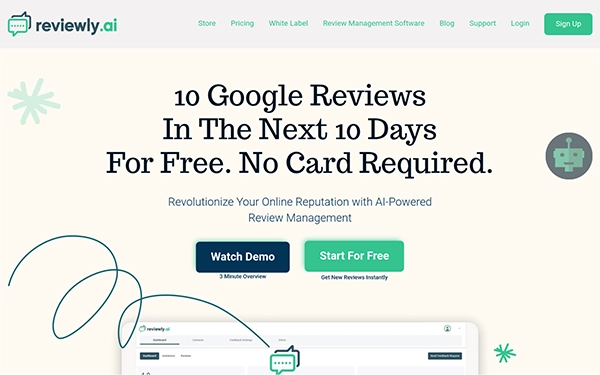
Reviewly.ai is a reputation management platform designed to help businesses generate, monitor, and respond to Google reviews at scale through automation and AI-powered workflows. Integrating QR codes, NFC tags, and Review Plates, their SMS review generation system covers 100+ countries. It captures feedback across all physical locations. Their AI detects customer sentiment and generates personalized response drafts, which makes the response workflow faster without sacrificing quality. Enterprise clients like Jersey Mike’s and JW Marriott use the platform, which signals proven performance at a multi-location scale.
Why Does Reviewly.ai Stand Out for Management Software Platforms?
Multi-location businesses often struggle with fragmented review management, and Reviewly.ai solves that by bringing SMS outreach, AI sentiment detection, and response automation into one connected platform. And honestly, the white-label setup combined with recurring revenue potential for agency partners makes this a stronger long-term fit than most single-feature tools in the space.
Summary of Real User Reviews:
Enterprise clients point to the platform’s multi-channel reach and automated response quality as standout strengths. The white-label setup gets consistent recognition from agency partners who want to expand their service stack without building new infrastructure. That kind of verified real-world adoption from recognizable brands is hard to match.
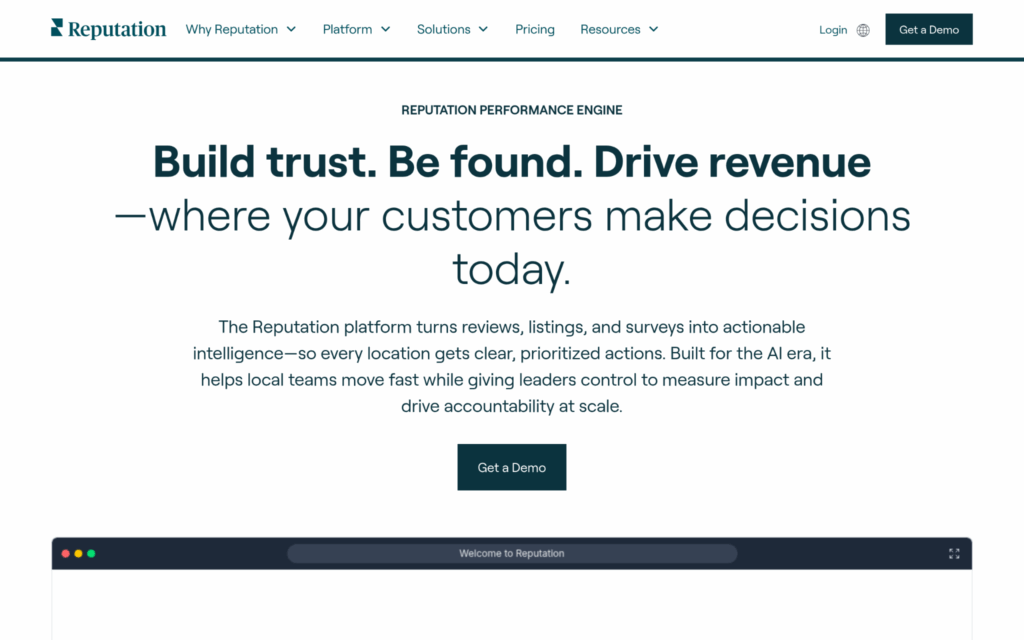
Reputation provides enterprise organizations with a centralized customer experience and reputation management platform that aggregates reviews, surveys, listings, and social media feedback into a single dashboard while surfacing sentiment analysis you can actually act on. They serve clients across 77 industries (think Banner Health, BMW, Ford Motor Company, and US Bank) and have over 750 enterprise customers on the platform. Their documented results include helping Caraday Healthcare grow review volume by 200% and improve their reputation score by 217 points. That’s the kind of measurable output that enterprise buyers need to justify the spend.
Why Does Reputation Stand Out for Management Software Platforms?
Enterprise teams managing customer feedback across distributed operations need a platform that’s been validated at that scale. Reputation’s placement in both the Forrester Wave and Gartner’s Magic Quadrant gives buyers that confidence. Based on the research, that placement usually means the platform has the depth and reliability that multi-location enterprise management actually demands.
Summary of Real User Reviews:
Reputation has collected 500+ Leader Badges since 2018 and ranked #1 in the 2026 G2 awards. This shows strong, consistent user satisfaction over time. Reviewers frequently point to the platform’s cross-channel monitoring and sentiment depth as important differentiators. Teams working across multiple locations find the collaborative tools particularly useful for consistent response quality.
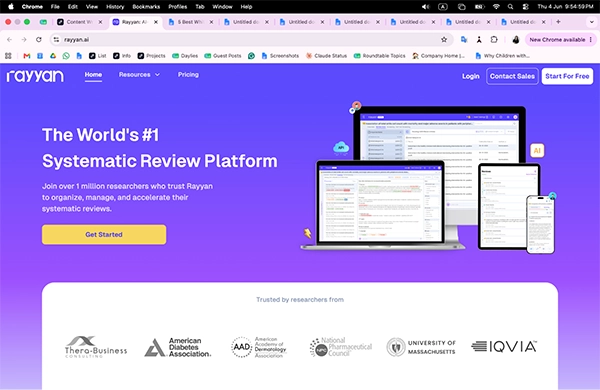
Rayyan is an AI-powered research collaboration platform built to streamline systematic literature reviews and evidence synthesis projects. Over 300,000 researchers across 180 countries have used it to screen more than 700 million research articles. The platform reduces screening time by up to 90% compared to traditional manual methods, a serious shift for research teams handling large article volumes. Features like PICO extraction and advanced deduplication make the platform practical even for researchers without a technical background (users report getting up to speed within minutes, without formal training).
Why Does Rayyan Stand Out for Management Software Platforms?
Research teams working remotely and across distributed locations need a platform that functions offline and scales without adding friction. Rayyan’s design addresses both of those needs directly. The freemium model and rapid setup mean the time-to-value after adoption is genuinely short, which is rare for platforms handling this level of research depth.
Summary of Real User Reviews:
Prestigious research organizations, including Cochrane Airways and Adelaide Health Technology Assessment, endorse Rayyan. Reviewers consistently mention how quickly the platform becomes usable without any training, which is a meaningful adoption signal. The combination of ease of use and serious research capability is what keeps researchers recommending it to colleagues.

MagicReview simplifies the customer feedback process, boosting the number of reviews. It also guides satisfied customers toward public review platforms. They use QR codes to trigger the review process and AI-generated suggestions to reduce the friction customers feel when writing a review. Negative feedback gets routed to a private form where the business owner can respond directly before anything goes public. The platform serves 30-plus businesses across multiple industries, making it a leaner option suited for businesses that want results without a complex setup.
Why Does MagicReview Stand Out for Management Software Platforms?
The challenge for most small and mid-sized businesses is that negative reviews go live before anyone has a chance to address the issue. MagicReview’s intelligent routing system directly solves that gap. The QR-based workflow removes friction from the customer side, increasing review volume.
Summary of Real User Reviews:
Public review data for MagicReview is still limited, given its size. But businesses using the platform point to the automated suggestion quality and the private feedback routing as important reasons they stick with it. The biggest win users report is seeing review volume go up without needing to chase customers manually. That kind of low-effort, high-output setup is what small business teams are genuinely looking for.
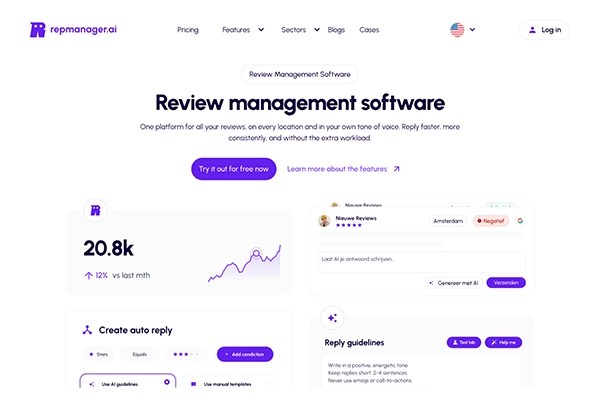
RepManager is a review management solution built specifically for businesses managing multiple locations and large volumes of customer feedback. Teams can monitor feedback, spot sentiment trends using AI-based analysis, and respond with the help of customizable AI response suggestions. The AI model gets trained as used, so response suggestions get better over time and stay on-brand. Pricing starts at $10 per month with a 7-day free trial and no long-term commitment required (not enterprise pricing, which makes it accessible for smaller teams trying to get organized).
Why Does Repmanager Stand Out for Management Software Platforms?
Managing multi-location review responses manually leads to inconsistent quality and slow turnaround. Repmanager addresses that directly by giving teams both AI drafts and full control before anything gets published. And the trainable AI model is a detail that separates it from competitors, where response suggestions start to feel generic over time.
Summary of Real User Reviews:
Beta users gave Repmanager a 4.8/5, a strong rating for a platform that just launched in 2024. Clients, including Van de Hare Barbers and Stam, have documented real results across different business types and use cases. Users value the control they keep over responses, even while benefiting from AI drafting, which is the balance most teams actually want.
A credible ranking requires a structured process. The research covered dozens of platforms before the final five were selected.
The longlist was built by pulling data from multiple sources across the SaaS software ecosystem. Product directories, industry-specific review platforms, company case study archives, and official product pages were all used to identify platforms with genuine market presence.
This broad initial search ensured that both established industry leaders and emerging innovators received equal consideration during evaluation.
From the initial longlist, platforms without verifiable evidence from customers or documented client results were removed. Review pattern analysis played an important role here, with attention paid to consistency across review sources, recency of feedback, and whether positive signals came from a range of user types or appeared artificially concentrated. Options with thin or unverifiable review histories were cut regardless of how polished their marketing looked.
Every claim made on a platform’s official site was cross-checked against external sources wherever possible. Performance statistics, client names, and documented outcomes were each tested against user reviews, press coverage, and case study specifics. When claims couldn’t be backed up by at least one independent source, they were discounted during evaluation. Real-world results, not marketing copy, drove the scoring at this stage.
Platforms with third-party recognition received additional weight in the evaluation. This included formal analyst placements (Gartner, Forrester), awards, and citations in industry publications. Platforms that have contributed original research or been referenced in credible external content were treated as stronger signals than those relying solely on self-reported metrics. That kind of third-party validation is harder to fake and more reliable as a quality signal.
The final layer of evaluation focused on evidence that each platform actually delivers in the reputation and review management context. Dedicated service pages, reviews from users in multi-location and enterprise settings, and case studies with quantifiable outcomes were all reviewed. Platforms received stronger consideration that showed up repeatedly in searches related to:
This step filtered out platforms that were broadly capable but lacked a clear, documented fit for this specific use case.
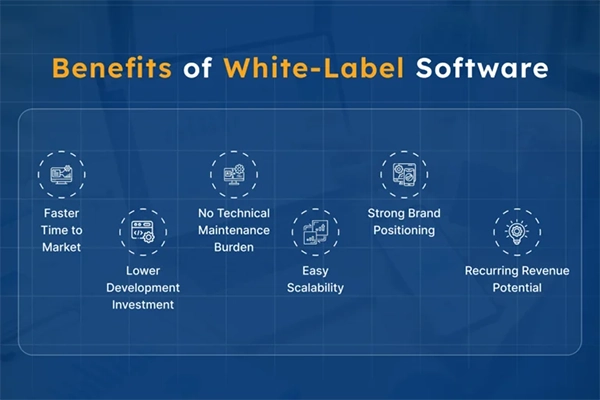
We’ve talked a lot about why review and ORM, but why white-label? Here’s why:
Selecting a reputation management platform should start with a clear understanding of your business size, operational complexity, and long-term growth objectives. Not every platform in this space fits every business, so it’s worth being deliberate about what you actually need before committing to anything.
Online reputation management has evolved from a reactive business function into a strategic growth driver. The right ORM platform depends entirely on your scale, workflow, and growth goals. Enterprise teams with multi-industry needs require the depth that Reputation brings. Multi-location businesses running lean require the automation and reach that Reviewly.ai delivers. Newer entrants like Repmanager show the space is still moving fast. As AI review management becomes standard practice, the platforms that combine smart automation with genuine user control will define what good looks like in the years ahead.
White-label reputation management software allows agencies and service providers to rebrand a platform as their own while offering review management, feedback collection, and reputation monitoring services to clients.
Reviewly.ai and Repmanager are particularly well-suited for multi-location businesses because they centralize reviews from multiple locations and provide AI-assisted response managemen
A strong online reputation improves customer trust, increases conversion rates, and helps businesses identify customer experience issues before they impact revenue.
AI-powered platforms automate tasks such as review requests, sentiment analysis, response drafting, and feedback categorization. It helps businesses manage large review volumes more efficiently while maintaining response quality.