“The internet is not a luxury, it is a necessity.” – Barack Obama (44th President of the United States)
In a world where even your refrigerator needs a Wi-Fi signal to tell you that the milk is sour and your career depends on a seamless Zoom connection, choosing an ISP is not just a utility choice; it is a lifestyle foundation.
Key Takeaways
- Properly analyze your peak household usage before selecting a speed tier.
- Give priority to symmetrical upload/download speeds for modern remote work.
- Look for pricing transparency and avoid any hidden equipment fees.
You are not just buying data; you are purchasing the ability that allows you to connect with your loved ones, compete in global markets, and escape into digital worlds without the dreaded ‘buffering’ wheel of doom. A poor choice can lead to more than just slow downloads; it leads to genuine frustration and lost productivity.
Audit your digital habits before making a commitment. Whether you are a solo worker or a high-traffic household with 4K streamers and gamers, you need to assess peak usage to prevent overpaying for NASA-grade speeds.
Conversely, you need to ensure that you won’t suffer through frustration bottlenecks when everyone is online simultaneously. Therefore, you need to choose a plan that actually fits your reality.
Quality is not just about a flashy number on a marketing flyer; it is a delicate balance of three critical pillars.
Did You Know?
By 2026, it is estimated that the average household will have over 30 connected devices making router quality as essential as the cable coming into the house.
Speed is the horsepower of your connection. In 2026, symmetrical speeds, which means equal upload and download, are the gold standard for creators.
Speed becomes irrelevant if the connection drops twice a day. You should look for providers that boast 99.9% uptime.
If the physical infrastructure is outdated in your specific neighbourhood, even the best tech fails.
We all have been there, we have been lured in by a teaser rate only to see our bill double in month thirteen. When looking for a Fairfield Harbour internet provider, you must look beyond the bolded price tag and investigate the fine print related to equipment rentals and installation fees.
Understanding the financial fine print will help you avoid ‘bill shock’ later in the year.
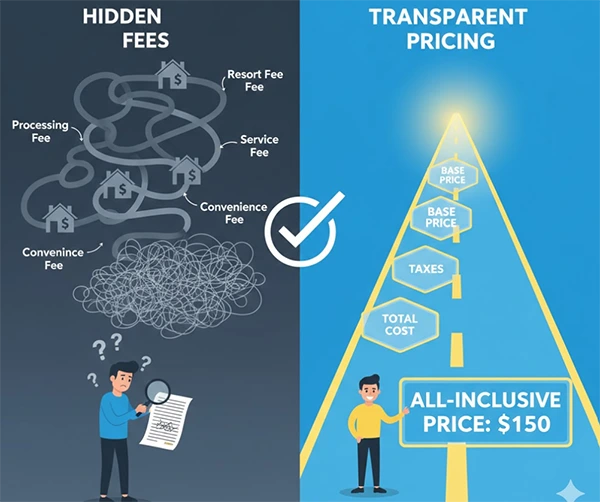
A reliable provider will not hide infrastructure recovery fees or regulatory recovery surcharges deep in the footer of their website. You should ask for a flat-rate quote that includes the modem and any necessary mesh nodes.
The days of being ‘locked-in’ are now fading. Look for providers that offer month-to-month service or those that prove their value through performance instead of legal handcuffs, allowing you to pivot if your needs change.
“Your connection is only as strong as its weakest link, which is usually the customer service department.”
When your connection goes dark at 9 PM on a Sunday, you don’t want to talk to a chatbot. You need a human being who could understand the local grip.
Superior ISPs prioritize proactive communication that alerts you about maintenance before it happens and offer real-time status maps as well. Responsiveness is the ultimate ‘insurance policy’ for your digital life.
Geography is the destiny when it comes to fiber-optics versus cable. Different regions have different backbones. Speed is not the only thing you need; you also need a secure Internet connection that uses modern encryption and hardware to protect your smart home devices from any external threats.
Fun Fact: The first ‘webcam’ was created at the University of Cambridge just to monitor a coffee pot so that the researchers didn’t have to make the trip for an empty carafe.
alt- Images from the first webcam

You should always check if the provider has invested in the local infrastructure recently, as older copper lines simply cannot keep up with the demands of modern web-based applications.
Selecting an ISP in 2026 is about finding a partner that keeps your world moving. By focusing on transparency, security, and local reliability, you ensure that your home remains a high-speed sanctuary.
Yes, you can! While ISP routers are convenient, getting your own often provides you with better security features.
It means that your upload speed is the same as your download speed, which is essential for uploading large files and attending video calls.
For most individuals, Fiber is still the kind of low latency and stability. 5G is also a great, flexible alternative in areas where cables can’t reach.