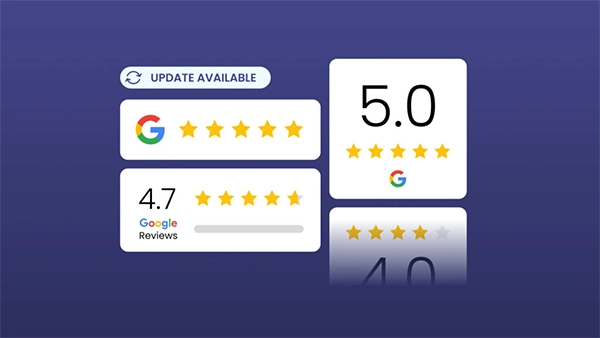
A five-star review not only makes a business look good but also actively shapes whether someone chooses your services or scrolls past to the other options. The businesses that consistently rank well in local search and convert searches into customers usually have positive reviews on their profiles.
Getting more five-star reviews is not about asking each and everyone to consider commenting. It’s actually about understanding what motivates a satisfied user to leave a review, and creating a system that makes it happen regularly.
This article lets you in on some ways in which you can do just that and attain perfect reviews while doing so.
Key Takeaways
- Review collection systems amplify what is already true about a business. They cannot create satisfaction that was not there
- The single highest-leverage change most businesses can make is asking for a review at the moment a customer’s satisfaction is at its peak, and doing it every time rather than occasionally
- When you respond to reviews, especially recent ones, it signals to both Google and future customers that your business is active and engaged
- Each new five-star review adds to a profile that becomes persuasive to the next potential customer, driving more visits and generating more opportunities for additional reviews
This may sound obvious, but it’s still worth stating, as no review collection strategy can manufacture satisfaction that wasn’t actually delivered in the first place.
Asking for a review after a bad experience either gets ignored or, worse, prompts the customer to write about the mediocre experience.
The foundation of a strong review profile is routinely delivering experiences that actually make a case for the business to deserve five stars. This means that the food is good, service is attentive, the appointment ran on time, and the product worked as intended.
Review collection systems amplify what is already true about a business. They cannot create satisfaction that was not there.
What review collection does is close the gap between the number of customers who had a great experience and the number who tell Google about it. For most businesses, that gap is enormous. The vast majority of satisfied customers never leave a review unless something makes it easy and timely.
The single highest-leverage change most businesses can make is asking for a review at the moment a customer’s satisfaction is at its peak, and doing it every time rather than occasionally.
That moment is different depending on the business. For a restaurant, it is right after the meal, ideally as the bill is being settled. For a salon or spa, it is at checkout immediately following the service. For a retail store, it is at the point of purchase if the customer has expressed satisfaction, or shortly after, if the product needs to be used first. For a service business like a plumber or contractor, it is immediately after the job is completed and the customer has expressed satisfaction with the work.
The keyword is every. A business that asks inconsistently, depending on which staff member is working or how busy the shift is, will get inconsistent results. A business that builds the ask into the standard closing routine for every customer interaction, regardless of who is working, will see a steady and predictable increase in review volume.

Once you have identified the right moment to ask, the next priority is making sure that the path from “yes, I would leave a review” to an actual published review is as short as possibl
Telling a customer to search for your business on Google and find the review section asks them to do real work. Many intend to do it and then get distracted before they finish. A direct link, sent via text or accessed through a QR code, that takes the customer straight to your Google review form removes the search step entirely.
Asking a customer to leave a review from scratch asks them to put in creative effort that they may not feel equipped for. Many genuinely want to express that they had a great experience, but don’t really know how to put it into words that feel adequate. This is precisely where AI-assisted review writing makes a huge difference.
Platforms like reviewcook are built around exactly this principle. A customer scans a QR code at the table, counter, or checkout, taps their star rating, and immediately receives a complete, well-written review draft generated by AI based on their rating and the type of business. They can edit it, regenerate it for a different version, or submit it as written. The entire process, from scan to published review, takes around twelve seconds.
The conversion difference this makes is substantial. ReviewCook reports conversion rates between 15 and 22 percent for this kind of guided flow, compared to under 1.5 percent for traditional approaches like a printed card asking customers to find the business on Google. For a business serving a few hundred customers a month, that difference is the gap between a handful of new reviews and dozens.
A five-star review strategy needs to account for the reality that not every customer interaction goes perfectly. The goal is not to prevent unhappy customers from expressing themselves, but to make sure that when they do, it happens in a way that gives the business a chance to respond before it becomes a public one-star review.
This is where sentiment-based routing becomes valuable. When a customer indicates a low rating during the review flow, instead of directing them to post publicly on Google, the system can route them to a private feedback form that goes directly to the business owner. The customer still gets to express their concerns, and the business gets a chance to understand and address the issue, often turning a frustrated customer into a loyal one through a direct response.
ReviewCook’s Smart Sentiment Intercept works exactly this way. Low ratings are automatically routed to private feedback rather than public posting, while high ratings flow through the AI-assisted drafting and posting process. The result is that the public Google profile accumulates reviews predominantly from customers who had genuinely positive experiences, while the business retains full visibility into the feedback that needs attention.
This is not about hiding problems. It is about giving every customer the appropriate channel for their feedback, public celebration for great experiences, and private resolution for problems.
Did You Know?
Telling customers what to write is against Google’s policies. Doing this or using fake reviews can lead to penalties or review removal.
A five-star rating with no text helps a little. A five-star rating with two or three sentences of specific, descriptive text helps significantly more, both for your search ranking and for convincing the next potential customer reading it.
Generic reviews like “great place, would recommend” do not give Google much to work with in terms of understanding what your business does well, and they do not give potential customers a reason to choose you over a similar business with similar generic reviews.
Reviews that mention specific details about the experience are far more valuable. They read as authentic because they are specific, and help with local search relevance as they naturally include related keywords, painting a picture for future reads that generic praise does not.
This is another area where AI-assisted review drafting genuinely helps. The drafts generated by tools like ReviewCook tend to be specific and descriptive by default, giving customers a starting point that is already more useful than what most people would write unprompted. Customers can then personalize the draft with their own specific details, producing reviews that are both authentic and substantive.
When you respond to reviews, especially recent ones, it signals to both Google and future customers that your business is active and engaged. It also subtly encourages future reviewers, because people are more likely to take the time to write something if they believe it will actually be read and acknowledged.
Responses to five-star reviews should be genuine and specific, referencing something from the review itself rather than using a generic template for every response. A thoughtful response that acknowledges what the customer specifically mentioned shows that someone actually read it, which matters to the person who wrote it and to anyone reading the exchange later.

Most platforms that handle review collection provide some level of analytics on how the process is performing. Scan rates, conversion rates, and rating distributions tell you whether your collection points are effective and whether your overall customer satisfaction is trending in a healthy direction.
If a placement of your review QR code is converting well, consider whether similar placements could replicate that success. If conversion rates are lower than expected, consider whether the element itself requires adjustment, if staff needs a reminder about consistency, or whether the physical placement of the code needs to be a bit more visible.
Treating review collection as a process you can measure and improve, rather than a one-time setup, is what separates businesses that maintain a strong review profile over time from those that see an initial bump and then plateau.
The business with the strongest Google review profiles did not just get there through a single campaign. It got there through consistency, low-friction daily, weekly, and monthly collection.
Each new five-star review adds to a profile that becomes persuasive to the next potential customer, driving more visits and generating more opportunities for additional reviews.
That compounding effect is why getting the system right matters more than any single tactic. A business that asks consistently, removes friction effectively, routes negative feedback appropriately, and encourages specific, detailed reviews will see its review count and average rating climb steadily, building a competitive advantage in local search that becomes increasingly difficult for less attentive competitors to match.
Manage your Google Business Profile and review responses from anywhere with the latest smartphone. Find the best models and prices at Priceka.
Responses to five-star reviews should be genuine and specific, referencing something from the review itself rather than using a generic template for every response.
Scan rates, conversion rates, and rating distributions tell you whether your collection points are effective and whether your overall customer satisfaction is trending in a healthy direction.
They are more valuable as they are specific, and help with local search relevance as they naturally include related keywords, painting a picture for future reads that generic praise does not.
Low ratings are automatically routed to private feedback rather than public posting, while high ratings flow through the AI-assisted drafting and posting process.