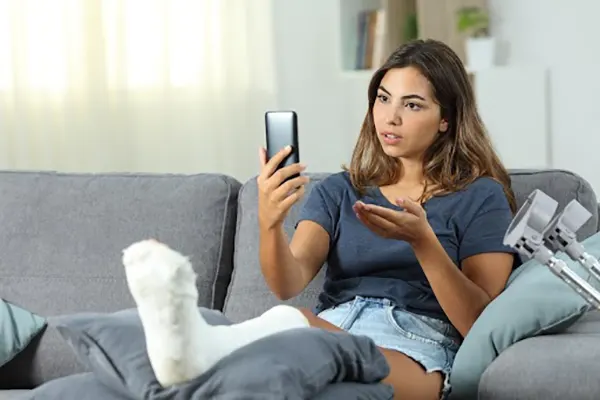
After an accident of a major nature, you may understandably wish to communicate through social media about your condition or what happened. However, if you’re not mindful of how social media can impact your potential injury claim following an accident, then you will be making a huge mistake.
Do not post any pictures, videos, check-ins, etc., that depict how you’re feeling or what you’re doing. An opposing party will usually use this type of post as evidence against your case to try to prove you are not entitled to the amount of compensation you believe you are.
In this blog, you’ll find real-life examples of mistakes to avoid and how even a short or “disappearing” post can apply as evidence. After an auto accident in Austin, you should consult a Texas injury law firm before making an accident insurance claim.
KEY TAKEAWAYS
- If social media evidence helps prove you are 51% or more at fault, you are legally barred from recovering any compensation.
- Digital forensics can often recover deleted content, and doing so can lead to legal sanctions for spoliation of evidence.
- Posts as simple as I’m okay or a photo at a family BBQ can be used to argue that your pain and suffering are exaggerated.
- Texas courts have consistently ruled that privacy settings do not protect relevant social media content from being subpoenaed in personal injury cases.
Honestly speaking, staying off social media is probably your best strategy in the short term to keep your reputation intact. Claims representatives will scour social media for anything remotely related to the claim that could be used to deny or reduce your claim amount.
Even a quick “my bad” or “should’ve seen them” can come back to haunt you in Texas. It sounds simple, but those words end up in adjuster reports and jury exhibits, and suddenly you’re sharing blame under Texas’s modified comparative-fault rule.
So don’t post anything, including apologies, confessions, or “what ifs,” publicly about the accident. If someone is asking for details, you should respond privately to your attorney or via email (not via a public post) and only use secure methods, such as encrypted email, to send documents to your insurance company.
Updating everyone about your pain, recovery, or what you can do physically? That’s risky. If you say “feeling fine” a week after the hospital, it’s tough to claim ongoing pain or lost wages later.
Try not to post anything online that describes how you felt, were treated, or the limitations/errors caused by your injury. For example, even a video of yourself at a cookout can contradict your doctor’s notes. If you need to share information with family members, use private messages or email them.
Photos and videos don’t just capture what you want—they show how you’re moving, where you are, and a bunch of little clues you might not even notice. A 10-second clip of you walking can totally contradict a doctor’s note about mobility issues.
Never upload photos of the accident scene, injury selfies, or “check in” at events. Turn off auto-geotagging features on your phone. And don’t post any “throwback” photos that are close together in time to your accident date and event.
Random friend requests? Be careful. Sometimes, investigators or third parties make fake profiles just to get access to your private stuff—photos, comments, group posts, all of it.
Facebook or Instagram, decline it if you don’t know them. Set tight privacy settings. Be sure to tell friends and family not to tag you or post anything about you on social media; tell them to only send updates using private email.
If your account needs to be accessed for legal reasons, let your lawyer handle it—don’t just hand over passwords or access on your own.
Insurance companies and defense lawyers often love to search through these platforms. They will use pictures and videos, location tags, messages, and timestamps to build their case against you. Even things that seem to have nothing to do with your case, like a location tag on your Facebook page, can influence how a court rules.
Photos or videos of you standing, driving, dancing, or just being out and about can become hard evidence for the other side. Even a single tagged photo at a party or a Story of you out for a walk can get screenshotted and dropped into discovery—context or not.
What your friends or family post also matters. In case a family member tags you at a restaurant or if they upload a group video from an outing, it can negatively impact your physical limitation claims. Also, if one of your friends tags you, that tag may show up on multiple platforms because many social media sites share login information with each other.
Here’s what you can actually do:
An insurer or attorney has already seen something you have posted; deleting it after they have seen it is worse than leaving it up. A court may consider this as hiding evidence, which means the court would impose sanctions against you, give the jury bad instructions on your credibility, and impact your overall credibility in a trial.
Even if you delete something, metadata and cached copies stick around. People take screenshots, platforms back things up, and third-party archives can grab stuff before you even realize it. Editing captions or images just draws more attention—digital forensics can track every change.
Some practical tips:
Setting your accounts to private can cut down on random snooping, but honestly, it’s not a foolproof shield. Legal requests or even just a friend taking a screenshot—those things still slip right through. Sure, toggling privacy on Instagram, Snapchat, TikTok, and the rest keeps strangers out, but if you tag someone, they can reshare your post, and if a court wants in, well, they’ll probably get in.
Shared logins, like logging into apps through Facebook, can add a layer of risk where the two accounts can communicate with each other and share information about activities you have done. Additionally, the linked accounts can log the times you logged into each account.
Using a group account or allowing someone else to login with your credentials increases the exposure that occurs as a result of those accounts being used. This is not a good plan.
Recommendations:
Insurance does not care about the truth; they only want an excuse to give you less money. The best way to prevent social media from being the ‘star witness’ against you is to be offline, not admit any culpability, and work with an Austin or Texas personal injury lawyer at some point in time.
Yes, if any content is deemed relevant to your injuries, a judge could grant the defense access to your private account and any associated messages.
The adjusters will use it to deny your claim for injuries that are not immediately present. You should consult with an attorney to help explain the context of how your first statements were made.
No, Snapchat saves the logs and metadata, and apps can capture the actual content before the content disappears.
Deactivating social media accounts is typically safer than deleting accounts, however, you should consult with your attorney first to ensure that you do not violate any spoliation of evidence issues.