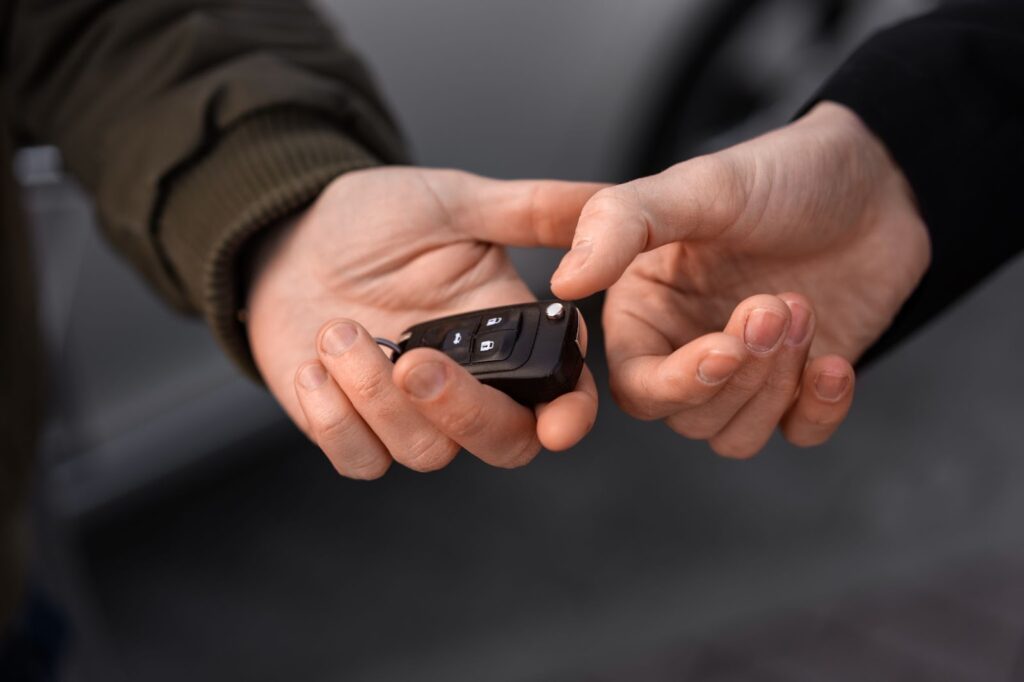
Imagine you get out of a bar at night and push the car key button, but nothing happens. A chill goes down your spine. You press again; again, nothing. Is it time to call a car locksmith in NYC.?
This might sound like a scene straight out of a horror story, but it’s a pretty common thing that happens with car owners.
Smart car keys are a sophisticated piece of technology; hence, their scope of getting dysfunctional is high, and the repairability is inversely low.
But there are many benefits to these keys as well. People are not stupid that they are choosing them instead of the old insertion-based keys. The popularity of smart keys and fobs has peaked so much that 70% of new cars come integrated with the technology (Source).
In this article, I’ll explain to you the ins and outs of your car access tool and what to do when it goes bad.
BIG TAKEAWAYS
- Smart keys have greatly eased the car driving experience by a mile.
- But they can also stop working and are difficult to repair, requiring professional smart key locksmiths.
- Different types of car keys serve different purposes and leverage different technologies.
- Dead battery, interference, physical damage, and faulty receivers or transponders are the common causes of a smart module failure.
You’ll have a hard time differentiating between a transponder and a regular car key. On the surface, they look exactly the same, but the plastic head of the transponder (transmitter + responder) contains a tiny electronic chip.
When you insert the key and turn the ignition, the car’s antenna ring sends out a low-frequency radio signal. The chip inside receives that signal, activates, and transmits back a unique code.
If the code matches what’s stored in the car’s Engine Control Unit (ECU), the immobilizer disengages and the engine starts. If there’s no chip, or the code doesn’t match, the car won’t start — even if the metal blade is a perfect cut.
Transponder keys were first introduced in the mid-1990s as an anti-theft measure, and today virtually every new car comes with some form of electronic key security.
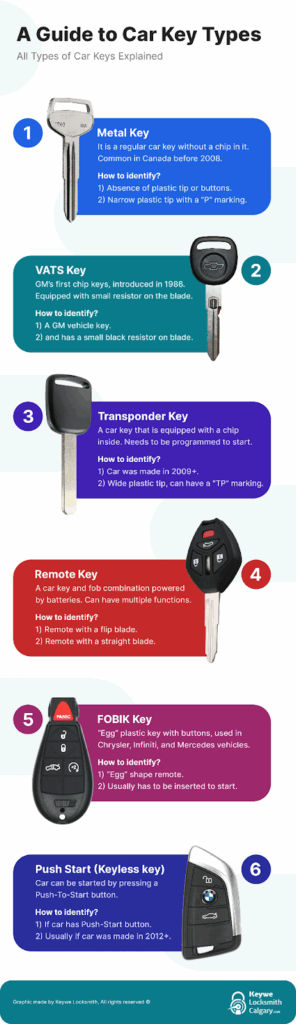
In 2026, you might encounter a plethora of car access tools around you:
The most common ones in the 90s, all through the 2010s. This was a physical instrument with a chip embedded in the head. Must be cut to match the lock and programmed to match the ECU. No remote functionality.
A transponder with integrated lock/unlock buttons. The key and the remote are one unit. Mid-range vehicles from the 2000s and 2010s commonly had them.
A standalone remote control that works alongside a traditional key. Used for locking/unlocking, and even remote ignition. Operates on radio frequency — typically 315 MHz or 433 MHz depending on the region and manufacturer.
A folding key where the metal blade flips out from the fob casing. Combines the transponder, remote, and key blade in a compact design. Common on European vehicles and some Hondas and Toyotas.
No insertion or button press required. The car unlocks, detecting the module’s presence within a short range (usually 1–3 meters) via low-frequency radio signals. You can start the car by pressing a button on the dashboard. Also known as Passive Entry Passive Start (PEPS). Standard on most new vehicles from 2015 onward.
A limited-function access tool that opens doors and starts the engine but doesn’t open the trunk or glove compartment. Designed to give parking attendants minimal access to your vehicle.
The following infographic depicts what these various types of car keys look like:
A fob is a small radio transmitter that sends a signal to the receiver in your car as you press a button. Modern fobs use rolling code technology (also called hopping code), which means the code changes with every single use — making it nearly impossible to intercept and clone.
Here’s the basic communication flow:
Proximity keys are always in a passive bond with the car. The vehicle continuously broadcasts a low-power LF (low-frequency) signal. When the fob enters range, it responds with a UHF signal confirming its identity. This is why proximity keys drain their batteries faster than traditional fobs.
There are only a few causes for fobs to malfunction:
The most common cause and the easiest to fix. Most fobs use a CR2032 coin battery.
Signs: the range decreases before the fob stops working entirely.
Fix: Replace the battery.
Cost: under $5.
How to check: Most cars start by holding the fob directly against the start button, even if the battery is dead. This does the trick; then the culprit is none other than your battery.
Fob signals are generally blocked by large metal objects, certain buildings, and even some electronics. If your fob suddenly stops working in a specific location but works elsewhere, interference is likely.
Fobs lose their pairing with the vehicle after the battery dies, a botched-up replacement, or an ECU reset. The fob and car need to be re-synced.
How to check: If the key blade still starts the car but the buttons don’t work, the issue is the remote pairing, not the transponder chip.
Fobs are not waterproof. Dropping one in water or sitting on it can damage internal components. Look for corrosion on the circuit board — sometimes cleaning with isopropyl alcohol and a cotton swab can recover a water-damaged fob.
If a new battery and reprogramming don’t fix the issue, the problem may be in the car’s receiver module — not the fob itself. This requires professional diagnosis.
Car keys like to be dropped, and in years of use, they drop hundreds of times. The chip inside a transponder can degrade or crack due to this. The car will crank but not start — or won’t recognize the key at all.
In some cars, not all. For some older vehicles, self-programming is possible using a specific sequence of steps (insert key, turn ignition on/off multiple times within a set window, etc.). These procedures vary by make and model and can usually be found in your owner’s manual or a quick search for your specific vehicle.
However, self-programming has significant limitations:
If you’re not sure whether your vehicle supports self-programming, the safest approach is to check the owner’s manual first, then consult a professional if the process seems complex.
The situations sometimes go bad to an extent that only an expert can handle them. In the case of fobs, those people are professional auto locksmiths. You need them in situations like:
For drivers in New York City, a licensed mobile auto locksmith is often the fastest and most practical solution — particularly in situations like being locked out in an unfamiliar neighborhood or late at night. Services like those offered by Lock and Tech USA provide 24/7 mobile car locksmith coverage across NYC, handling everything from key fob programming and transponder replacement to full lockout service for all makes and models.
There are many unlicensed car locksmiths in New York City. You can avoid them by:
The following table summarizes what you should do in case of various problem cases:
| Problem | Most Likely Cause | DIY Fix? |
| Fob buttons not responding | Dead battery | Yes — replace CR2032 |
| Reduced range on fob | Weak battery or interference | Yes — replace battery first |
| Key starts car, fob doesn’t lock/unlock | Lost pairing | Sometimes — check owner’s manual |
| Car won’t start, access tool recognized | Transponder chip issue | No — needs professional |
| All keys lost | — | No — needs professional |
| Smart key not detected | Dead battery, antenna, or ECU | Battery: yes. Rest: no |
| Module stuck in ignition | Worn cylinder or steering lock | No — risk of damage |
Technology is making things smaller and more sophisticated at the same time. The same is true for car keys.
Understanding the difference between a transponder chip, a rolling-code fob, and a proximity key helps you diagnose problems faster — and know when a battery replacement will solve everything versus when you need professional help.
When DIY isn’t an option, choosing a licensed, reputable auto locksmith matters. Whether it’s a programming issue, a lockout, or a broken module extraction, the right technician will resolve it quickly, safely, and at a fair price.
It’s a handheld, battery-powered device that enables drivers to lock/unlock and start their cars.
Bad batteries, physical damage, or programming desync.
If the battery is dead, replace battery. Else call a car key professional.