“It takes 20 years to build a reputation and five minutes to ruin it.”
— Warren Buffett (Investor & Philanthropist)
In business, reputation is all you have. If you say something, you fulfill it. If you don’t, customers aren’t going to stop at saying “some” things. A lot of them will say a lot of things, until it becomes a scream.
Modern consumers are really picky about what they buy and from whom. 95% of consumers check reviews before buying, and 87% don’t even consider businesses below 3 stars.
So, to run a business successfully, managing your online reputation becomes paramount. But how do you control it when thousands of people are commenting on your services in the corners of the internet? You can’t.
Thankfully, there are automated reputation management tools to make that job easier.
In this guide, I’ll help you understand what exactly that is. The following sections discuss how these systems work, their significance, what they track, the top ones right now, common threats to your reputation, and some best practices to manage them.
| KEY TAKEAWAYS One PR mistake or one vengeful competitor, and your online reputation can go down the drain.Earlier, trust management was seen as a reactive chore, but now brands continuously monitor their online perception.Automated brand management solutions are adept at this job.They track brand mentions across the internet 24/7 and respond accordingly to build trust and a positive image. |
Online Reputation Management (ORM) involves monitoring, shaping, and controlling how your brand, business, or personal name is perceived on the internet by both individuals and businesses.
ORM encompasses a broad range of digital touchpoints. Depending upon the industry and customer base, these can include:
To build trust and credibility with your audience practically, you have to track these digital mentions, address negative feedback, and promote positive content.
The automated system tracks mentions and measures sentiment around your brand. When a crisis is imminent, it gives you an opportunity to prevent the crisis before it actualizes.
A reputation monitoring system mainly tracks where, when, and how people are mentioning your business. Every single mention adds to your digital footprint, be it in a Google review, a YouTube comment, or a tag in a local Instagram post.
The system gathers all mentions in one place and automatically conducts sentiment analysis on them: categorizing them as positive, negative, and neutral. It also tries to gauge the reason behind those sentiments, like “friendly staff”, “quick turnaround,” or “long wait times,” “poor communication”, etc.
The top ORM tools right now have some things in common: AI-driven sentiment analysis and tracking local reviews and social media in real-time. These tools include Mention, Brand24, and Birdeye.
One of the most powerful tools for brand management, Mention serves across multiple markets. It’s designed for both established enterprises and scaling startups.
One of the most recognizable solutions for online mention monitoring, Brand24 is perfect if you want to know how your app is performing among the users. It smartly tracks the entire internet 24/7 across news, blogs, social media, forums, reviews, etc.
Birdeye manages reputation across social and review platforms. The entire workflow, from data aggregation and response, is automated and primed for building trust and visibility. You can also collect data through surveys, SMS, email, etc.
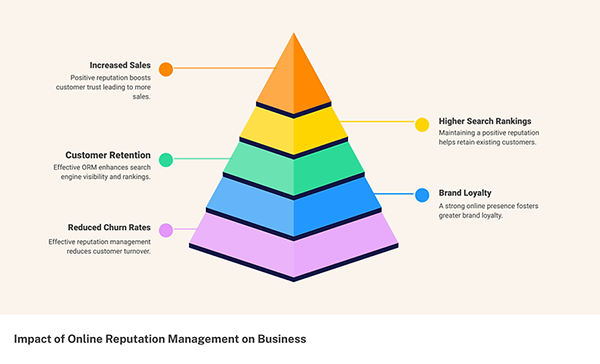
Reputation management monitoring is immensely important as it directly dictates how customers perceive your brand, how much trust they put in you, and your visibility in local searches. As you gain competitive advantage and new customers, your bottom-line revenue automatically rises.
Earlier, businesses used to treat it like a reactive chore. But in this modern market, they’ve moved to strategic continuous monitoring, as this helps them in many ways:
Businesses face many reputational threats online that can literally drive away new and casual consumers, break trust of even the loyal ones, and eventually dent their bottom-line revenue. It’s critical to protect your digital presence from the following risks:
INTERESTING STATOne negative search result on the first page of Google can cause a company to lose 22% of potential customers.
To maintain the best possible online image of your brand, a reputation management system is a necessity in modern times. It must come with real-time monitoring and a rapid response strategy. Just throw in some SEO best practices along, and you’re good to go.
Whenever a customer searches for your business, he/she must find accurate, helpful, and positive content every single time.
Besides trust management, you can also consider digital advertising and local partnerships for business growth.
Even the best of brands get some bad reviews once in a while due to unintentional subpar services. But most of the time, a business reputation gets damaged due to a PR mistake or some competitor proactively prowling the internet against you.
Whatever it is, trust management tools are your best bet against these digital reputational threats. They track the conversation around your brand 24/7 and respond accordingly.
May your digital footprint shine, your consumers grow, and your business thrive!
It’s the practice of monitoring, influencing, and improving the perception of a brand or business online.
It’s obviously important considering it decides how consumers see you, whether they buy from you, your local search visibility, and your resulting revenue.
It involves active social listening, proactive content creation, and reactive crisis management.