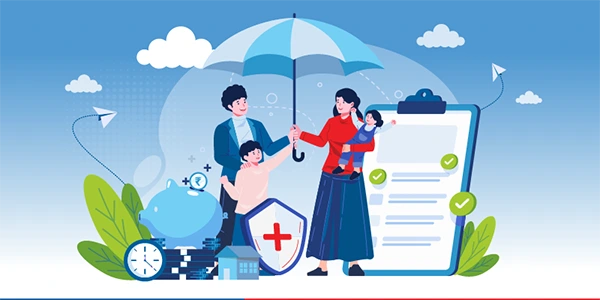
Most people already know that they need a life insurance policy, but very few get around to buying it at the correct time.
Although there isn’t a single age that works for everybody, there sure is a clear pattern: the longer you wait, the more you end up paying, while also having fewer options.
This guide explains when it actually makes sense to act, why getting the timing right matters more than most people realise, and whether you should go for term or permanent life insurance.
Key Takeaways
- No matter your current age, your monthly premium will likely never be lower than it is today
- Locking in a personal policy early gets you the lowest rate you will ever qualify for
- Permanent life insurance, as the name suggests, lasts your entire lifetime and builds cash value over time
- Every health change along the way can push premiums higher or close the door on certain policies entirely
Think of life insurance premiums the way you think about confirming a mortgage rate. Insurers set a premium based on your age and health at the time of applying, and once that is locked in, it remains fixed till the end of your policy.
On average, premiums rise roughly 8 to 12% for every year you wait. A 25-year-old and a 40-year-old buying the same policy are in completely different conversations on cost. The older buyer could easily be paying two to three times as much.
The bigger risk is the health trap. A diabetes diagnosis, a blood pressure issue, or a cardiac flag on a routine exam can dramatically raise your premium or make you uninsurable entirely. No matter your current age, your monthly premium will likely never be lower than it is today.
The clearest sign you need a life insurance policy is when someone else starts depending on your income. Once that shift happens, the stakes change completely.
Getting married is usually the first trigger. You begin sharing expenses, debts, and plans. If one income disappears, the other person carries it all alone.
Having children raises the stakes further. Whether you are the breadwinner or the stay-at-home parent, your absence creates both an income gap and a services gap. Childcare, school fees, and daily costs do not pause because a parent is gone.
Buying a home adds another layer. A mortgage does not disappear if you do. A policy helps a surviving spouse keep the home without being forced into a financial crisis.
The exact logic is applied to cosigned loans and business partnerships. A simple check: if you were gone tomorrow, would someone close to you struggle financially? If yes, a policy is not optional anymore.

Your 20s are the cheapest time to buy. No dependents yet? Your employer’s basic coverage may hold for now. But if marriage or a home is on the horizon, locking in a personal policy early gets you the lowest rate you will ever qualify for.
Your 30s are when coverage stops being optional. Mortgages, young children, and rising debt tend to arrive together. You still qualify for competitive premiums and have enough time to choose a 20 or 30-year term that covers your family through its most financially vulnerable years.
In your 40s, premiums are rising, and the window for long term life coverage is closing. If you have not bought yet, this is your last real opportunity to lock in reasonable rates.
By your 50s, priorities shift toward covering remaining obligations or final expenses. Smaller permanent policies tend to make the most sense at this stage.
Most people know premiums rise with age. Fewer consider the bigger risk: waiting too long could make you uninsurable altogether.
A diabetes diagnosis or a cardiac issue does not just nudge your premium up. It can add a significant surcharge or disqualify you entirely from certain policies.
There is also the trap of assuming you will get to it later. Life insurance is cheapest when you feel healthy and have no immediate pressure. By the time something causes an urgency, the favourable terms are often already passed.
Fun Fact
The earliest forms of life insurance existed in ancient Babylon (c. 1750 BCE), where merchants paid extra sums to lenders to guarantee loan forgiveness if shipments were lost.
The choice between term and permanent life insurance is not only about preference. It also closely depends on where you are in life and what you need the policy to do for you.
Term life covers you for a definite period, usually 10,20 or 30 years. It is cost-effective, making it the practical choice for many buyers with a specific obligation to cover, such as a mortgage, young children, or income replacement during peak earning years. Once those obligations are gone, the coverage has done its job.
Permanent life insurance, as the name suggests, lasts your entire lifetime and builds cash value over time. The premiums are also a lot higher, but the policy never expires, and the value can be borrowed against or used in retirement. It suits buyers who want lifelong protection or are looking for a tax-efficient way to build long-term financial value.
For most people, term life is the right starting point. Permanent coverage makes more sense if you have lifelong dependents, complex estate planning needs, or want guaranteed coverage regardless of what your health looks like later in life.
Life insurance is not for everyone. If you are retired, debt-free, and no one relies on your income, there is genuinely no gap for a policy to fill. Your passing would not leave anyone in financial difficulty, and that is exactly the situation where coverage is not necessary.
If you are young, single, have no dependents, and carry no shared debt, your employer’s general coverage might just be sufficient for now.
One question cuts through all the noise: would anyone struggle financially if you were gone tomorrow? If the answer is no, it can wait. If the answer is yes, it cannot.
Life insurance is one of the few financial decisions where waiting has a real, measurable impact on almost everything. Every year you delay, premiums rise. Every health change along the way can push them higher or close the door on certain policies entirely.
The best time to buy is when you are young and healthy. The second-best time is today.
Ans: The best time to get insurance is when you are healthy and young, as the premiums remain affordable and you get a good deal before life starts getting in the way.
Ans: The choice between term and permanent life insurance is not only about preference. It also closely depends on where you are in life and what you need the policy to do for you.
Ans: Life insurance is cheapest when you feel healthy and have no immediate pressure. If you delay it more, the favourable terms often already pass.
Ans: Insurers set a premium based on your age and health at the time of applying, and once that is locked in, it remains fixed till the end of your policy.