The manufacturing sector is one of the busiest sectors of every economy. With several machines and products moving in unison, and workers being solely devoted to getting the work done on time.
The idea of safety often goes ignored, leading to tragic accidents and, in the worst cases, even deaths.
To avoid such circumstances, building a safe and secure environment for your workers is the need of the hour.
Read this article to explore the three ways that make security on manufacturing floors a cakewalk.
Key Takeaways
- Prioritising clarity over clutter: A simple step of clear walkways that goes a long way for your employees’ safety.
- Detecting the trouble before it accelerates: Facility inspections can save the workers from great hazards, such as machinery breakdowns.
- Including good safety equipment, limiting physical strains, and ensuring that the company cares for its employees are taken care of by the employees
Clutter is a common hazard. Boxes left in aisles. Stray tools on the floor. Loose materials near machines.
All of these situations could turn into accidents waiting to happen. Something as simple as a blocked walkway causes trips, falls, or delays during emergencies.
So, create a habit of keeping walkways and workspaces clear. This goes a long way toward reducing these risks.
Mark designated paths with floor tape. Post clear signage. Encourage employees to return tools and materials to their proper storage areas. Order will be maintained throughout the day with these practices.
Look for ways to move materials without crowding the floor, too. Many facilities do this. Using overhead conveyor solutions, for instance, will allow products and components to travel above the workspace.
This keeps aisles open. Workflow efficiency will improve as well.
Reinforce these efforts with regular housekeeping checks. Cleanliness and organization should be part of the company culture. As a result, employees are much more likely to take pride in maintaining a safe environment.
Safety issues develop over time. Even well-maintained facilities are at risk. Equipment wears down. Safety guards loosen. The littlest problems could go unnoticed during busy production days – and they’ll worsen over time. That’s why regular inspections are vital.
A thorough inspection should look at the entire facility – from machinery and electrical systems to storage areas and emergency exits. Safety teams should check for:
It also helps to involve employees in this process. Those operating machinery often notice issues before anyone else does. Encourage these workers to report concerns early on. By doing so, small issues turning into larger hazards will be prevented.
Schedule inspections weekly or monthly. This will depend on the size of your facility. Consistency is the key here. Routine checks make it much easier to catch problems early and maintain a safer workplace overall.
Employees’ safety can be ensured with just a simple step of incorporating the right tools and protective gear.
Personal protective equipment (PPE) – such as gloves, helmets, safety glasses, and hearing protection – should always be readily available and in good condition.
Further integrating equipment to handle materials safely is crucial, too.
This includes carts, guardrails, lift assists, and so on. Such tools reduce physical strain and limit exposure to hazards.
Training forms yet another important aspect. Workers should know when to use each item. They also need to know how to wear it properly and how to recognize when something needs to be replaced.
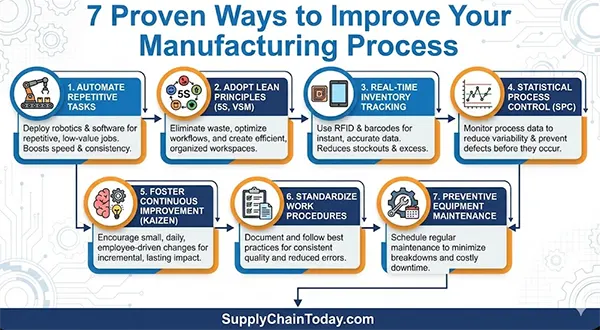
If you wish to take a step further to ensure workers’ safety in the workplace, you can refer to the infographic depicting ways to improve the manufacturing process:
To conclude, workplace safety isn’t about a single policy. It’s about protecting everyone on the manufacturing floor through everyday habits and thoughtful planning.
Only through the tips above will you build a safer environment, ensuring workers focus on doing their best work.
The three major steps you can take to protect workers from hazards include: Identity, access, and control hazards. To enable protection, eliminating risks is very important.
The three most important factors include management leadership, worker participation, and implementing a constructive and structured approach to fix the hazards.
The three main types of controls include the feedback control, concurrent control, and feedforward control.
Positive risks are events that are beyond a company’s control but can work in the company’s favour.