
Ethereum staking sounds simple at first: you lock ETH, earn huge rewards, and move on with your day. While this is the promise, and it can be true, a few rookie mistakes can make it all come crashing down.
Beginners often treat staking like they are holding a savings account, not understanding that staking is a different ballgame altogether. These kinds of costly, easily fixable mistakes in your current setup can drop your rewards, limiting your access and creating issues later.
In this article, we’ll outline five ETH staking mistakes beginners make and how you can avoid them.
Key Takeaways
- Begin staking by choosing a proper method
- Remember to read every rule, guideline, and changing agreements
- Use strong passwords and two-factor authentication methods to keep your account secure
- Track every insight, such as fees and taxes, from day one
The first mistake is jumping in with no plan for custody, liquidity, or effort. Some people want full control and run their own validator.
Others want a simpler route that still earns rewards. Decide what simple means for you, then pick the method that matches it. Ask two quick questions:
If you want a guided path with fewer moving parts, you can start staking Ethereum with Kraken and follow the platform’s steps and disclosures.
Just remember to check how fees are shown and whether rewards get auto-compounded or are paid out.
Either way, read the key terms before you click confirm, especially around reward rates, access to funds, and any service fees.

Staking works best when the ETH is truly long-term. Beginners often stake funds that should stay liquid, like an emergency buffer, rent money, or a near-term goal.
You might require some cash when the market dives, and you learn too late that unstaking requires time, or that selling a liquid staking token has its own downsides.
Fix this by separating the money you need to feel secure day to day from the money you can truly leave invested for the long term.
Be sure to keep an emergency fund outside crypto. Decide a time window for your staked ETH, then commit only what fits that window.
Staking adds one more set of logins, permissions, and transactions to your crypto life. Beginners sometimes skip security steps because they can be boring, then pay for it later.
Use strong, unique passwords, turn on two-factor authentication, and be suspicious of links shared in DMs.
Also, track your staking activity, even if monthly, note it with dates, amounts, and total rewards. This helps fix spot issues early and makes tax season less stressful if rewards are taxable where you live.
Did You Know?
Staking isn’t just for individuals. Major institutional and financial products like exchange-traded funds (ETFs) are beginning to incorporate staking to offer higher returns on investment products.
Staking rewards are not a fixed savings account rate. They can move, and headline numbers rarely tell the whole story.
New ETH stakers also forget to track net return after fees and timing. The fix is to pick a route you trust, then focus on consistency over optimization.
Comparing options that use the same time window and assumptions is a wise play. Write down what would compel you to make a switch, such as a major fee increase or a minor change in withdrawal rules.
If you cannot explain your choice in two sentences, you are probably just chasing a number.
Every small reward counts and adds up, and you will want clean records. Create a habit to track every insight from day one.
Save confirmations, note dates, and export statements when they are available. Watch for fees or spreads tied to conversions or withdrawals. They quietly change the value of true returns.
Additionally, consider setting aside a portion of rewards for taxes, so you are not forced to sell at a bad time.
Then learn how rewards are treated where you live; rules differ by country and can change. If you are unsure, speak with a tax professional.
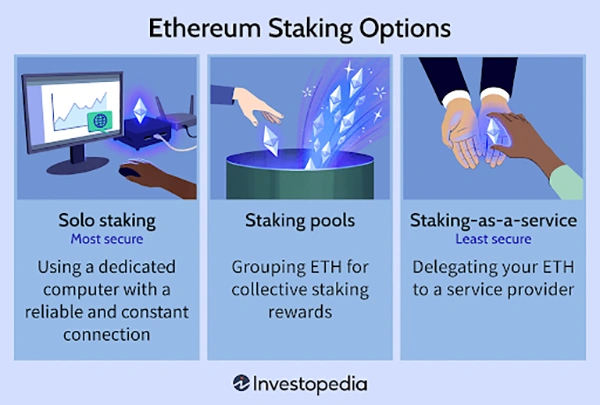
You can also check out this illustration to know about ethereum staking options you can use:
ETH staking can be a steady way to earn while you hold, but only if you respect the details. Keep liquid money liquid and do not chase yield without understanding the tradeoffs.
Size your staking so you can stick to your plan, and be sure to also lock down your security before you click anything.
It is the process of locking up Ethereum to secure the network, acting as a validator to verify transactions, and in exchange, participants earn rewards.
The biggest mistakes novices make while staking ETH are not carefully reading guidelines, rules, and terms, accepting all of these, and regretting all of it later.
Yes, it is considered safe for long-term holding strategies, but participants should be aware of market, liquidity, and technical risks associated with it.
Choosing reputable providers, reading all the necessary terms, and diversifying your holdings is a great way to begin staking.