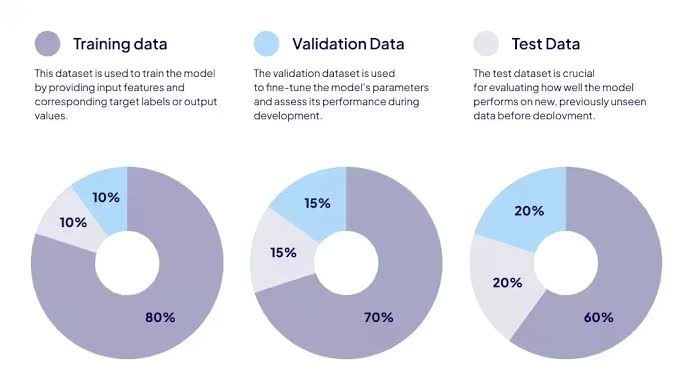
AI-generated content on social media is changing how people create posts, share ideas, and consume information; and misinformation as well. AI tools generate realistic images, write captions, generate videos, and adapt messages for different audiences.
The data depends on the prompt used by the user, and the data used to train AI systems shapes what they generate, the patterns they repeat, and what concepts they are overlooking.
AI learning for content creation help understand these processes to make better content decisions, and it also gives you a clearer way to evaluate AI models, and help users question what appears in their feed. It also reveals why data quality matters as much as model performance.
AI-generated material is text, imagery, audio, or video created with the help of artificial intelligence. On social platforms, it can take many forms:
Some results are produced almost entirely by AI. Other posts combine generated material with human writing, photography, or editing.
Consider a small eyewear brand preparing a campaign for a new collection. A generative AI tool could draft ten captions, create several product backgrounds, and suggest different versions for Instagram and TikTok. The marketing team would then select the best options and check that the images match the real products.
The process looks easy from the outside. Behind it, however, the model relies on patterns learned from large datasets. Those patterns influence the final result, even when the user has never seen the original training information.
A training dataset is a collection of examples used to train a machine learning model. Depending on the task, these examples may include text, images, video, audio, or combinations of different data types. Some businesses build these collections in-house, while others turn to providers like Unidata.pro for ready-made or custom datasets.
A language model inherits statistical relationships between words and ideas. An image-generation model learns relationships between visual features and their descriptions. A multimodal model can learn connections between text and images, allowing it to reply to prompts such as “a coffee shop on a rainy evening.”
Training does not generally mean storing every example as a separate file and retrieving it when asked. Instead, the model adjusts its internal parameters to learn patterns across the data.
Three factors are especially essential.
The examples included in a dataset decide which subjects, styles, languages, and situations a model encounters during training.
Suppose an image model sees many photographs of newer apartments but relatively few examples of traditional rural homes. When asked to create a typical living room, it may favor contemporary furniture, neutral palettes, and minimalist interiors.
This does not mean the model has been explicitly instructed to prefer that style. It may simply reflect the patterns that look most often in its training data.
The same issue affects text. An engineering intelligence model trained heavily on English-language websites may handle English marketing copy well but produce less natural content in languages with fewer teaching examples.
The quality of a dataset impacts what a model learns. Incorrect labels, duplicated examples, poor-quality images, and misleading descriptions can all introduce problems.
Imagine a dataset used to train a model to determine different dog breeds. If many images are mislabeled, the model may learn unreliable visual patterns. It could associate a breed with the background, lighting, or camera angle instead of the dog’s authentic features.
Social media content presents a similar challenge. If a dataset contains promotional posts labeled as independent reviews, a model may learn to generate advertising language when asked to write a neutral product assessment.
A useful dataset should represent the range of people, places, and situations related to its intended use.
If a model encounters limited examples of certain cultures, occupations, age groups, or physical characteristics, its result may reflect those gaps. It might repeatedly depict a particular profession using the same gender or associate certain regions with a narrow set of visual stereotypes.
The key takeaway is that a model can reproduce patterns in its training data without understanding their social meaning.
Training data and social media recommendations are connected, but they perform various roles.
Training data influences what a generative model can produce. A recommendation system decides which available posts to show to particular users. The two systems may collaborate, but they should not be confused.
Here is a plain example of how a generated post reaches an audience.
Step 1: The Model Learns Patterns.
A text model trains on large collections of documents and learns how words and ideas tend to look together.
Step 2: A Creator Enters A Prompt.
A marketer asks the model to write a short post promoting a new coffee blend to fresh professionals.
Step 3: The Model Generates A Draft.
It combines learned language patterns with the prompt and generates a caption. The result may sound familiar because it uses common expressions found in similar content.
Step 4: The Creator Edits And Publishes It.
The team adds accurate product definitions, checks the tone, and publishes the post.
Step 5: The Platform Distributes The Post.
A recommendation system may consider aspects such as user interests, previous interactions, predicted relevance, and the content’s characteristics. The exact signals vary by platform.
Step 6: Audience Reactions Create New Feedback.
Views, comments, shares, and other interactions can influence future recommendations. In some workflows, this feedback may also enhance later content strategies or model updates.
This creates two different feedback loops: one related to how AI models are developed and improved, and another related to how social platforms distribute content.
The distinction matters. A post can show biases in a generative model, receive strong engagement, and then reach more users because of the platform’s ranking system. Neither system needs to deliberately promote a stereotype for the effect to happen.
According to a 2025 study published at ACL, researchers examined approximately 2.4 million posts from Medium, Quora, and Reddit. Using an AI-text detection model, they estimated the share of posts attributed to AI-generated text between January 2022 and October 2024. The estimated percentages increased from 1.77% to 37.03% on Medium and from 2.06% to 38.95% on Quora, while Reddit saw a smaller increase, from 1.31% to 2.45%. These figures reflect the study’s verification method and sample, not verified rates across all content on these platforms.
Their estimated AI attribution rate rose specifically on two platforms:
| Platform | Estimated rate in January 2022 | Estimated rate in October 2024 |
| Medium | 1.77% | 37.03% |
| Quora | 2.06% | 38.95% |
| 1.31% | 2.45% |
These findings indicate that AI-generated text became much more prominent on Medium and Quora during the period studied, while Reddit showed a smaller increase.
There are important limits to the outcome. The figures come from a specific detection method and dataset. AI detectors can make mistakes, especially when posts are short, heavily edited, or written in a style that resembles model output. The estimates should not be treated as the exact amount of every AI-written post across the internet.
Still, the study demonstrates why researchers require large, varied datasets to understand changes in online content. It also highlights a practical challenge: models used to detect AI-generated material need training and evaluation data that reflect the language people really use on social media.
Dataset bias happens when the examples used to train or evaluate a model fail to represent the conditions in which it will be used. Bias can enter through collection methods, missing data, inaccurate labels, or determinations about which examples deserve more weight.
On social media, its effects often appear in subtle ways.
An image model can repeatedly associate certain jobs with particular genders because those associations are common in its training material.
For example, a prompt requesting an image of a software engineer might generate a narrow range of people and workplace settings. A single image may seem harmless, but repeated outputs can reinforce an incomplete image of the profession.
A model trained mostly on content from a small number of regions may struggle to represent other cultures accurately.
Ask it to generate a festive family dinner, and it may return a familiar Western holiday scene even if the prompt refers to a celebration elsewhere. The problem may not be a lack of visual quality. It may be a lack of relevant results.
Training data can provide outdated claims, incorrect statements, and contradictory information. A model may combine these patterns into an answer that sounds confident but is wrong.
For example, a created health post might mix valid advice with unsupported claims. If a creator publishes it without checking the sources, the polished language can make the misinformation harder to notice.
Generative models frequently reproduce patterns that appear frequently in their training data. As a result, different brands may receive captions with similar structures, stock-like imagery, and predictable phrases.
This can make huge amounts of AI-assisted content feel repetitive. The model is not necessarily copying one specific post; it may be drawing on patterns that are common across many examples.
The solution is not just to collect more data. It is to collect the right data, check its quality, measure representation gaps, and evaluate outputs against real use cases.
Best datasets start with clear goals. A team developing a model for social media content should define the intended audience, supported languages, content types, and acceptable risks before collecting examples.
The following practices can enhance both model quality and the reliability of generated content.
| Practice | What to do | Why it matters |
| Define the task | Define whether the model will write captions, generate images, or moderate posts. | Prevents collecting irrelevant examples. |
| Check data sources | Determine where the data came from and whether its use is permitted. | Reduces legal, privacy, and provenance risks. |
| Remove duplicates | Verify repeated or near-identical examples. | Limits the influence of overrepresented material. |
| Review labels | Identify whether categories and descriptions are correct. | Reduces errors learned during training. |
| Measure diversity | Compare languages, regions, subjects, and demographic representation with the intended use case. | Reveals gaps that can affect output quality. |
| Test real scenarios | Evaluate outputs using prompts and examples from the target audience. | Shows whether the model works outside a narrow test set. |
| Monitor after release | Collect reports of issues and test new model versions. | Helps identify problems that appear in real use. |
A dataset reliable for one task may not work for another. A model that generates fashion ads needs examples of clothing and visual styles, while a system that detects harmful comments requires labeled text and context. Training material should reflect the model’s intended use and target audience.
AI-generated content helps marketers save time and test creative ideas, but publishing more posts does not guarantee better outcomes. Without editing, content can become repetitive or lose the brand’s voice.
Businesses can use AI more effectively by following a few basic considerations:
The following infographic summarizes the main stages and shows where quality verifications can make a difference.
Readers do not have to know how a model works internally to assess a suspicious or misleading post. A few practical checks can help.
The same principles apply to businesses evaluating their own content. Human review, source checks, and clear publishing standards remain helpful even when generated material looks convincing.
AI-generated content on social media relies on several factors: training data, prompts, human review, and platform algorithms. Together, they shape what AI produces and what audiences see.
Reliable outcomes start with relevant, diverse, well-documented datasets. Developers must test for bias and errors, businesses should maintain editorial oversight, and users should evaluate content critically.
Better data cannot solve every issue, but it is an essential step toward more accurate, representative, and trustworthy AI content.
Training datasets teach AI models patterns in text, images, audio, and video. Their composition influences the styles, subjects, languages, and ideas that models generate.
Biased and unbalanced datasets can cause AI models to repeat stereotypes, overlook cultural differences, produce narrow representations, and generate misleading information.
Businesses should use reliable and diverse training data, provide accurate product information, review generated content for factual errors and bias, and maintain human oversight before publishing.