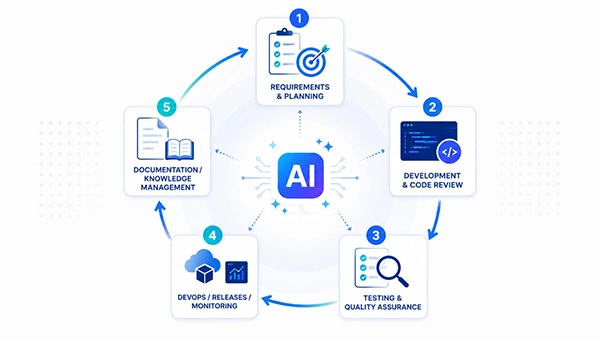
AI documentation software saves IT teams time by automating first drafts, capturing step-by-step workflows, and keeping runbooks or SOPs updated without manual formatting. Rather than spending days writing guides from scratch or answering repeated “how-do-I” questions, engineering teams review and refine AI-generated drafts. The main profit comes when teams connect AI to disciplined documentation practices, clear permission, consistent review processes, and defined ownership.
Technicians hardly ever need more information; they need the right and full information quickly. A useful AI documentation software setup can reduce the time spent scanning articles, asset records, ticket notes, and shared files for one answer. This matters during troubleshooting, when every extra search forces technicians to switch between tasks and sources. Quick recovery also reduces interruptions and helps senior technicians focus on harder incidents.
Search becomes more useful when documentation uses predictable names, current records, and clear ownership. AI works with the structure, but poor documentation still produces poor results.
Technicians solve the same classes of problems repeatedly. Some inside fixes stays that help one incident, while a documented fix can support the next technician. AI can reduce the writing burden by turning working notes into a clearer procedure, provided a technician checks the final record for accuracy.
This strategy also holds the knowledge that might otherwise remain in personal notes. New staff can follow established procedures rather than interrupting experienced technicians for routine answers.
Ticket closeout creates a second workload after the technical work ends. Technicians still need to record what changed, why the change worked, and what someone else should check later. AI can convert rough notes into structured documentation, reducing the amount of manual editing required.
The best workflow keeps the technician in control of factual details. A technician supplies the source materials, reviews the generated record, and corrects missing context before publication. This creates a faster documentation cycle without treating generated text as a substitute for technical judgement.
Internal questions take much time when the answer exists but remains hard to locate. AI search can help technicians to ask simple-language questions rather than remembering exact article titles or folder paths. It decreases interruptions for senior staff who are frequently pulled into routine troubleshooting.
The staff also use repeated questions as a documentation audit. If technicians are frequently asking how a backup job works, where credentials are stored, or which device owns a service, then the documentation needs attention.
Outmoded documentation causes rework because technicians must verify whether a training still matches the environment. AI can make updates easy when the staff changes as part of basic technical work rather than scheduling documentation as a separate project.
IT leaders require more than descriptive claims to judge whether AI improves documentation work. Basic operational measures can show where time is being recovered. Useful measures include average search time, time spent closing tickets, repeated internal questions, and the age of frequently used documentation.
AI works best when it removes repetitive effort from a process that already has clear rules.
AI saves IT staff the most time when it decreases small, repeated tasks across the whole documentation cycle. Faster search, cleaner ticket records, reusable fixes, and easier updates all return time to technical work. Then measure one workflow before changing several at once. Track the minutes spent searching or documenting, improve the process, then compare the results. This gives teams a clear image of the time saved, the problems that remain, and the changes worth making next. A focused pilot gives teams a practical basis for deciding where AI belongs.
Time savings vary by workflow and tool maturity. Some research shows specialized AI documentation tools can cut documentation time by 60 to 70%, while broader workplace AI studies report average weekly time savings around 11 hours across routine tasks.
Hopefully yes. Generic chatboats rally on manual prompting and cannot capture screens or enforce domain structure on their own, whereas specialized tools are built around workflows, templates, or screen capture.
No AI can still miss edges, cases, invent details, or misread system context. Keep a human in the loop to verify technical accuracy, permissions, and security before publishing.