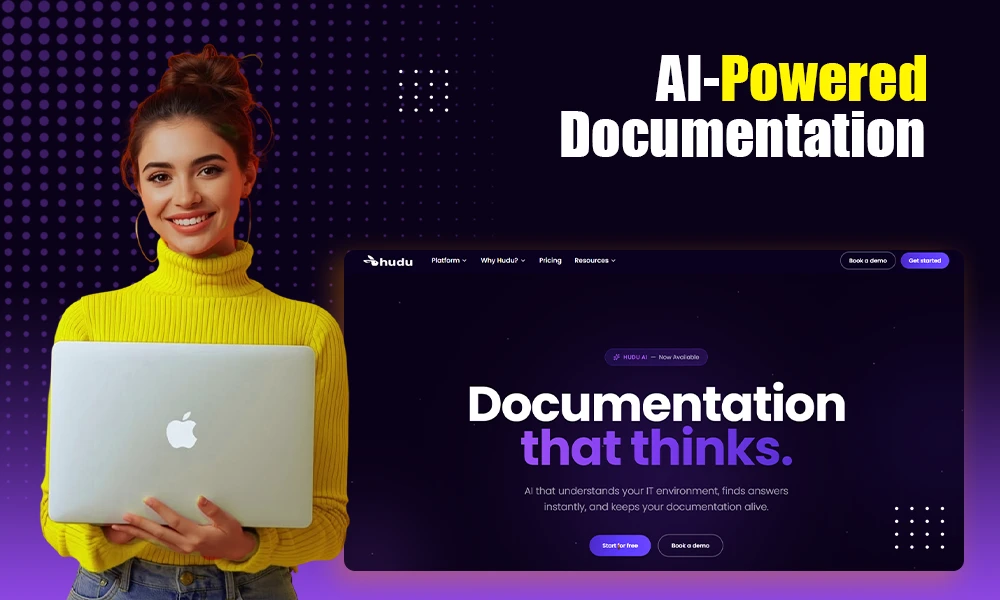
Everything is changing in the world through AI; most of the things depend on it, and it is also changing the thinking. The way people learn, develop professional skills, and access information has changed over the past few years. AI is helping to learn new things even in a better and easier way.
It is also finding the alternative of many paid services, which it is giving in free. One of them is an AI video generator, which can turn written descriptions into visual sequences, providing another option for explaining digital concepts and developing instructional material.
Many modern software applications hold various menus, settings, tools, and configuration options, which can be confusing to use. Even a smaller task can be done with difficulty if the application is unfamiliar with the interface. The same problem goes with spreadsheet applications, website management systems, graphic design software, and communication platforms.
AI-assisted video creation makes it easy and offers a way to develop supplementary visual explanations. An instructor could generate conceptual sequences showing how digital information moves between systems or illustrating the general stages of a technical process.
Organizations often introduce new digital tools to their employees; staff members may need to learn customer management systems, project tracking, and so on.
Preparing instructional videos through conventional recording can become repetitive, particularly when the same information needs to be adapted for different audiences.
AI-powered visual creation can support the development of supplementary training content. For example, a business introducing a new online service could prepare an introductory visual sequence explaining the general purpose of the platform.
Some digital concepts are difficult to explain because their underlying processes are not directly visible.
Cybersecurity, data storage, artificial intelligence, network communication, and cloud computing are examples of subjects that can involve complicated technical relationships.
Visual explanations can help break these subjects into more understandable parts.
For example, a lesson about cloud computing could use an illustrative sequence showing information being stored remotely and accessed through connected devices.
However, conceptual illustrations should not be confused with accurate technical demonstrations. If a video explains how a particular protocol, application, or security mechanism operates, its technical content must be checked by someone with relevant knowledge.
Online education has created many opportunities for professionals to share their knowledge through structured digital courses. Many instructors now teach and earn through it, and many students are getting online education benefits.
Producing a complete course involves more than recording lessons. AI-assisted video creation can help during the development of these additional resources.
These visuals can complement recorded lessons without replacing the instructor’s actual demonstrations.
One practical feature of text-based AI video creation: users can begin with a descriptive instead of an existing recording.
This allows educators and content developers to explore how a concept might be represented visually before deciding on the final format.
A well-organized prompt identifies the subject, environment, important objects, movement, and intended atmosphere. For technical education, it is also important to describe what the visual is supposed to explain.
Digital educators and technical content creators have access to an expanding range of AI-assisted creative platforms. Dreamina offers video-generation capabilities that allow users to explore visual concepts through written prompts.
For example, an instructor could explore a conceptual visual about digital connectivity, while a course developer might prepare an introductory sequence for a lesson about modern computing.
Educational content carries a responsibility that purely decorative material may not. An inaccurate explanation can confuse learners or encourage them to follow incorrect procedures.
Before publishing an instructional video, creators should check technical details, terminology, interface references, and the accuracy of any claims made through narration or captions.
You should also care about privacy when producing software tutorials. Demonstrations should avoid exposing personal information. Private account details, confidential business documents, or sensitive customer data.
The growing availability of AI video tools is creating additional possibilities for online education and technical communication. Instructors can explore visual explanations, and independent course creators can develop new approaches to presenting complex subjects.
However, the purpose of an educational video is not simply to attract attention. It should help someone understand a concept or complete a task correctly.
AI-generated visuals can contribute to that goal when they are used thoughtfully and supported by accurate information. Combining creative experimentation with real demonstrations, clear explanations, and proper technical review can make digital learning resources more useful.
As educational technology continues developing, the ability to turn abstract ideas into understandable visual material may become an increasingly valuable part of how people teach and learn online.
Learning AI builds high-demand career skills, boosts personal and workplace productivity, and helps you make smarter decisions in data-driven environments.
The main purpose of using AI in teaching and learning is to support and enhance human instruction and student learning, adapting to individual needs, improving accessibility, and reducing routine workload instead of replacing teachers.
Education uses various types of AI, primarily generative AI and large language models (LLMs), machine learning (ML), natural language processing (NLP), and deep learning, to power tutoring, content creation, grading, and accessibility tools.