If you have ever launched an app, you might be aware of the struggle to actually make this transparent for the users. Downloads and rankings of your app might be a good sign to analayze the performance.
But what about the competitors’ growth, strategy and performance? App stores barely reveal anything about the rising trends and shifts. These hidden things often decide the top performers in the market.
Continue reading this article to understand what the app stores won’t show you and why it is actually relevant for significant growth.
Key Takeaways
- App stores usually hide the market trends and shifts that are useful to get better results next time.
- Keeping track of competitors movements helps to find opportunities before they become obvous.
- Pre-order charts allow developers and markets to know about what is coming next and align things accordingly.
Let’s say you make mobile games. You spend months developing something great. You launch. You hope.
Then a game you’ve never heard of shoots to the top of the charts and takes all the attention. How did they know? What did they see that you missed?
The answer is data. Specifically, the data that most developers don’t bother looking at.
The top downloaded apps list tells you what’s popular right now. But the more interesting story is in the changes. Which apps are moving up fast? Which are dropping? The movement tells you where the momentum is.
Sometimes an app jumps fifty spots in a week. Something drove that. A feature launch. A marketing campaign. A viral moment. If you’re watching, you can investigate and learn from it.
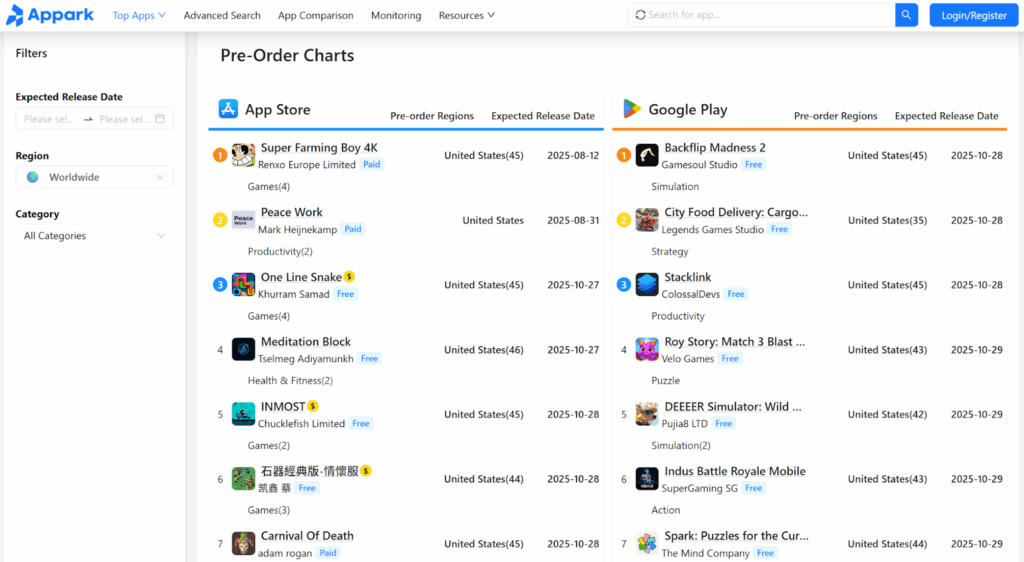
Here’s something most developers ignore entirely: pre-order charts.
This shares about the games and apps that are open for pre-order but haven’t gone live yet. People usually do not cover this. They’re not on any top lists. They’re not in any reports.
But they’re coming.
If you’re watching upcoming mobile games charts, you see them months in advance. You know what they’re working on. You know how they’re establishing their identities. You have time to respond.
Maybe you adjust your own launch timeline. Maybe you can add a feature they have that you don’t. Maybe you prepare a marketing campaign to counter their arrival.
The alternative is being surprised. Waking up one day to a new competitor that’s already got thousands of pre-orders, already building buzz, already taking attention away from you.
The number of people who need this kind of information is much greater than you’d think.
Game developers use it to track what’s working in their category. When a competitor’s update drives engagement, they study it. When a new game takes off, they analyze why.
App publishers use it to find promising apps before they blow up. If you can spot an app growing 30% month over month before anyone else notices, you can acquire it or copy it.
Investors use it to find studios worth backing. Revenue data show you who’s really making money, not just who’s popular.
Marketers use it to time their campaigns. They watch pre-order charts and launch their promotions when there’s less competition.
Ad networks use it to find apps that are growing fast and need monetization help.
Here’s the thing about missing this information: it has a real cost. Every month you ignore a growing competitor is space you’ll never get back and skipping a category shift is money left on the table.
Every time you publish without checking pre-order charts, you risk being diminished by something you didn’t see coming.
The developers who win aren’t always smarter or more talented. They just have better information. They know what’s working because they can see it. They know what’s coming because they’re watching.
Let’s get specific about what becomes visible when you have the right tools.
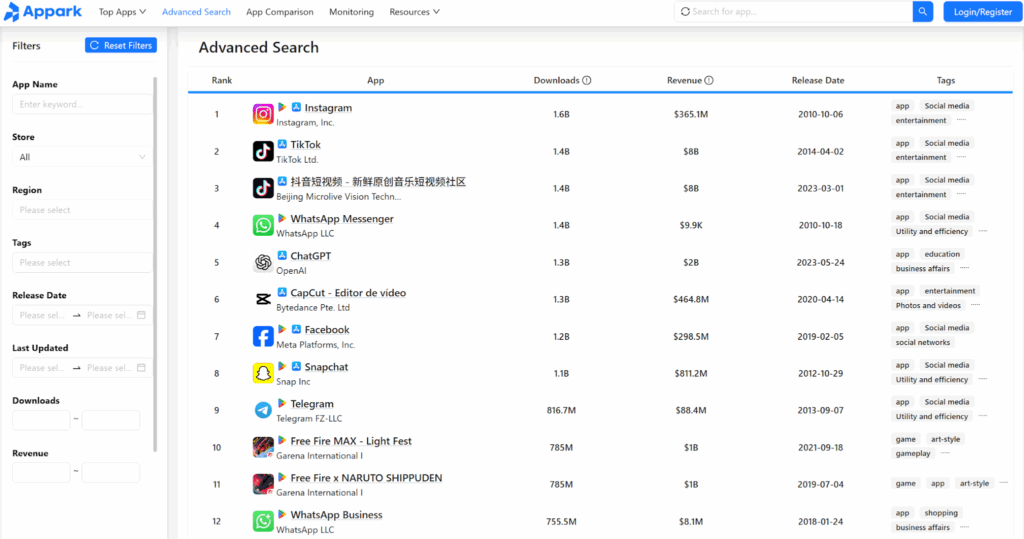
Download rankings. Which apps are at the top? Which are rising? Which are falling? This tells you where the market is moving.
Revenue rankings. Which apps are truly creating money? Also, the apps with the most downloads aren’t the ones that earn the most profits.
Category breakdowns. Not just overall charts, but specific categories. Games. Productivity. Health. Fitness. You can drill into your exact niche.
Pre-order counts. How many people have already signed up for an upcoming game? This tells you which launches are generating buzz.
Release dates. When are competitors planning to launch? You can plan around them.
App stores share about the growth and the results—but never share about the major reason behind it. The real growth is only seen in the market when the trends are analyzed properly and the products are made according to them.
When developers and marketers track the market pathways and see the competitors growth, the decision becomes more strategic. As a result, better data and research lead to better results.
In the end, the teams that are getting success are not just guessing—they are paying attention to what we generally ignore.
Game developers, marketers and investors are the ones who benefit the most from the market data.
Not always. More downloads are not always accurate indicators of more profits and long-term growth.
Yes—right use of analytics data helps smaller teams to make better decisions, such as finding the right time to launch their app.