Choosing a WhatsApp Business API provider becomes critical as your messaging volume scales. What works for 1,000 messages monthly might become prohibitively expensive or technically limiting at 100,000. This analysis examines six providers across infrastructure, pricing, and capabilities to help you make an informed decision.
We’ve structured each provider review consistently: what they offer, how pricing works, technical requirements, and where they fit in your growth trajectory.
| Provider | Meta Status | API Markup | Setup Type | Focus Area |
| WANotifier | Tech Partner | 0% | Embedded + API | End-to-end lifecycle marketing |
| 360Dialog | BSP | Varies | API only | Infrastructure |
| Interakt | None | 20-30% | Embedded | SMB automation |
| AiSensy | None | 25-35% | Embedded | Marketing |
| WATI | None | 20-30% | Embedded | Team inbox |
| Zoko | None | 25-30% | Embedded | E-commerce |
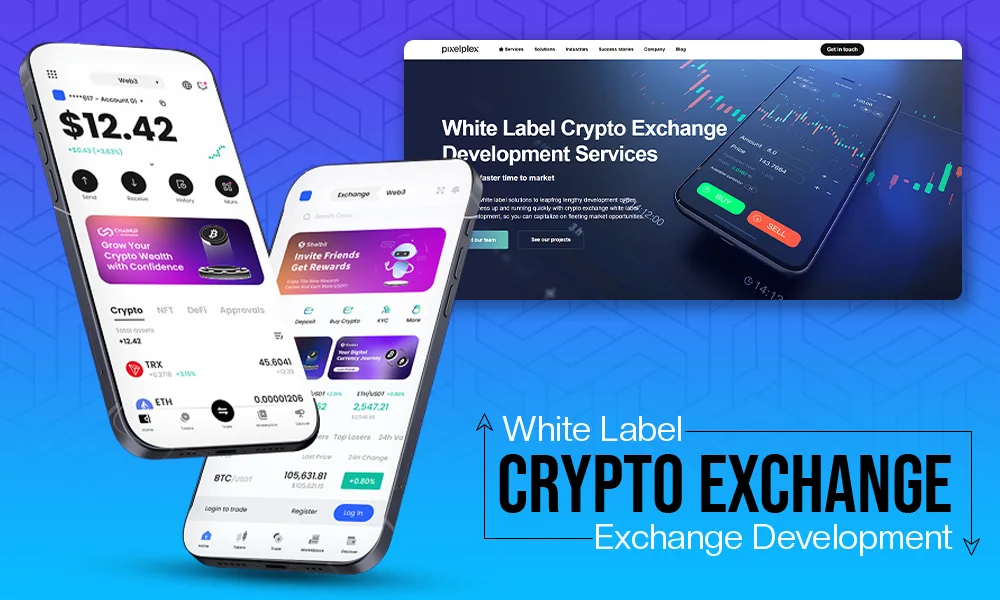
WANotifier delivers end-to-end customer lifecycle marketing through WhatsApp, from initial acquisition campaigns through retention automation. As an official Meta Technology Partner, the platform ensures compliance, seamless WhatsApp API setup, and reliable message delivery.
The platform offers features like WhatsApp campaigns, built-in CRM, chatbots and auto-replies, drip campaigns, WhatsApp Flows, and a multi-agent inbox for collaborating on chats. It also includes advanced analytics for tracking message delivery and click-through rates, chatbot and drip sequence sessions, and conversions from ad campaigns.
User reviews often highlight the platform’s user-friendly interface, which allows marketing teams to build sophisticated workflows without constantly relying on developers. WANotifier’s support team is also praised for providing specific, actionable solutions instead of generic responses.
WANotifier offers a transparent pricing model, with 0% markup on WhatsApp API usage costs, so you only pay for what you use. At 100,000 messages monthly, this transparency saves $2,000-4,000 compared to providers adding 12-25% markups.
Two onboarding paths accommodate different technical capabilities. Non-technical teams use embedded signup to connect your WhatsApp Business account in minutes through a guided flow. Technical teams can implement using their own API credentials for advanced customization and infrastructure control. This flexibility is rare among full-featured platforms.
WANotifier scales efficiently from startup to enterprise volumes. The 0% markup model means costs grow linearly with actual usage, and no surprise multipliers. As an official Meta Tech Partner, it offers reliable infrastructure designed to handle high message volumes. It also supports a wide range of use cases, including e-commerce and retail, education, travel, healthcare, real estate, and professional services.
360Dialog provides infrastructure-focused access to WhatsApp Business API with minimal platform overhead. As Meta’s official Business Solution Provider, they emphasize reliable API delivery and comprehensive technical documentation. The platform intentionally stays lean; you get API access, webhook management, template tools, and basic analytics without bundled marketing features.
This approach serves developers building custom solutions or businesses integrating WhatsApp into existing communication stacks. Advanced automation, sophisticated chatbots, and marketing campaigns require integrating third-party tools or custom development.
Operates through a partner network, so pricing varies by region and implementation partner. Some resellers add markups, others bundle services differently. This creates pricing variability requiring research across multiple partners before committing. Generally, more cost-effective than full-featured platforms if you’re building custom vs. using pre-built automation.
API credentials only, no embedded signup option. Requires technical resources for implementation and ongoing management. Documentation is thorough for developers comfortable with API integration. Expect development time to connect to your systems and build the required functionality.
Infrastructure scales reliably given BSP status, but feature scaling requires ongoing development. Works when you have engineering resources to build and maintain custom solutions. Less suitable if you need pre-built marketing automation that scales without code.
Interakt targets small-to-medium businesses needing a quick WhatsApp setup without technical complexity. Template-driven automation and visual workflow builders enable non-technical teams to deploy campaigns rapidly. The shared team inbox provides basic conversation assignment and routing.
Pre-built templates cover common scenarios: order confirmations, appointment reminders, and delivery updates. E-commerce integrations with Shopify and WooCommerce enable automated order notifications. Basic chatbot functionality handles FAQs before routing to agents. Automation capabilities center on trigger-based workflows with limited conditional logic.
Tiered pricing based on conversation volume. WhatsApp API charges are billed separately with a 20-30% platform markup added. Pricing increases as message volume grows, with markups compounding costs at enterprise scale. Good for initial testing; becomes expensive relative to zero-markup alternatives at high volumes.
Embedded signup gets you operational in under 30 minutes. Visual builders for all automation, no coding required. The template library provides starting points for common workflows. Works well for teams without developer access, though customization depth is limited.
Scales operationally until you hit platform limitations or pricing becomes prohibitive. Template-driven approach works until you need customization beyond visual builder capabilities. Consider migration planning if you anticipate complex automation requirements or very high volumes.
AiSensy approaches WhatsApp as a marketing channel first, with a heavy focus on campaign automation and conversion optimization. Multi-step sequences support conditional branching based on customer actions. Segmentation tools analyze behavior patterns, purchase history, and engagement to create dynamic, auto-updating segments.
Campaign analytics track opens, clicks, and conversions at each step of each sequence. Integration marketplace connects e-commerce platforms, CRMs, and analytics tools for data synchronization. Decision-tree chatbots handle qualification and routing with limited natural language processing. A/B testing capabilities optimize message templates and timing.
Plans are tiered by contact volume and features. WhatsApp API costs carry a 25-35% markup depending on plan level. Marketing-focused features justify the premium over basic platforms, but the markup percentage significantly impacts total cost at scale.
Embedded signup with visual campaign builders. Marketing teams operate independently without technical support for most workflows. Integration setup may require coordination with technical teams, depending on the existing tool stack. That said, AiSensy is generally accessible to non-technical users.
Scales well for marketing use cases with sophisticated campaign requirements. Feature depth supports complex customer journeys. Markup percentage becomes a material cost factor at enterprise volumes. It is recommended that you compare the total cost against zero-markup alternatives when projecting scale.
WATI balances team collaboration features with marketing automation capabilities, making it well-suited for mid-market companies managing both support and promotional messaging. Features like conversation assignment, internal notes, and performance tracking help teams stay coordinated, while broadcast campaigns support scheduling, segmentation, and personalization.
Wati’s no-code chatbot builder allows you to create flows that handle FAQs and routine customer queries. Its template management system streamlines the Meta approval process. Analytics focus on team performance, including response times, resolution rates, and workload distribution. Integration options also enable seamless data exchange with other business tools.
Scales with active contacts plus team seats. WhatsApp API charges include a 20-30% markup. User-based component means costs increase as the team grows, not just message volume. Customer success support is included for onboarding and optimization. Calculate both contact and seat costs when projecting expenses.
Embedded signup with visual automation builders. Support and marketing teams operate features without developer involvement. Integration setup varies by the complexity of existing tools. Generally accessible to teams with mixed technical capabilities.
Handles growing conversation volumes and expanding teams effectively. Dual focus on support and marketing prevents the need for separate tools. User-based pricing means team expansion directly impacts costs; factor this into hiring plans. Works well through mid-market scale.
Zoko integrates WhatsApp deeply into e-commerce operations, treating the messaging app as a direct sales and order-management channel. It also offers product catalogs that can be shared directly in conversations, enabling in-chat browsing. Its order workflows handle selection, cart management, payment links, confirmations, and fulfillment tracking automatically.
Abandoned cart recovery through WhatsApp’s high open rates drives conversions. Customer segmentation analyzes purchase behavior for targeted campaigns. Shared inbox includes purchase history and cart contents, providing agents with full customer context. Analytics emphasize revenue metrics such as sales attribution, average order value, and conversion rates.
Pricing scales with order volume rather than just contact count, aligning costs with revenue generation. WhatsApp API charges include a 25-30% markup. E-commerce-specific features may justify a premium over general platforms if order management drives your adoption. It’s recommended that you compare the total cost against alternatives.
Embedded signup with e-commerce platform integrations (Shopify, WooCommerce, others). Catalog sync and order automation are configured through visual interfaces. Requires a connection to an e-commerce platform for full functionality. Set up is straightforward for supported platforms.
Scales with transaction volume for businesses using WhatsApp as an active sales channel. Commerce-native features remain relevant as order volume increases. Order-based pricing model scales with business growth. Best fit when WhatsApp directly drives revenue, rather than just marketing or support.
| Provider | API Markup | Platform Fee Basis | Cost at 100K Messages/Month* |
| WANotifier | 0% | Usage-based | $4,000 API + Platform fee |
| 360Dialog | Varies by partner | Partner-dependent | Varies (~$4,000-5,000) |
| Interakt | 20-30% | Conversation volume tiers | ~$5,000-5,200 API + Platform |
| AiSensy | 25-35% | Contact volume tiers | ~$5,000-5,400 API + Platform |
| WATI | 20-30% | Contacts + Team seats | ~$5,000-5,200 API + Platform |
| Zoko | 25-30% | Order volume-based | ~$5,000-5,200 API + Platform |
Platform subscription fees tell only part of the story. Here’s how costs compound with API markups:
Example: 100,000 marketing conversations monthly
• Meta base rate: $0.04/conversation = $4,000/month
• Provider with 0% markup (WANotifier): $4,000 API cost
• Provider with 25% markup: $5,000 API cost (+$1,000/month of Meta base rate)
• Provider with 30% markup: $5,200 API cost (+$1,200/month of Meta base rate)
• Annual difference: $12,000-14,400 in markup alone
At enterprise volumes (500,000+ monthly), the markup difference exceeds $60,000 annually. Always calculate total cost: platform fees + (Meta API cost × markup multiplier).
The right provider scales with your business without creating bottlenecks or cost surprises. For most growing businesses, WANotifier offers the strongest combination: Meta Technology Partner certification ensures reliability, 0% API markup creates predictable scaling costs, dual onboarding accommodates both technical and non-technical teams, and comprehensive automation supports full customer lifecycle management.
Test thoroughly during trials, implement actual workflows, calculate costs at 2x and 5x your current volume, and evaluate support responsiveness. Choose based on where you’re scaling to, not just current needs.