“The success of any logistics network hinges on visibility and real-time data.”
– Dale S. Rogers (Professor, Supply Chain)
This statement is coming from vast experience, as Dale S. Rogers has been learning, researching and teaching about supply chains all his life. The quote emphasizes the visibility of real-time data around shipment logistics, which is handled by a dedicated system: logistics visibility software.
But for peak benefit, your logistics visibility software need to have some features which are non-negotiable in today’s market.
In this article, I will outline the must-have features for business logistics visibility software to improve your operational efficiency, decision-making, and risk management.
KEY TAKEAWAYS
- Logistics visibility software improves decision-making, risk management, and operational efficiency.
- The system should be cloud-based and integrated with real-time, end-to-end shipment tracking.
- It should have integrated predictive data analytics, exception management alerts, and role-based dashboards.
Logistics Visibility Software is a platform that enables real-time, end-to-end tracking and monitoring of goods, shipments, and inventory across the entire supply chain.
Whether your business has a complex supply chain or you are delivering shipments across regions, this system is essential for its efficiency and transparency. It also improves decision-making and enhances operational performance.
DO YOU KNOW?
According to a McKinsey survey, about 50% US consumers track their order delivery to ensure it’s progressing and is scheduled on time.
You can call a logistics visibility software modern and robust only if it has some must-have features.
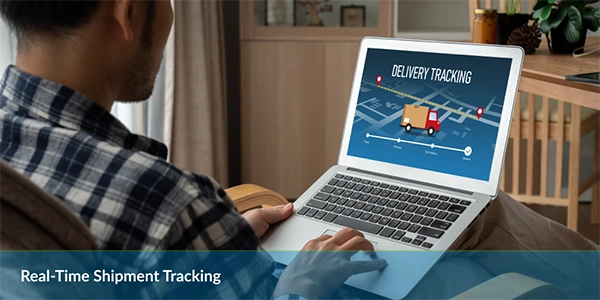
The most important feature for any Logistics visibility software is the ability to track shipments and inventory in real-time.
A decent logistics visibility software provides live location updates on shipments, right from their point of origin to the final destination.
With this information on the shipment location at a particular time, you can easily gauge delays and reroute shipments if necessary to ensure timely delivery.
INTERESTING STATISTIC
Real-time updates reduce customer enquiries for order status by 20-30% (Source).
End-to-end supply chain visibility ensures you have a clear view of the inventory being moved through the supply chain.
This covers every stage from supplier procurement, through warehouses, to final customer delivery.
Full transparency allows early detection of bottlenecks and proactive management of the entire supply chain.
Predictive analytics allow future planning and decision-making.
A Logistics visibility software integrated with predictive analytics enables easy forecasting of potential issues based on historical data.
These potential issues are demand surges, inventory shortages, and delivery delays.
Based on these insights, you can optimize your supply chain and avoid many disasters from even happening.
From just being a “nice-to-have”, exception management alerts have become a non-negotiable in modern logistics visibility software.
Logistics being physical, can be affected by many factors such as weather, traffic, machine malfunction, or human mistakes.
Here’s where exception management alert comes in. It automatically detects, classifies, and resolves critical issues like these.
No software can work in isolation; the same is true for Logistics visibility software. It also has to integrate with other systems for relevant data.
Improper integration can stop the entire system from reaching its peak efficiency, limiting your potential ROI.
Having role-based dashboards allows you to get actionable insights extracted from massive pools of complex data. You get custom reports and visual data in a user-friendly manner, relevant to your role.
This improves your decision-making and augments overall operational efficiency.
In a digital-first world, cloud accessibility of the logistics visibility software is essential.
As business operations are spread across the globe, this allows every team and its members to access the system from anywhere, at anytime.
Cloud-based logistics visibility software also enables automatic updates.
With all these features in the logistics visibility software, you can manage risk better and improve your decision-making. The analytical insights and prompt alerts improve decision-making, while risk management improves by minimizing product spoilage.
This only improves operational efficiency and customer satisfaction, keeping you competitive in this demanding market.
Agistix offers a really good logistics visibility software solution integrated with cutting-edge logistics management technologies.
A robust logistics visibility software can help you in decision-making and manage risk better, leading to improved operational efficiency.
Just ensure the system is cloud-based and integrated with real-time and end-to-end shipment tracking. It should also be properly integrated with predictive data analytics, exception management alerts, and role-based dashboards.
Wish you a brighter business!
Supply chain visibility software allows tracking of shipments from procurement to delivery.
Real-time end-to-end shipment tracking, predictive data analytics and integration, exception management alerts, role-based dashboards, and cloud accessibility are essential features for a supply chain visibility software.
A robust logistics visibility software can really improve your business decision-making, risk management, and operational efficiency.