“The future of AI isn’t human vs. AI — it’s human with AI.”
— Kipp Bodnar (HubSpot CMO)
AI and automation are everywhere. Adoption across industries is exponential, but there is still some hesitation. And that’s not irrational either. 75% of marketing teams use AI but fear campaigns feeling generic.
It’s great at giving speed and scale to operations, but terrible at human specialties like empathy and judgment.
So, the solution for the time being, given automation, is a human-centered approach. This gives you all the AI advantages without your brand losing its authentic voice.
Human-centered automation concerns automating brand workflows. Its main aim is to scale operations. But to not fall on the other side, it also prioritizes human empathy, connection, and user experience.
A generative tool usually produces generic stuff, which you can improve using the best humanize AI tools. But if even that fails, you’ll need an actual human to do it manually.
All in all, the tech is used for efficiency, while human contribute their oversight and emotional faculties at work. Working together, both of these bring us a balanced brand journey.
Automation augments personalization, engagement, and support.
Brand automation triggers carefully crafted welcome emails to users as soon as they subscribe or create an account. It transforms generic promotional messages into tailored ones based on user actions, such as viewing a specific product or abandoning the shopping cart. To alleviate post-purchase anxiety, the system keeps sending updates about order confirmation, shipping, and delivery.
The automation system also rewards loyal customers, building a deeper connection with them. On the other side, it tries to reduce the customer loss. As soon as engagement drops are detected, the system sends a personalized product recommendation or a special “we miss you” offer.
Brand automation tools perform responsive, data-driven engagements that are consistent and personalized across platforms.
Historical engagement data analysis gives the time period during which your audience is most active. So, instead of manual posting, tools schedule them across time zones, maintaining an active and reliable presence. Still, the posts can feel template-based to the audience, so make sure to pass them through a tool like humanize.io at least once.
The system can detect complex complaints based on keywords and route them to human support teams. The tools keep scanning mentions across channels to spot any potential PR crisis
Social Media schedulers tailor messages based on the platform and even localize them. If required, a public social media interaction is seamlessly turned into a private customer support ticket.
Brand automation employs chatbots that have many benefits:
AI is now capable enough to analyze even complex customer feedback. If it fails to do so in the case of an extremely complex complaint, the system forwards it to human support. Addressing customer concerns before they become big issues improves satisfaction and loyalty. Here are other customer experience benefits as a result of automation:
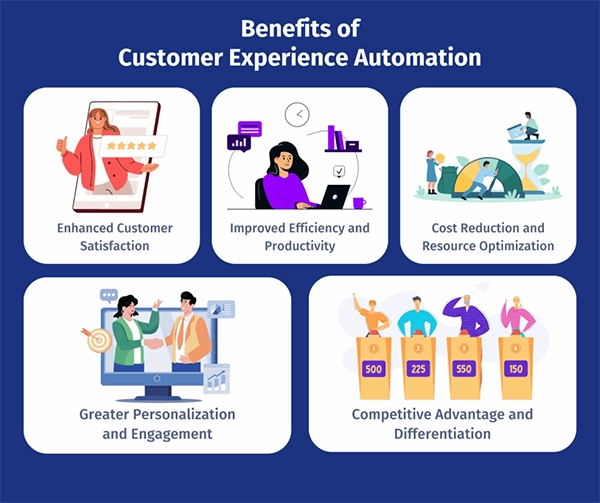
To boost your brand image further, you can consider review and reputation management software.
Automation efficiently scales things. But you need to use it strategically, not to lose your brand voice.
Don’t use generic company attributes like “professional”, “friendly”, etc. Give behavioural instructions.
Maintain a living style guide that lists words/phrases to use and not ot use. Also, share 5-10 good past interactions so the automation tool learns the exact sentence length, syntax, and phrasing to use.
Program tone changes based on the customer situation. Confused customer -> reassuring tone. Celebratory customer -> enthusiastic tone.
The goal is still customer service. If automation can do that, good. If not, it’d better get behind.
When the tool detects words like “cancel”, “wrong item”, things have gotten serious or even legal. In sensitive situations like these, it should route the case to a human agent.
If the tool is only handling the situation, at least there should be a human in the loop, editing the messages for empathy before sending final responses.
In case the things have turned irrecoverable and demand apologies, the responses should reek of any AI involvement at all. All human work.
Avoid Creepy or irrelevant personalization. Rely on as much current data as possible instead of letting AI make broad assumptions.
Personalize content based on customers’ past behavior. For real-time data, integrate the system with your CRM, or straightaway ask the customers about the feedback on your brand automation tool, what they like, and what they don’t like.
Combining machine learning and human empathy can:
Barring customer interactions, brands are using AI systems to optimize for even workforce-related operations like hiring.
Automation feels robotic when:
To keep it natural and engaging, focus on personalization and flexibility, in addition to technical efficiency. However, there are many other ways to boost business efficiency besides automation.
Are you also hesitant to adopt AI, fearing it will kill your brand’s authentic voice? Well, the fear is quite rational as customers are getting really good at recognizing AI-powered work.
The rational approach in that case is to keep the automation human-centered. Using AI where it’s advantageous, but letting humans handle things where some empathy or judgement is needed.
Artificial intelligence is not some alien. It’s just another human-created technology, which humanity will eventually learn to work with.
As per this rule, 10% AI value comes from algorithms, 20% from technology and data, and 70% from people, process, and change management.
For a successful automation strategy, a firm should focus on Capability, Culture, and Capital.
They primarily fail due to data issues, poor strategy, and organizational resistance to change.