A reliable internet connection is crucial for smarter living – and for a good reason. From access to online entertainment including music, movies, online gaming and the ease to host video chats with family and friends, to home automation – almost everything is dependent on it.
But still, most users fail to get a convenient ISP. In fact, more than half of the internet users, nearly 70% have reported slower speed and connection issues than promised by their provider – hence are willing to switch to a better one. (Source – Business Standard)
To address this common challenge, this guide will help you evaluate a reliable internet service provider (ISP) – whether you’re in a big city or looking into internet service in Fairbanks, Alaska or anywhere else.
These days, everything runs on online connectivity. From remote work and online classes to streaming movies and smart home devices – a good internet connection is no longer a luxury, but a fundamental thing. Choosing the wrong internet service provider (ISP) can directly slow your network, interrupt your Zoom calls and leave you frustrated while looking at that constantly moving loading circle.
Consider your ISP as the foundation of your house – if it isn’t solid, you will have to face problems. A poor ISP directly means slow speeds, unreliable performance, hidden fees or unresponsive support that leaves you hanging when you most need its support.
Not every internet service is accessible everywhere. A provider that works great in a city might not perform well in rural areas. Even within a city, some of the neighborhoods enjoy much better services and technologies than others. This is not because companies prefer some specific areas – it’s often because of the infrastructure and the associated cost.
Prices vary with location and city development. In a place like Fairbank, options are diversified – some have fibre or cable internet with good speeds, while others might only have a fixed wireless option, depending on where they reside and how their infrastructure is. Although providers have widened broadband in interior Alaska, including Fairbanks and the surrounding areas.
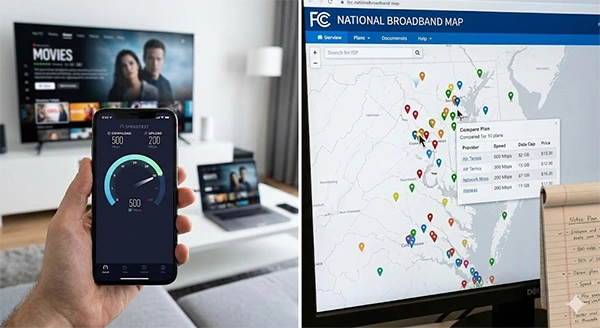
To figure out what services are available in your particular area, the Federal Communications Commission maintains tools like the National Broadband Map through which you can determine your ISP availability and speeds in your area.
Availability is a first step – if a provider isn’t available at your location, everything else (speed, support, pricing) doesn’t matter.
Selecting a reliable service provider is the toughest part. Here it is simplified with the factors that need to be evaluated when comparing Internet service providers –
Internet speed is just one aspect of network compatibility. There is download speed (how fast you get things downloaded) and upload speed (how fast you share or upload data during video calls and uploading files). If the ISP is a highway, then speed would be how fast cars move toward the city and upload speed is how fast cars leave it.
For common browsing use, email or occasional streaming, lower speeds might work well. But for multiple users, streaming 4K videos, video calls or online gaming, you will probably need high speed – often 100 Mbps or more.
Interesting Fact
Over 60% of broadband users face disruptions and slower internet speeds than what was promised to them.
Some plans include charges for the data you will use each month. Once exceeded, you will start facing slow speed issues or overage charges – same as when you go above your mobile data allotment.
If your internet use is heavy – too much gaming, streaming or has many users – a plan with generous data will save frustration and extra fees in the long run.
Network performance includes factors like reliability and latency (delay time). Latency matters for real time factors such as video calling and live gaming and reliability reveals when your internet works without any kinds of interruptions.
Consider performance as electricity – it’s not just about how much power you get (speed), but whether it stays steady or doesn’t cut off, which depends on the quality of your internet. Check independent performance tests, reviews and local user feedback for real world performance.
A real check for customer support is done when something goes wrong. ISPs with 24/7 support, quick response times and with various contact options (phone, chat, email) can turn a frustrating outage into a minor inconvenience.
A provider might be claiming any illusory customer support, but if you can’t get proper support when your service drops – that’s a red flag.
Contract terms vary a lot. Some ISPs cage you in long term agreements with early termination fees, while others allow you to go month by month. Ensure you are aware of what you are agreeing to and ask how easily you can change plans if your need expands.
Advertised prices often don’t share the whole story. Installation fees, equipment rentals (like modern or wifi routers), taxes and other miscellaneous charges come out of the blue and increase your bill to unexpected prices.
In recent years, the Federal Communications Commission has had rules mentioning clear pricing ‘nutrition labels’ so consumers are aware of what they’re signing up for – though many of these transparency rules are undergoing a debating process.
There are many tools and resources that can help you evaluate before assessing ISP performances in a wider range –
These resources act like a pre-flight checklist for your internet journey – the more you get involved and check, the fewer surprises you will encounter.
Choosing the right ISP is more than picking the cheapest plan. You are investing in your daily online experience – work, entertainment, communication and family life. Evaluate availability, speed, data limits, support and pricing transparency – and verify claims with trusted tools and resources.
This practical comparison will help you make a confident choice that will both fit your location and usage needs – whether it is in your area or out where services are less common.
Use trusted sources such as the FCC National Broadband Map and get the details just by entering your address.
It depends on your needs. For basic usage, 25-50 Mbps may suffice and for heavy streaming and multiple users, 100 Mbps will work well.
Yes. If your household needs a lot of data, choose plans without caps to avoid extra charges or slowdown.