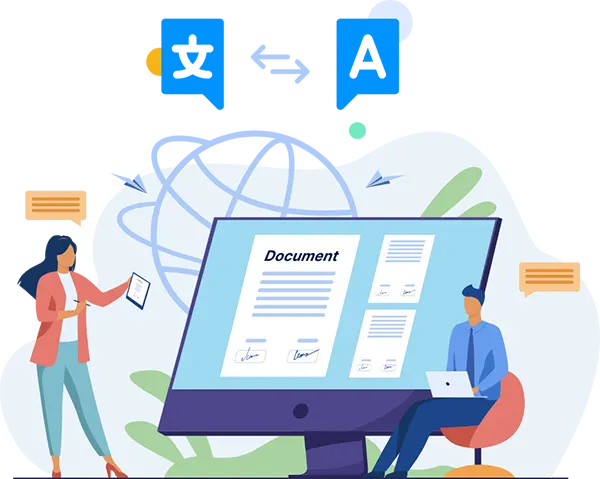
It can be immensely frustrating when the important documents you’ve been waiting on for days arrive in a completely different language altogether.
Furthermore, if a deadline is right around the corner, this isn’t really an ideal scenario for anyone. This experience is a lot more common than you’d think and is usually caused by miscommunication among people.
Let’s talk about what these common problems and scenarios are and what you can do in these situations to fix these issues at hand.
Key Takeaways
- The problems individuals regularly face when a document is in a different language
- A solution to help navigate through these issues quickly
- Using the solution the correct way
- What can be done with it
This is the one that keeps people up at night.
You’re applying for a job. The offer comes through. The contract looks standard, but it’s in Spanish. You’ve been looking for work for months. You don’t want to delay. You also don’t want to sign something that commits you to things you don’t understand.
What do you do?
Some people just sign it anyway without understanding the meaning of the texts. Some ask for assistance from their friends and trust their interpretation. Some people try to puzzle through it with school-level Spanish and miss the important clauses.
None of these are good options when the document controls your employment rights, your salary, your notice period, and your non-compete obligations.
The same thing happens with rental agreements. You find a flat. You’re excited. The landlord sends the contract in French. You need to move in next week. Do you sign something you haven’t fully understood?
Government letters almost always have dates in them.
Respond by the 15th. Payment is due by the end of the month. Appeal within 14 days.
When the letter is in an entirely different language that you don’t understand, then those dates just appear as random numbers on a page.
You don’t know what they’re attached to. You don’t know whether the 15th is a response deadline, a payment date, or something else entirely.
So you miss it. Or you scramble at the last minute. Or you pay someone to translate pdf english to spanish it urgently and hope they’re fast enough.
A benefits letter about housing support. A tax letter about an underpayment. A court letter about a hearing. These aren’t things you can afford to misunderstand or delay.
This one is less obvious but just as painful.
A relative passes away. Among their papers is a birth certificate from the country they came from. It’s in Urdu. You need it to sort out inheritance, to apply for citizenship, to understand your own family history.
A medical report that arrives with the test results written in German. The numbers look fine, but the actually helpful part: the doctor’s comments? Completely unidentifiable.
A school sends home a letter about your child. It’s in Arabic. Is it about a parent-teacher meeting? A field trip? A bullying incident? A change to lunch arrangements? You have no idea.
These documents belong to you. They’re about your life, your family, your health, and your money. And you can’t read them.
Fun Fact
English is the most spoken language worldwide (including native and non-native speakers), followed by Mandarin Chinese and Hindi.
When people face these problems, they need a few specific things from a solution.
They need it to be instant. Not tomorrow, not after you pay, not when your friend has time. Now.
They have to be accurate. These documents aren’t a place for guesses and estimates. The words and their reply should be well understood and correct.
They need the format to stay intact. A benefits letter that’s been scrambled into plain text is hard to trust. The official layout matters.
They need it to be private. These are personal documents. You don’t want copies floating around on some server somewhere.
They need it to work with scans. So many important documents aren’t clean PDFs. They’re photos, scans, faxes, old papers.
They need it to handle any language. Urdu matters as much as French. Amharic matters as much as Spanish. Bengali matters as much as German.
Here’s what this looks like in practice.
You get that rental agreement in Spanish. You open a translation tool. You upload the file. You tell it you need English.
A few minutes later, you have a fully translated document on your system. Its layout is exactly like the original, same signature lines and official-looking format, but every word is now in English.
You read through it. You spot the clause about the deposit that you didn’t understand before. You see the notice period clearly stated. You know what you’re agreeing to. You sign with confidence.
Or that benefits letter from the council arrives in Welsh. You’re still learning. You upload the scan.
The tool reads the text, translate scanned pdf it, and hands you back a clean document. Now you know the deadline is the 15th, and you know what you need to send by then.
Or that old family document in Urdu finally makes sense. You can read the names, the dates, the places. You understand where you come from.
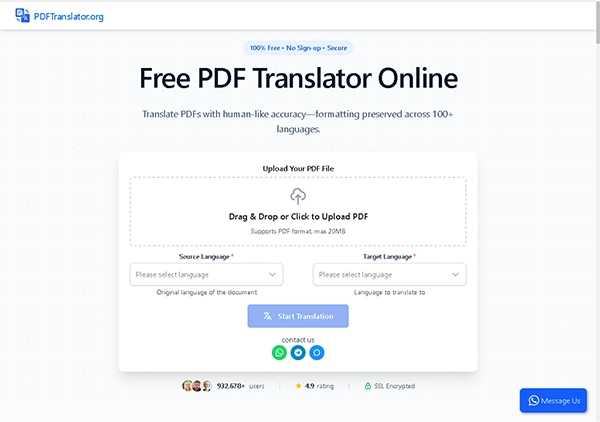
The part that catches people off guard is that this exists for free.
No subscription. No credit card. No “free trial” that turns into a monthly payment you forgot about. No spam later. No data harvesting.
You upload, it translates, you download, it’s gone from their servers within an hour. That’s it.
When you’re dealing with the stuff that matters most, your home, your money, your health, your family, this simplicity matters.
Think about the documents sitting in your files right now that you can’t fully read. The ones you’ve been meaning to deal with but haven’t because the language barrier felt too high.
A contract. A letter. A certificate. A report.
Each of them contains valuable information that is right there with you but still out of reach, as you cannot understand it. Each one you could change and be able to decipher it, and understand its meaning.
The barrier isn’t the document. It’s the language it’s written in. Remove that, and everything else becomes possible.
Ans: The translation tool supports over 100+ unique languages that you can input and translate to according to your convenience.
Ans: No, there is no restriction on signing up before using the tool. One can freely use the tool without the need to create an account for it.
Ans: Yes, the tool is completely secure and deletes the files after complete translation of your documents, so your data remains confidential at all times.
Ans: No, the tool is completely free to use and has no maximum translation limit on PDFs and documents.