After hearing your friends talk about cryptocurrencies and their enormous potential, you’ve made the decision to follow in their footsteps.
But before you enter the scene and start looking for the top cryptocurrency to buy, there’s one thing you have to do: get a crypto wallet. Why is this a necessary step? It will keep your digital assets secure.
Because of the excitement surrounding cryptocurrencies, hackers have a lot of opportunities to steal money using a variety of advanced techniques.
Don’t let this happen to you; it’s a nightmare for all cryptocurrency traders. That’s why in this blog post, we are going to cover everything about crypto wallets.
Let’s begin!
Key Takeaways
- Understanding the core elements of the crypto wallets
- Uncovering the most important factors to choose
- Decoding the supported assets group
- Exploring some security concerns.

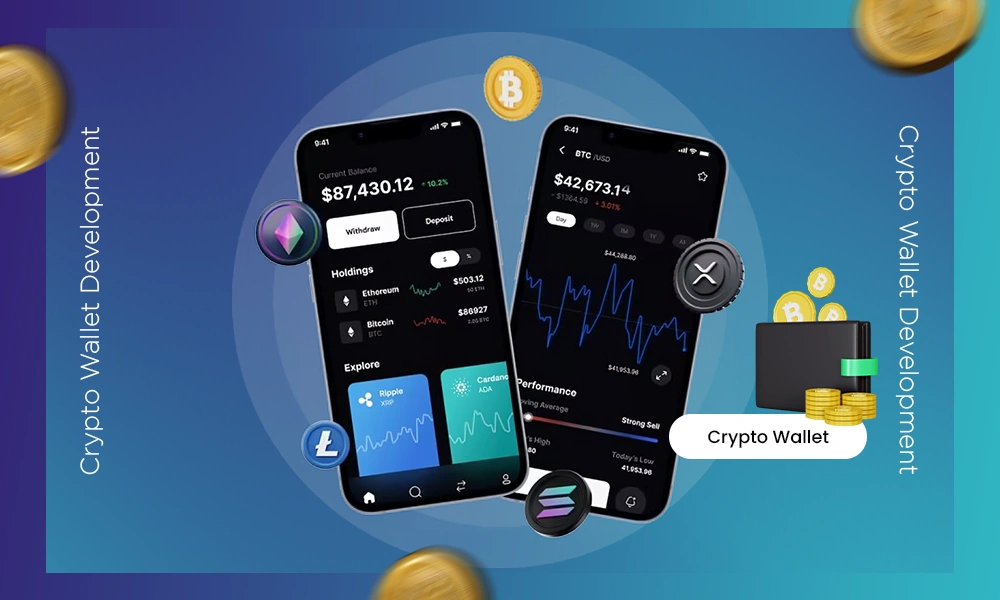
When you hear “crypto wallet”, you probably think that it technically keeps your crypto directly, but that’s not the case. Your private and public keys are instead stored on a physical device or online platform, which you can access and manage on the blockchain to complete transactions.
As a newcomer, you may assume that choosing a wallet is as easy as pie: you just choose the first option showing up in your search, and you’re all sorted. Things aren’t that easy, though. There are so many wallet providers out there that it’s hard to decide which one to choose (not to mention that they aren’t all created equal).
Think of it like when you’re shopping for a smartphone: while mobile devices generally have the same functions (texting, making calls, accessing apps, and so on), not all brands offer the same features. Some may offer better camera quality, while others may provide greater durability or longer battery life. Your job is to decide which one best fits your needs.
This logic also applies to crypto wallets: while their purpose is to safeguard your private keys, they use different methods to do so. Some may focus more on convenience, while others focus on security, for example. With that in mind, it all comes down to deciding how you want to manage your crypto assets and then weighing your options carefully.
Interesting Facts
There are approximately 820 million active crypto wallets globally. This means that crypto wallet users represent about 7.4% of total global internet users.
Since not all wallets are the same, you want to ensure you make a good choice. Here’s what to look at when evaluating your options:
What are your personal needs? This is the first thing that you need to consider, because it will impact the features you should prioritize. If you don’t take the time to define your strategy or goals, you’ll easily get overwhelmed by the range of features and may even end up with a wallet that doesn’t really serve your strategy. To avoid that, ask yourself why you want to use crypto: is it for trading actively, investing, or using it for everyday transactions?
Depending on your motivation, you will be able to narrow down the type of wallet that’s best suited to your needs. For instance, let’s say you want to hold your crypto for a short time only and engage in regular trading. If that’s the case, a software-based wallet (most commonly known as hot storage) is likely the right fit, because it’s always online.
On the other hand, if you want a long-term solution, a cold storage option may be better. This is also more secure than the former, as it keeps your private keys offline, shielding your funds from online threats.
The wallet you choose should support the types of cryptocurrencies you are interested in now and in the future. While some wallets are created specifically for cryptocurrencies like Bitcoin, others offer access to several assets (though they may lack some advanced features).
Unfortunately, no wallet out there can check all your requirement boxes, so it’s ultimately about choosing the one that meets most of your needs. As a general rule, you should go for a device or platform that’s compatible with various cryptocurrencies (and maybe even NFTs), as this will offer maximum flexibility and ensure you are covered for the future.
User interface and functionality are key in managing your crypto assets, but they’re often overlooked when choosing a wallet. It’s like visiting a library: if the place is inviting and well-organized, you’ll likely want to return. The same is true of a cryptocurrency wallet: if it has an easy-to-use interface, it will be simpler to manage your cryptocurrency and use its features.
Some advanced features to look for include a QR code scanner, staking and yield farming (which allow you to earn passive income), integration with dApps, an address book, and biometric authentication (which adds an extra layer of security).
You do not want to ignore security when choosing a crypto wallet. No matter what kind of functions and tools they may offer, in the end, none of them matter if they cannot secure your assets effectively. While you should still follow basic security practices yourself, like installing antivirus software and using robust passwords, the wallet is the gatekeeper of your crypto assets.
2FA is an indispensable feature for your wallet because it adds an extra layer of security. Basically, it lets you access the wallet only after completing a second step of verification. In general, 2FA combines a password with a one-time code from an SMS or authenticator app.
With this feature in place, critical actions within the wallet, like adjusting security settings, sending crypto and executing major transactions, are all safeguarded. Even if you fall victim to a phishing attack, 2FA is your safety net, which means the attacker is unable to transfer or access funds. As a first line of protection against online threats like phishing and hacking, encryption is also essential. Its function is to make sure that your data is private and unreadable by unauthorized individuals. This means that even if an attacker manages to access the wallet’s storage, they will not be able to decrypt the data.
You want to use a wallet with lower transaction fees, because higher fees will eat into your profits, and that’s something you clearly want to avoid. But there are other potential costs to be aware of in order to avoid surprises, including exchange fees and withdrawal fees.
In general, you can use software wallets for free, which means they are more budget-friendly. On the other hand, hardware wallets require an upfront investment, but prices vary depending on features and brand. If you’re in the crypto game for the long haul, this initial cost may be worth it, but you should definitely evaluate it against your needs and budget.
As you can probably tell by now, choosing the right platform or hardware device to store your crypto isn’t a walk in the park. It involves various considerations, from its purpose and security to its user interface. In the end, it’s all about finding the crypto wallet that works for you, so evaluate your options carefully and stick to the one that caters to your needs.
The future of cryptocurrencies is progressive and sustainable, and Bitcoin and Ethereum are projected to become leading tokens of this year, followed by Dogecoin.
According to Binance, there are 415 listed tokens on the platform as of September 2025.
Whether cryptocurrency is the future of money depends on several factors, with ongoing debates about its widespread adoption due to challenges like regulatory uncertainty.